Planning your desert landscape irrigation design palm desert before laying pavers avoids the high costs and structural risks associated with digging up hardscaping to install water lines later. This timing allows for precise plumbing placement that maximizes water efficiency and plant health while ensuring your outdoor space remains durable and undisturbed; it is a critical step for long-term maintenance in arid environments.
Homeowners in Palm Desert often envision their dream patio as a finished masterpiece, yet many overlook the critical infrastructure buried beneath the stone until it is too late. There is nothing more frustrating than investing in premium travertine or porcelain pavers only to realize that your irrigation system was an afterthought, leading to costly excavations or uneven watering that compromises your desert flora. A sophisticated outdoor space requires a seamless marriage between hardscape engineering and water management. In this guide, we will explore the technical advantages of integrated desert landscape irrigation design, specifically tailored for the Coachella Valley. You will learn how to navigate CVWD ordinance requirements, why the unique sandy soil of Palm Desert demands precision drip placement, and how strategic planning ensures your landscape thrives without ever needing to disturb your new pavers.
The Critical Intersection of Hardscape and Water Management in Palm Desert
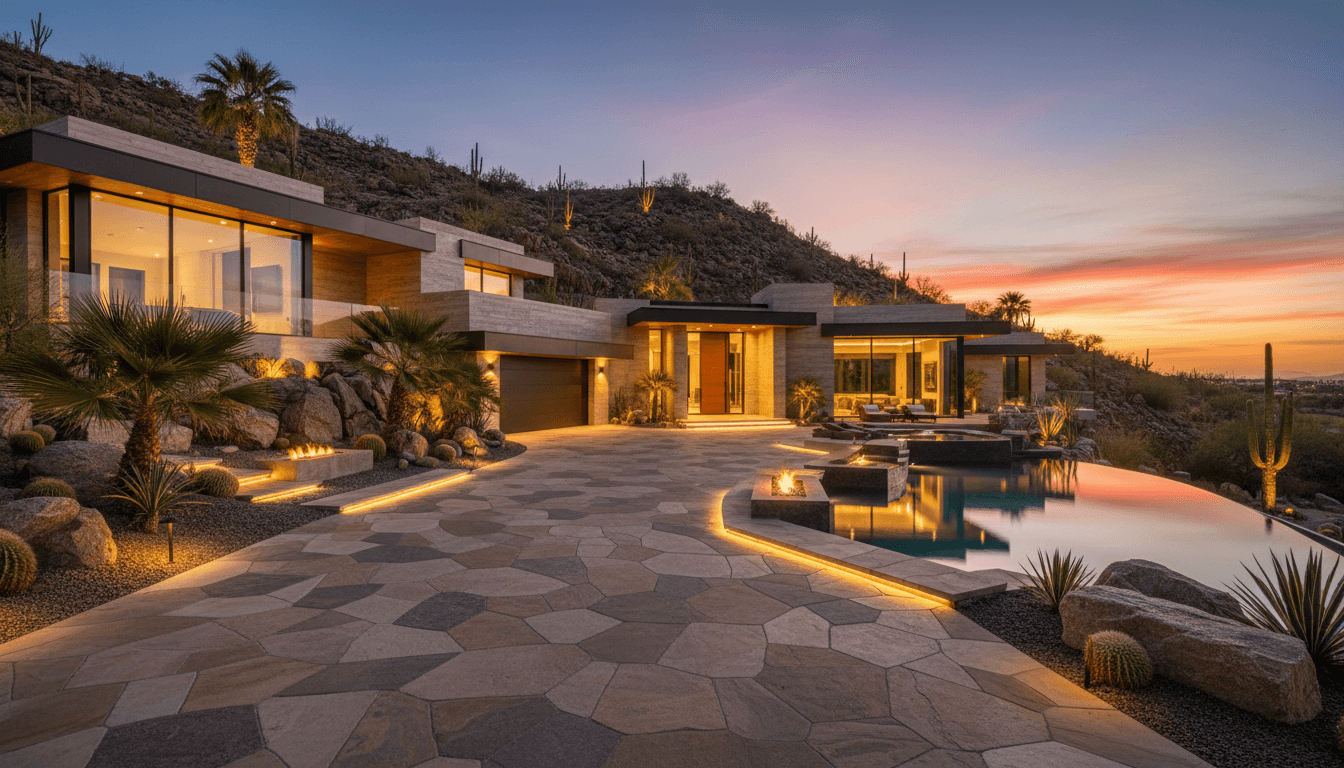
A premium paver installation is an investment in your home’s aesthetic and functional footprint, but even the most meticulously laid driveway or patio is only as stable as the infrastructure supporting it. In Palm Desert, homeowners often view irrigation as a secondary aesthetic choice to be addressed once the hardscaping is complete. This approach ignores the reality of our arid environment. Treating water management as a finishing touch rather than a foundational element leads to compromised structural integrity and unnecessary future expenses.
Effective desert landscape irrigation design palm desert requires an integrated strategy where the flow of water is mapped before a single stone is placed. The Coachella Valley climate, characterized by extreme heat and high evaporation rates, necessitates a system that is both efficient and subterranean. When we provide high-end design and installation services, we prioritize the synchronization of hardscape and custom lighting and irrigation systems.
By designing these systems concurrently, we protect long term property value by ensuring that the compacted sub-base remains undisturbed by future repairs. In the desert, true luxury is defined by a landscape that performs as beautifully as it looks, anchored by a hidden network that respects the specific demands of our local geology and the rigorous standards of the region. Planning the water delivery system first is not just a matter of convenience; it is a technical requirement for a resilient outdoor space.
Technical Advantages of Integrated Desert Landscape Irrigation Design
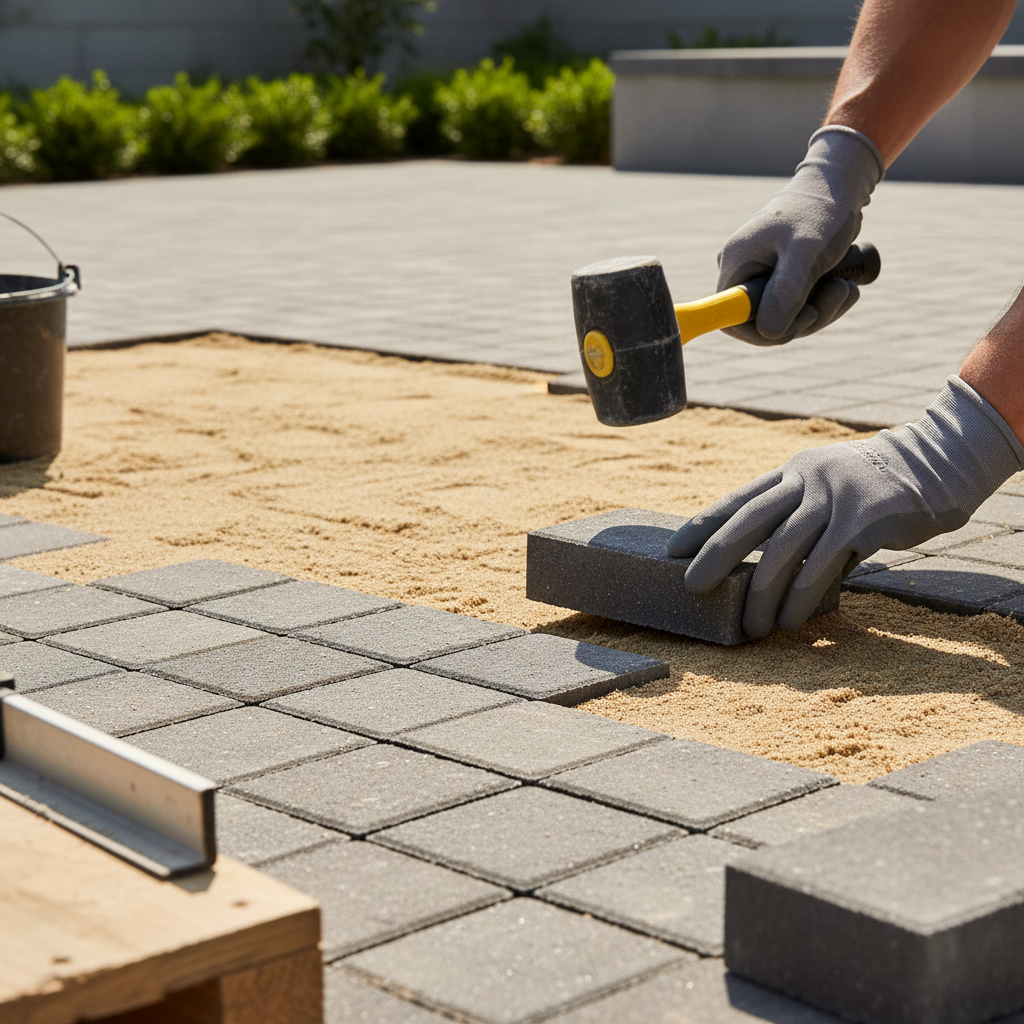
The most effective method to ensure a seamless integration between hardscape and nature is through the use of sleeves. These are high-grade PVC conduits placed deep within the sub-grade before the aggregate base is spread and compacted. By installing these dedicated channels at strategic points under a driveway or walkway, we create a permanent access point for the irrigation lines. This proactive step in desert landscape irrigation design palm desert eliminates the need to ever disturb the finished stone surface for maintenance. If a line develops a leak or if a homeowner decides to add a new planting zone years later, a technician simply slides a new line through the existing sleeve.
Contrast this with the reactive method known as horizontal boring. When irrigation is neglected during the planning phase, contractors must use specialized hydraulic equipment to tunnel beneath the established hardscape. This process is significantly more expensive due to specialized labor and machinery costs. More importantly, boring can compromise the structural integrity of the project. A hardscaping expert serving Indian Wells knows that paver longevity relies on a perfectly compacted, undisturbed sub-base. Boring creates subterranean voids that can lead to shifting, sinking, or unappealing ruts in the pavers above.
By integrating custom lighting and irrigation systems during the initial excavation, we maintain the specific compaction rates necessary for high-end design and installation services. This foresight ensures that the subterranean infrastructure remains as rigid and reliable as the stone itself.
Feature | Integrated Sleeving | Post-Installation Boring |
|---|---|---|
Timing | During sub-grade preparation | After hardscape completion |
Sub-Base Impact | Zero disturbance; preserves compaction | High risk of voids and settling |
Future Accessibility | Simple pull-through access | Requires excavation or new boring |
Relative Cost | Minimal material cost | High labor and equipment cost |
Meeting CVWD Landscape Ordinance Requirements in the Coachella Valley
In the Coachella Valley, professional landscape projects must navigate a complex regulatory environment defined by the Coachella Valley Water District (CVWD). The CVWD Landscape Ordinance establishes strict criteria for water efficient design, particularly for new or rehabilitated landscapes. Compliance is not merely a matter of environmental stewardship; it is a legal prerequisite for project approval in many Palm Desert developments. A core component of this ordinance involves submitting a detailed water management plan that accounts for specific irrigation efficiencies and prevents runoff.
One of the most critical requirements under these guidelines is pressure regulation. Water pressure in regions like Palm Desert can fluctuate significantly, which often leads to misting, line breaks, and inefficient water distribution if not managed correctly. Implementing pressure regulated valves and heads is far more efficient when the ground is already open for hardscape excavation. This allows our team to install the necessary high grade components directly into the main lines before any high-end design and installation services are completed.
Additionally, CVWD emphasizes the use of smart technology and precise emitter placement to combat the rapid drainage typical of our sandy soils. By integrating these requirements into your initial desert landscape irrigation design palm desert, we ensure that the system meets all local codes without the need for expensive, post installation modifications. This proactive approach allows a hardscaping expert serving Indian Wells to verify that every component, from the master valve to the furthest drip emitter, functions within the mandated efficiency parameters. This technical alignment between hardscape and water regulations protects you from potential fines and ensures your custom lighting and irrigation systems are fully compliant from day one.
Why Sandy Palm Desert Soil Demands Precision Drip Irrigation Placement
The geological profile of Palm Desert, particularly in the dune and cove areas of Indian Wells and Rancho Mirage, consists primarily of sandy soil that drains with extreme speed. This rapid percolation means that water must be delivered with surgical precision to be effective. Following the Lush and Efficient guidelines from the Coachella Valley Water District, we prioritize precision drip irrigation over traditional spray heads to ensure moisture reaches the root zone before evaporating or sinking too deep into the substrate.
Integrated planning is essential because hardscape borders act as impermeable barriers. If irrigation emitters are placed without considering the footprint of a new paver patio, you risk creating isolated dry spots where the stone blocks the reach of the water. Conversely, poorly planned systems can inadvertently trap moisture against a home’s foundation, leading to structural concerns over time. By incorporating desert landscape irrigation design palm desert into the initial layout, we ensure that every emitter is positioned to work with, rather than against, your hardscape boundaries.
When delivering high-end design and installation services, we account for these soil variables to maintain the health of your greenery. Professional custom lighting and irrigation systems designed by a hardscaping expert serving Indian Wells provide the balance needed to sustain a lush environment in an arid climate while respecting the physical limitations of the site’s topography.
The Costly Consequences of Retrofitting Irrigation After Paver Installation
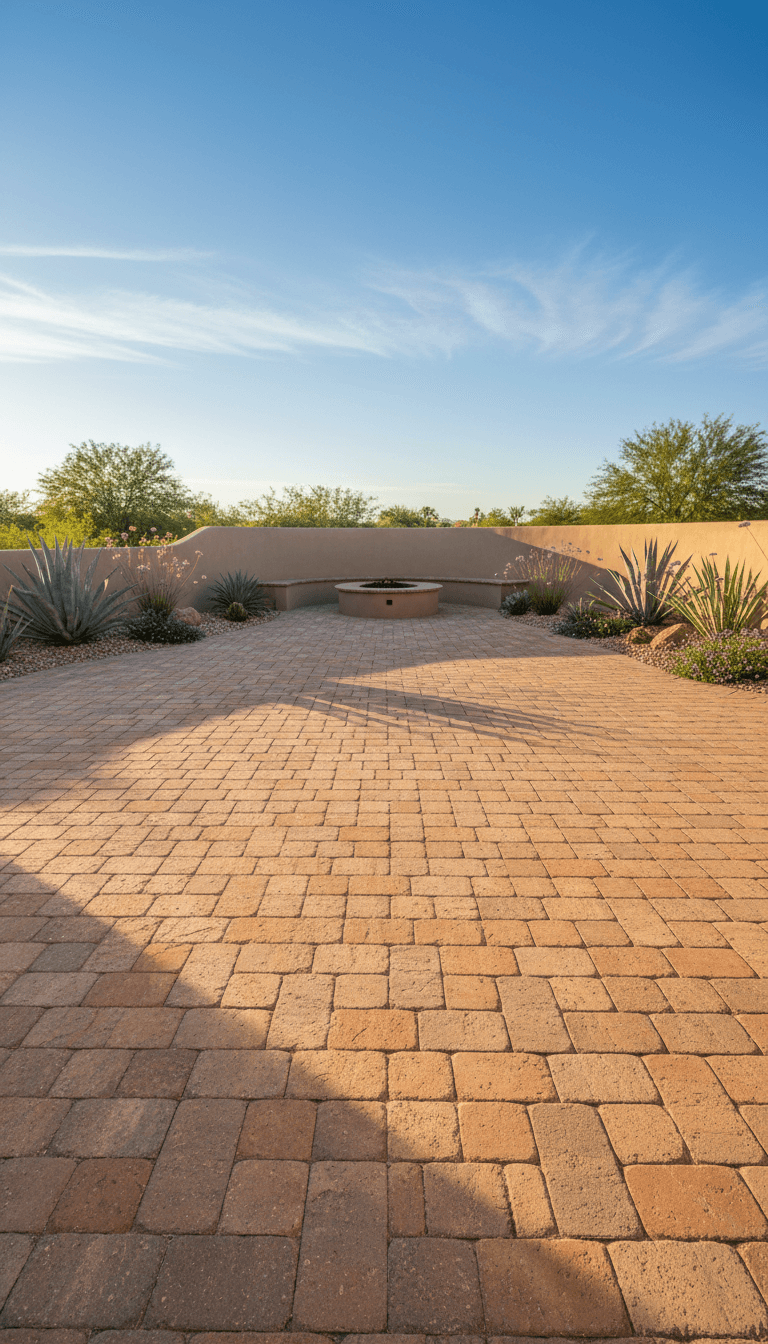
The economic reality of desert landscape irrigation design palm desert is that timing dictates price. Homeowners frequently ask if irrigation can be added later to manage initial budgets, but the technical reality reveals a different story. Retrofitting a system after pavers are set is never a simple swap. It requires a labor intensive sequence: technicians must carefully lift the stones, manually scrape away the hardened joint sand, hand excavate through the compacted aggregate, and then perform the repair. Once the line is fixed, the sub-base must be meticulously re-compacted and the pavers re-set to the original grade to avoid unsightly dipping.
This reactive process is significantly more expensive than laying infrastructure while the ground is open. When we provide high-end design and installation services, we emphasize that installing PVC sleeves during the base preparation phase adds negligible material costs. By contrast, a retrofit consumes hours of specialized labor that could have been avoided. As a hardscaping expert serving Indian Wells, I advise clients that integrated planning typically saves 20 to 30 percent on total project costs. By coordinating custom lighting and irrigation systems at the start, you avoid the premium price tag of undoing finished work. Financial efficiency in the desert is about more than just water conservation; it is about protecting your investment from redundant labor and the risk of a compromised foundation.
Hydrozoning and Hardscaping: Planning for Future Growth
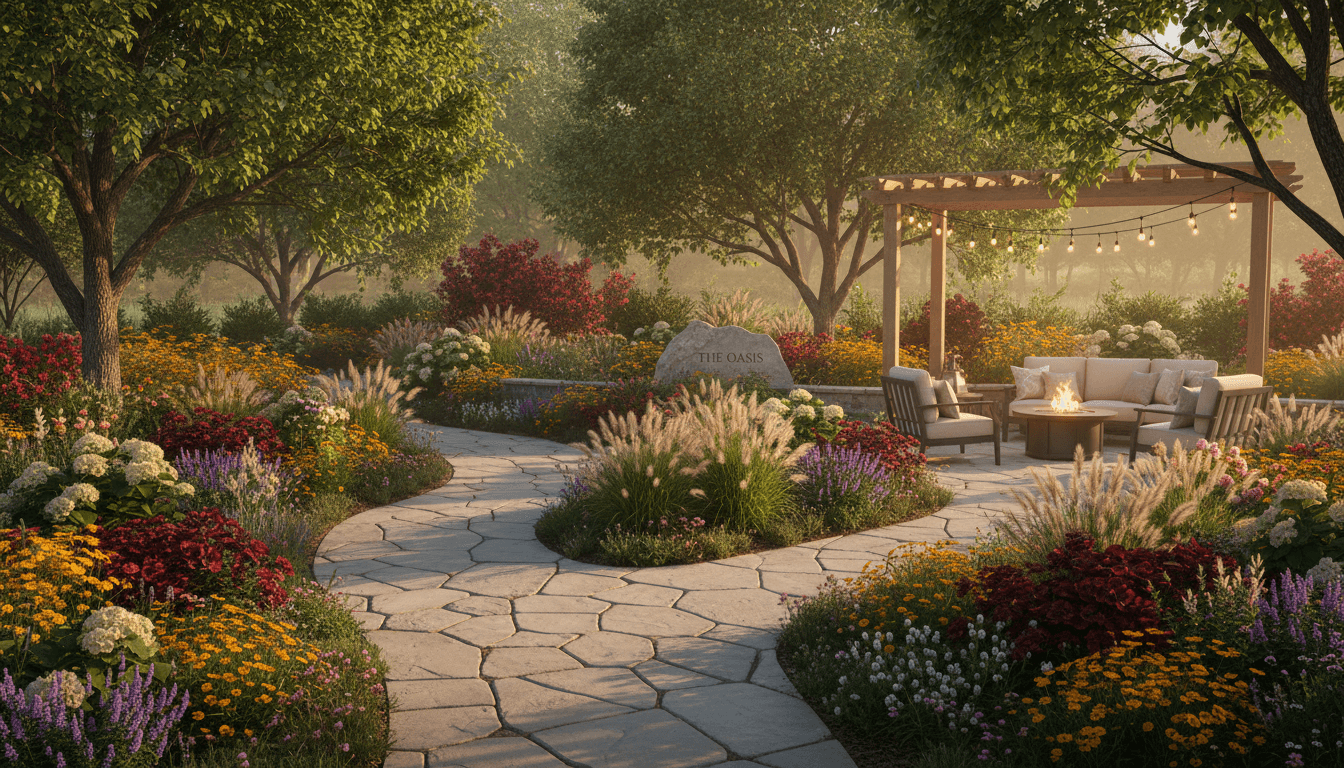
A successful desert landscape irrigation design palm desert relies on the principle of hydrozoning; this is the practice of grouping plants with similar water requirements into distinct irrigation zones. In a high-end Palm Desert landscape, you might feature a cluster of drought-tolerant agave and Barrel cacti adjacent to a primary walkway, while a small grove of Meyer lemons or a vibrant flower bed sits on the opposite side. Because these species have vastly different transpiration rates and root depths, they must be controlled by separate valves to prevent over-watering or dehydration.
This is where the physical layout of your hardscaping becomes a critical technical variable. A wide paver walkway or a custom stone patio acts as a permanent barrier between these hydrozones. Without pre-planned conduits, the irrigation system loses its ability to reach these disparate areas without unsightly surface pipes or destructive trenching after the fact. As a hardscaping expert serving Indian Wells, I ensure that our high-end design and installation services account for these botanical islands from the initial drafting phase. We install dedicated subterranean sleeves that allow secondary lines to jump the hardscape. This foresight ensures that your low-water succulents remain healthy while your thirstier citrus receive the deep saturation they require. Proper hydrozoning, facilitated by pre-laid infrastructure, ensures your custom lighting and irrigation systems function with maximum efficiency and aesthetic consistency.
Smart Controllers and Automation for Palm Desert Outdoor Spaces
The technical precision of hydrozoning requires a sophisticated management system to be effective. Smart controllers act as the central nervous system for your desert landscape irrigation design palm desert, utilizing real-time weather data to automatically adjust for Coachella Valley heat waves. When temperatures spike, these units increase watering frequency without manual intervention, protecting your botanical investment from thermal stress.
Installing these controllers involves low voltage wiring that typically follows the exact paths of your irrigation mainlines. By laying dedicated conduits during our high-end design and installation services, we ensure these control wires, along with custom lighting and irrigation systems wiring, are safely tucked beneath the hardscape. A hardscaping expert serving Indian Wells understands that these conduits must be placed and tested before the final paver sand is swept into the joints. This simultaneous installation prevents the need to pull up pavers later to run forgotten electrical lines, ensuring your outdoor automation is as seamless and reliable as the stone surface above it.
Planning your desert irrigation before laying a single stone is the most effective way to protect your landscape investment. This proactive approach prevents costly rework and ensures that your plants receive consistent hydration without disturbing your new hardscape. If you want expert help designing a space that balances beauty with functional water systems, our team is ready to assist. You can learn more about our commitment to quality craftsmanship and thoughtful planning as you begin your next outdoor renovation project.