Maximizing your retaining wall value Palm Desert hidden drainage backfill is essential for increasing property worth by up to 15 percent through erosion control and the creation of usable land. These structural elements prevent soil failure and ensure the wall remains a functional asset; providing both aesthetic appeal and critical site stability for desert homes.
Most Palm Desert homeowners view a retaining wall as a purely visual asset, but a wall is only as valuable as the engineering hidden behind its face. If you ignore the hydrostatic pressure building up during a sudden monsoon or the expansion of poor native soil, your expensive investment quickly becomes a costly structural liability. In the Coachella Valley, the difference between an asset that adds home equity and a wall that eventually leans or collapses lies in the backfill and drainage systems that remain invisible to the naked eye. This guide explores why high quality backfill and hidden drainage layers determine your long term ROI. We will examine the physics of the 1/3 rule, the risks of unpermitted construction, and the specific material requirements that ensure your hardscape survives the unique geological challenges of our desert environment.
The ROI of Desert Hardscaping: Asset or Structural Liability
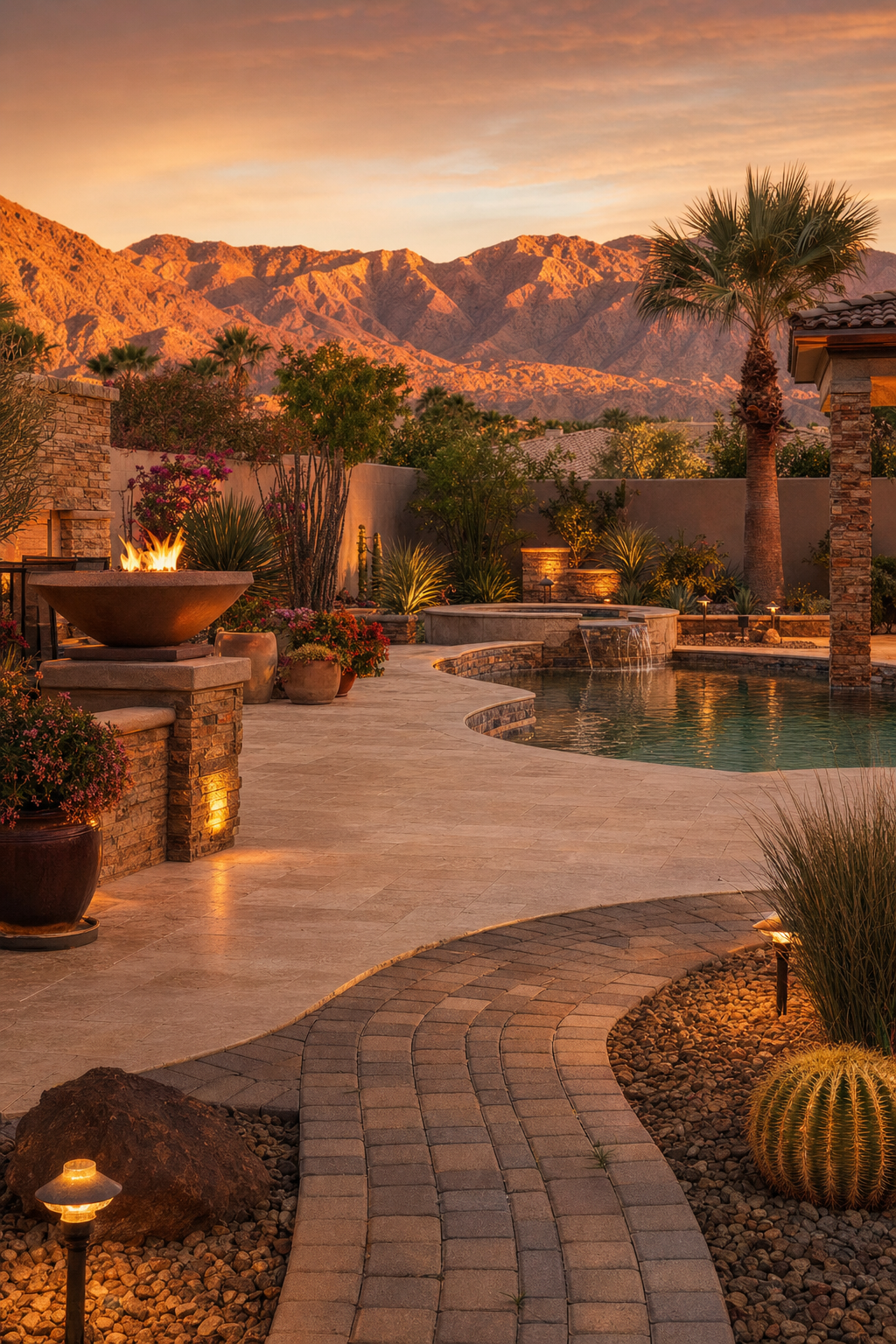
In the high stakes real estate markets of Palm Desert, Indian Wells, and Rancho Mirage, a professionally engineered retaining wall can increase property value by as much as 15 percent. This structural addition is often the primary difference between a wasted, eroding slope and a perfectly leveled lot ready for hardscape design services or custom stone patios. However, this investment only remains an asset if it is built to survive the unique pressures of the Coachella Valley.
The true retaining wall value Palm Desert hidden drainage backfill provides is measured by its performance during our rare but intense monsoon seasons. Without a sophisticated internal system to move water, a wall essentially becomes a mud dam. When saturated soil presses against the stone or block, the resulting hydrostatic pressure can lead to catastrophic failure; this transforms a beautiful landscape feature into a five figure structural liability.
While homeowners often focus on the aesthetic stone on the face, the stability of the structure depends entirely on what is hidden behind it. Professional installation ensures that water is diverted away from the wall's foundation, preventing the bowing and shifting that frequently triggers red flags during home inspections. Integrating permeable paver systems in the surrounding area can further assist in site water management, but the wall itself must be engineered to breathe and drain to maintain its structural integrity over time.
Why Native Desert Soil is a Poor Backfill Material
Pushing excavated native soil back into the trench behind a new wall is the most common shortcut in desert construction, and it is the leading cause of structural failure. While the Coachella Valley is known for its sand, many areas in Indio, Coachella, and parts of Palm Desert contain silty or clay heavy pockets. These materials are ill-suited for structural support because they lack the consistency of engineered aggregates.
Native desert soil acts like a sponge. When the heavy rains of monsoon season arrive, silty soil saturates and expands, creating immense hydrostatic pressure. As the soil swells, it pushes against the back of the masonry; as it dries in the intense summer heat, it shrinks, leaving gaps that lead to settling and shifting. This cycle of expansion and contraction eventually forces the wall to lean or "toe out" at the base.
To avoid this, professional engineering standards reject native fill in favor of a specific drainage zone. Quality installations require a minimum of 12 inches of clean, angular retaining wall backfill gravel placed directly behind the blocks. This granular aggregate does not hold moisture or expand when wet. Instead, it creates a high permeability chimney that allows water to drop straight down to the drainage pipe. By replacing reactive native dirt with stable gravel, the wall remains upright and secure, ensuring the structure serves as a permanent asset rather than a collapsing liability.
The Hidden Drainage Layer: The Secret to Long Term Stability
The efficiency of the gravel backfill depends entirely on how the collected water is channeled out of the system. A high performance drainage layer acts as the internal plumbing for the structure; this system typically begins with a 4 inch perforated drain pipe, often called a weeping tile, placed at the base of the wall. This pipe must be installed with a consistent slope to ensure gravity carries water toward a designated exit point or a larger storm drain system rather than allowing it to pool at the foundation.
To ensure this system remains functional for decades, the drainage gravel must be wrapped in a high quality, non woven geotextile filter fabric. This fabric acts as a critical barrier that allows water to pass through while keeping fine desert silt and sand out of the gravel envelope. Without this protective layer, the fine particles common in Coachella Valley soils would eventually clog the voids between the stones, rendering the drainage useless and increasing the likelihood of structural failure.
During a sudden desert flash flood, the volume of water can quickly overwhelm the soil's natural absorption rate. The gravel chimney allows this surge to drop rapidly to the perforated pipe, preventing the buildup of hydrostatic pressure against the masonry. This mechanical water management is the primary factor in maintaining retaining wall value Palm Desert hidden drainage backfill because it prevents the wall from becoming a saturated, weight bearing hazard during seasonal storms.
Homeowners frequently ask if a 2 foot retaining wall needs drainage. In the desert climate, the answer is a definitive yes. Even low walls are susceptible to shifting or heaving if the ground behind them remains damp for extended periods. Furthermore, professional drainage prevents salt efflorescence, which are the white, unsightly mineral deposits that form on the face of the stone when moisture leaches through the block. Proper drainage keeps the face of the wall dry and aesthetically pristine. While permeable paver systems can assist with surface runoff, the internal drainage layer remains the primary defense for the wall's long term stability.
Retaining Wall Engineering: The 1/3 Rule and Buried Courses
While the internal drainage system manages fluid pressure, the physical geometry of the masonry prevents the structure from rotating or sliding over time. This stability begins with the buried bottom course, a critical engineering step that many casual installers ignore to reduce excavation labor. For a wall to serve as a legitimate property asset, the first course of blocks must be embedded below the finished grade. At PAVERS PAVERS PAVERS, we ensure the base course is at least one eighth of the total wall height, or one full block, beneath the soil line to create a firm anchor. This embedment provides the necessary resistance to prevent the wall from kicking out at the bottom.
Beyond the foundation, professional standards follow the 1/3 rule. This principle suggests that for every 3 feet of vertical height, a wall often requires at least 1 foot of setback or structural base depth to remain upright under pressure. This specific ratio ensures the center of gravity remains centered over the footing. When these mechanical ratios are integrated with the proper retaining wall value Palm Desert hidden drainage backfill, the structure can withstand the immense weight of a saturated slope. These engineering benchmarks are essential components of our hardscape design services, separating a permanent structural solution from a temporary landscape partition.
Retaining Wall Cost in Palm Desert: 2026 Price Guide
Investing in a structural wall is a significant capital improvement that requires a clear understanding of the 2026 market rates. In the Coachella Valley, homeowners should budget between $55 and $140 per square foot for high-quality CMU or engineered segmental block installations. The broad range in pricing usually stems from the complexity of the engineering required as the wall gains height and the logistical challenges of site accessibility.
Wall Category | Est. Cost per Sq. Ft. (2026) | Engineering Requirements |
|---|---|---|
Standard (Under 3') | $55 – $85 | Gravity design, gravel backfill |
Engineered (3' to 6') | $90 – $120 | Soil testing, geogrid, permits |
Specialized (Over 6') | $120 – $140+ | Structural engineering, site access |
A primary factor in the price jump for taller walls is the depth of the footing and the volume of excavation. A 6 foot wall is not simply twice as expensive as a 3 foot wall; it requires significantly more reinforcement and specialized labor. The true retaining wall value Palm Desert hidden drainage backfill provides is most apparent during the home resale process. Professional installation, including municipal permits and internal water management, ensures the structure remains an asset rather than a liability. Utilizing expert hardscape design services ensures that your investment meets modern California building codes and passes rigorous home inspections, preventing costly price concessions during a future sale.
How Terracing Creates Usable Outdoor Living Space
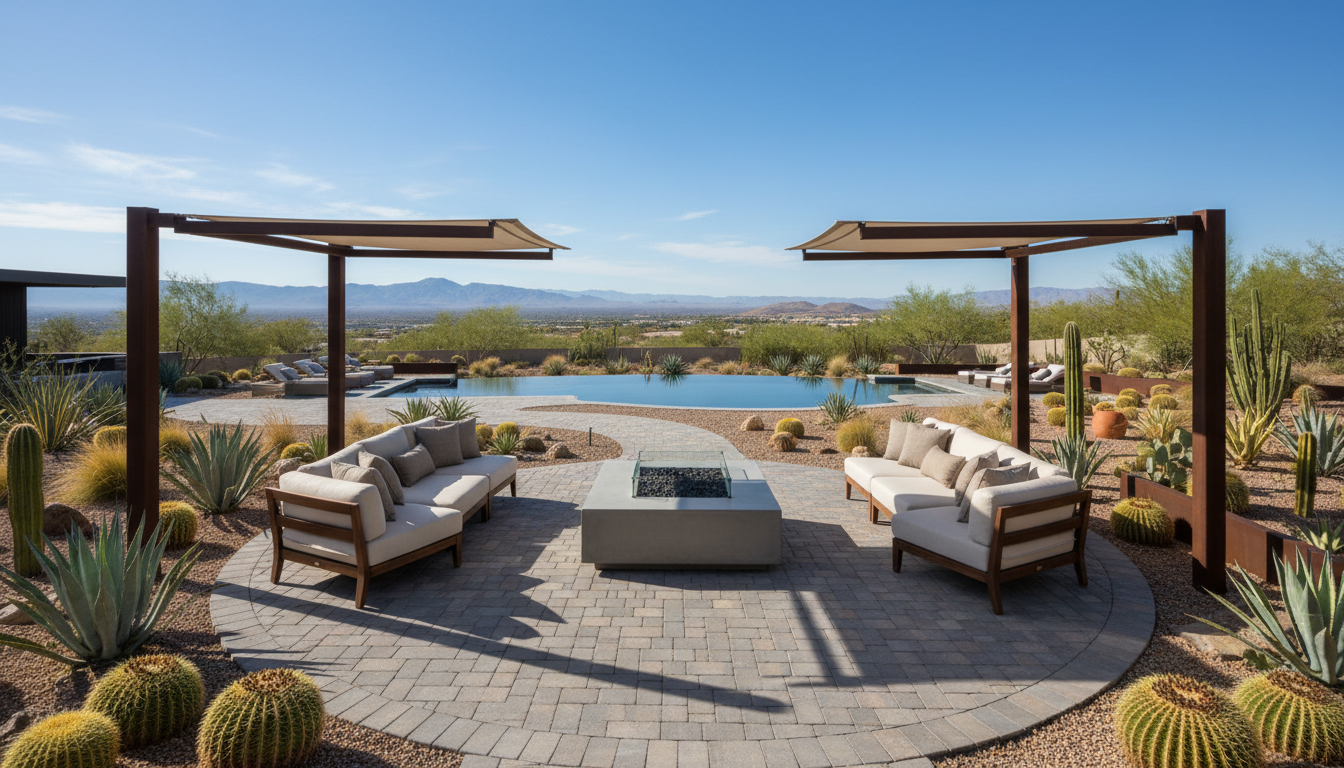
In steep residential areas like La Quinta or Palm Springs, a sloped backyard often represents thousands of square feet of wasted real estate. Terracing solves this by carving out horizontal planes from vertical terrain. By installing a series of smaller walls rather than one massive structure, we create tiers that can accommodate artificial turf, custom stone patios, or a level pool deck. This approach maximizes the footprint of the home by turning a structural necessity into an architectural feature.
Real estate appraisals in the Coachella Valley heavily weight usable square footage. Adding 500 square feet of flat, functional land to a previously unusable slope is where the most significant return on investment occurs. When a lot is effectively leveled, it moves from being a hillside property with limitations to a luxury outdoor living space with amenities. The retaining wall value Palm Desert hidden drainage backfill provides is realized when these tiers remain level and stable for decades, allowing for permanent installations that will not shift or crack. This transformation requires expert hardscape design services to ensure each level transitions seamlessly into the next while maintaining proper water runoff across the entire site. By creating these usable zones, homeowners essentially increase their lot size without purchasing additional land.
The Inspection Reality: Why Unpermitted Walls Become a Liability
The move from structural enhancement to a successful property sale hinges on what happens during a professional home inspection. In the Coachella Valley, inspectors are acutely aware of how desert conditions affect masonry. They specifically look for "bowing" in the center of the wall or "stepping" patterns in the joints, which are classic symptoms of inadequate base preparation or poor soil reinforcement.
When a wall shows these signs of movement or lacks functional weep holes, it often becomes a major point of negotiation. Sellers may be forced to offer thousands in concessions to cover the cost of a future rebuild. This is why professional hardscape design services are considered a high return pre-listing upgrade. By documenting the retaining wall value Palm Desert hidden drainage backfill specifications during construction, you provide tangible proof that the structure is an engineered asset. A wall built with a clear drainage plan and permitted foundation does not just hold back soil; it holds the property's value against the scrutiny of even the most rigorous structural assessments.
Investing in a retaining wall is about more than just aesthetics; it is about protecting your Palm Desert property from the ground up. By focusing on high quality drainage and proper backfill materials, you ensure that your investment retains its value for decades. If you want expert help navigating these technical requirements or choosing the right stone for your project, exploring our professional Services can help you get started on the right foot. We are here to help your vision last.