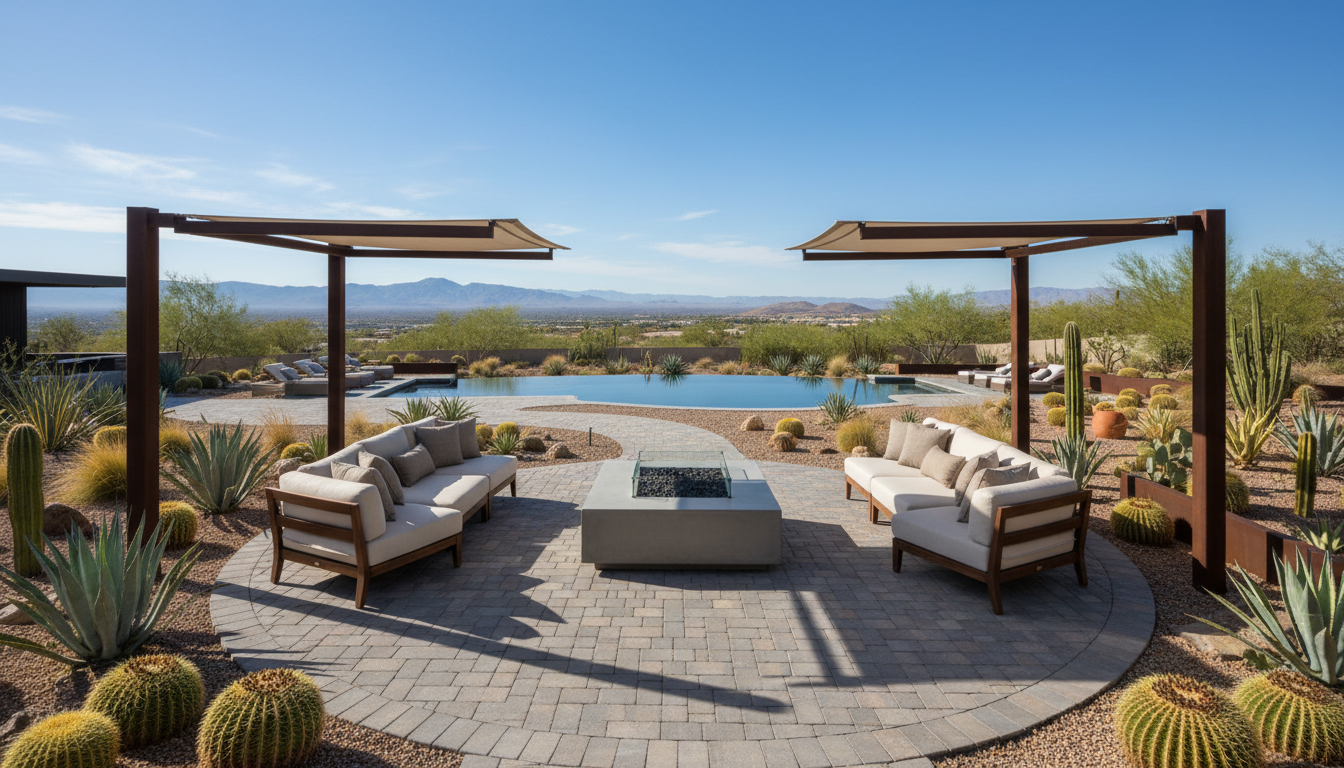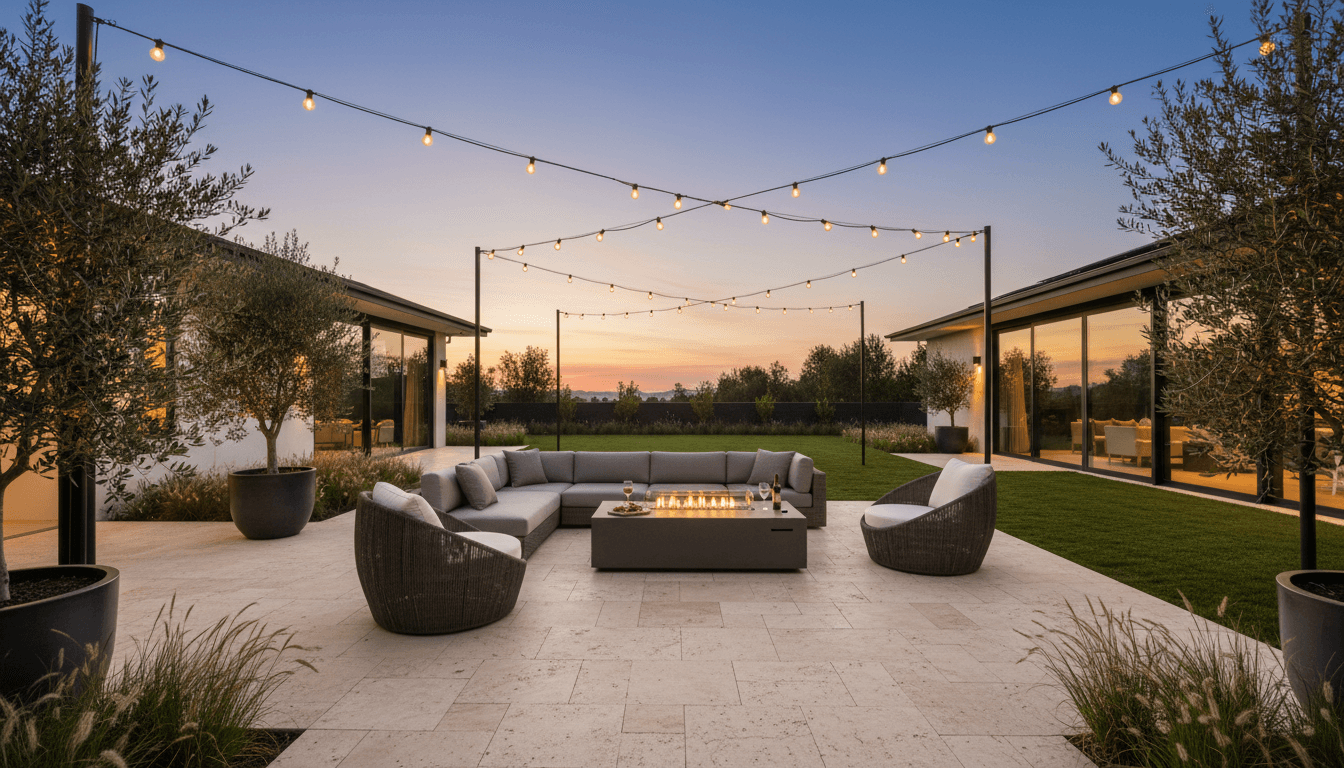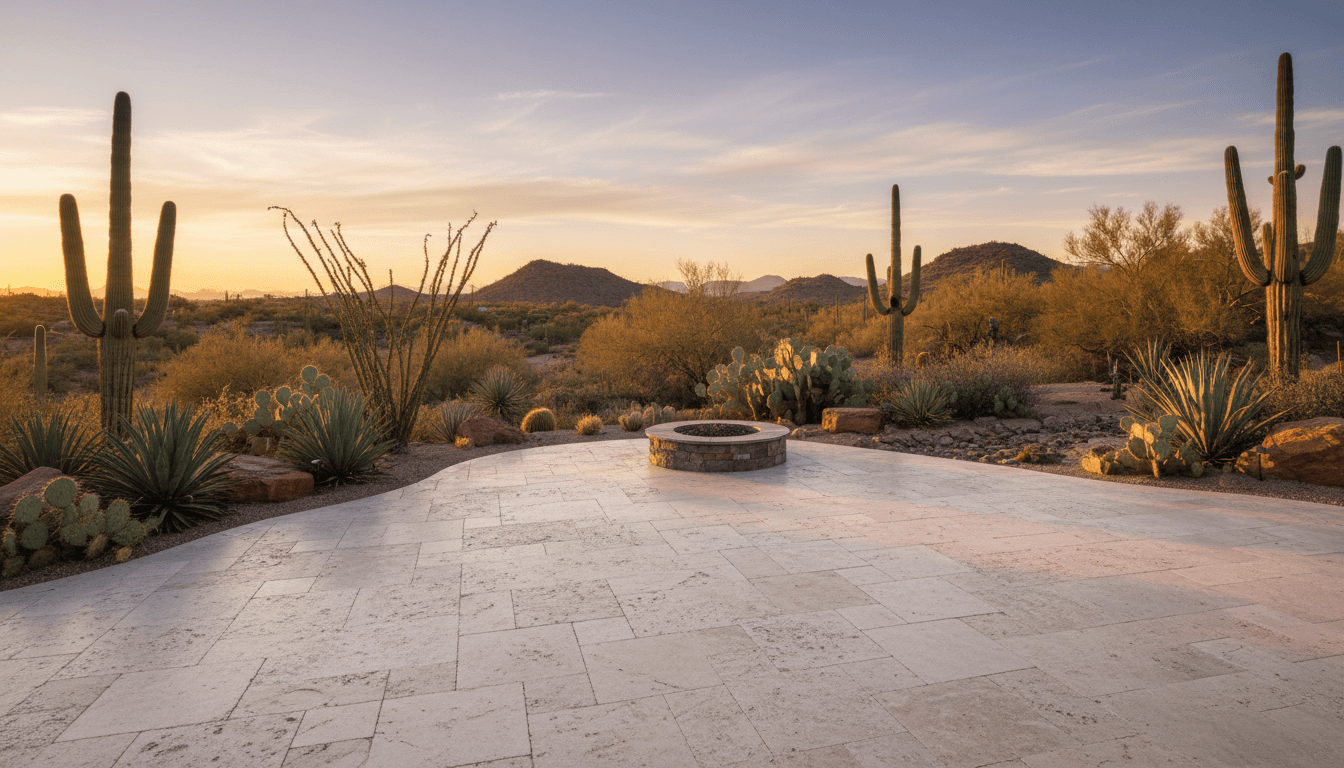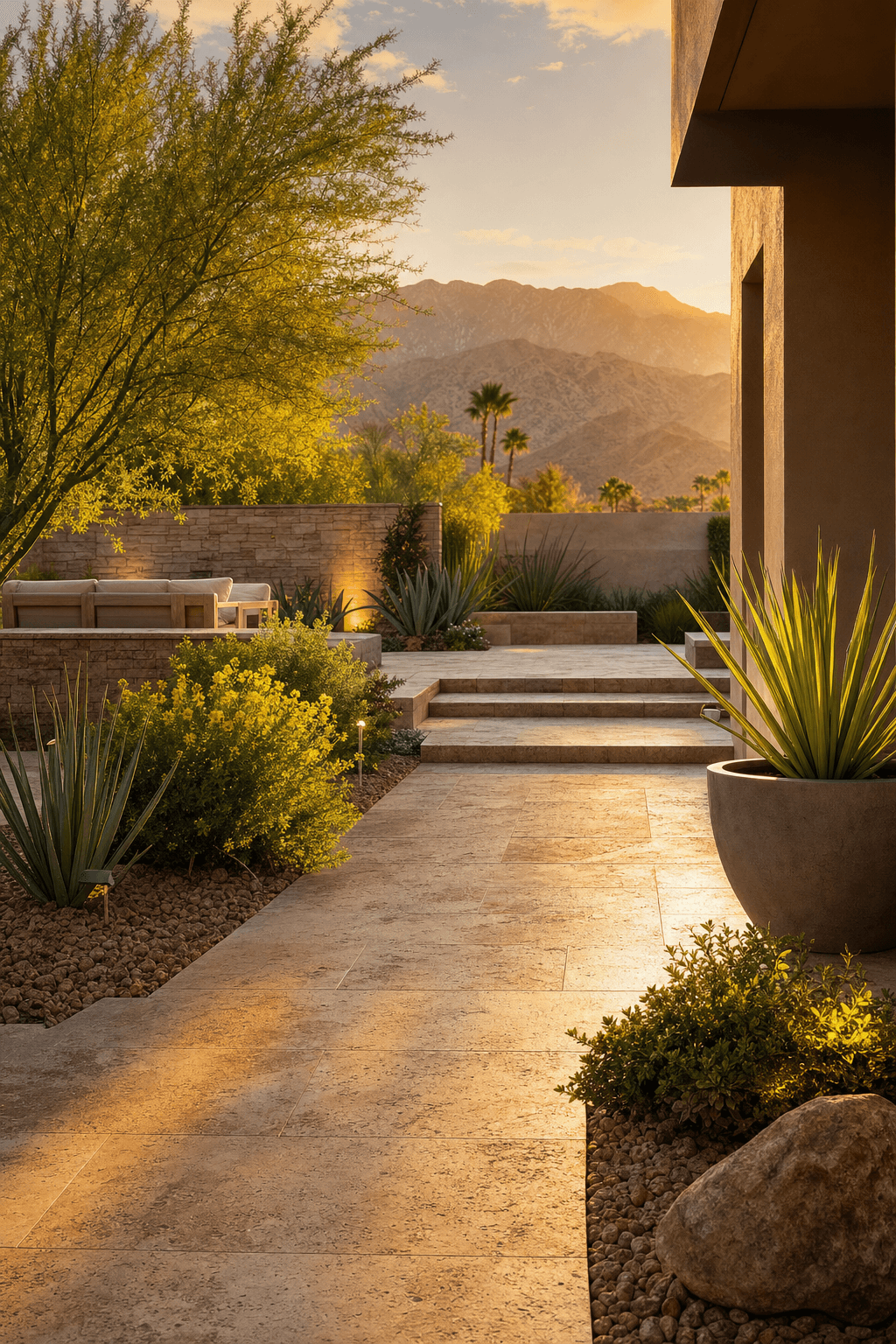
Installing essential gas, electrical, and plumbing lines is a critical first step when planning outdoor living space utilities before pavers Palm Desert to avoid costly future excavation. This proactive approach ensures that fire features, outdoor kitchens, and lighting systems are properly powered and seamlessly integrated beneath your hardscape surface.
Nothing ruins a luxury Palm Desert backyard faster than the realization that you forgot to run a gas line after your premium travertine or interlocking pavers are already set. The Coachella Valley sun is unforgiving, and the last thing any homeowner wants is to dismantle a precision installed patio to fix a drainage oversight or add a missed electrical conduit. At PAVERS PAVERS PAVERS, we believe that true outdoor sophistication starts several inches below the surface. This guide explores the critical infrastructure required before the first stone is laid; covering everything from high pressure gas lines for gourmet kitchens to essential irrigation sleeves and future proofing strategies. By mastering the subterranean elements of your hardscape design now, you ensure that your outdoor living space remains both functional and flawless for decades to come.
Why Planning Outdoor Living Space Utilities Before Pavers is Critical in Palm Desert
A high-end travertine pool deck or a series of custom stone patios in the Coachella Valley represents a significant investment, but long-term functionality depends entirely on the hidden infrastructure beneath the surface. Many homeowners realize too late that the time to install outdoor living space utilities before pavers Palm Desert area projects reach the final sanding phase is during the initial excavation. Once your pavers are set on a compacted base, swept with polymeric sand, and vibrated into place, you have reached the point of no return. Retrofitting a gas line or a forgotten electrical conduit after the fact requires lifting the stones, disturbing the sub-base, and risking the structural integrity of the entire project. This often results in visible settling or mismatched sand lines that never quite look the same.
The Coachella Valley climate presents unique challenges that generic hardscaping guides overlook. Our extreme summer temperatures and highly permeable, sandy soil dictate specific requirements for utility burial. Heat can cause expansion in certain conduit materials, while our loose soil requires precise trenching and backfilling to prevent the pavers from shifting over time. Professional hardscape design services prioritize these logistics to ensure that gas, water, and power lines are buried deep enough to avoid surface heat transfer and potential damage.
By coordinating your landscape lighting and irrigation runs alongside your primary hardscape, you avoid the massive expense of secondary excavation. Planning for the future now, even if you are not installing a full outdoor kitchen today, saves thousands in labor costs and protects your beautiful stone investment from unnecessary disturbance.
Gas Line Installation: Powering Fire Pits and Outdoor Kitchens
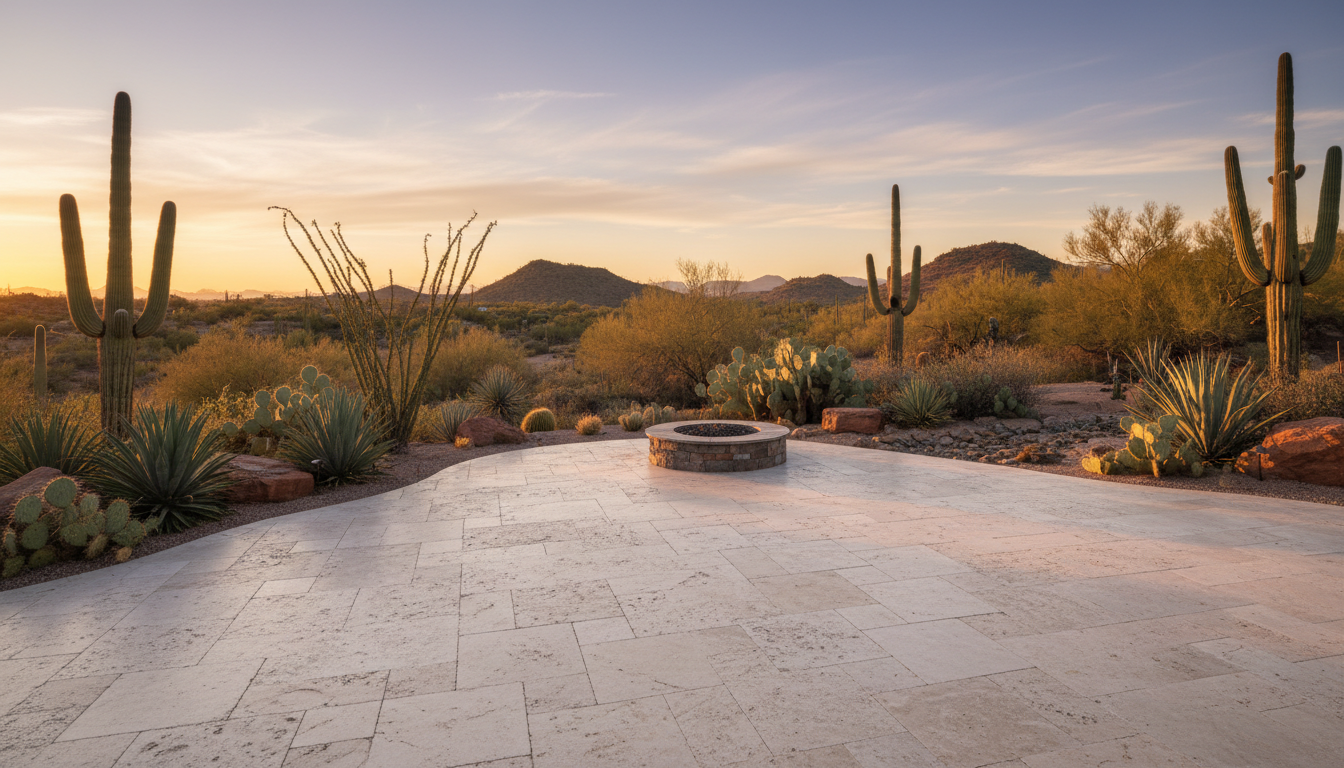
Building a functional outdoor kitchen or a custom fire pit starts long before the first stone is set. In the Coachella Valley, installing outdoor living space utilities before pavers Palm Desert projects commence is the only way to ensure safety and compliance with local building codes. A common question homeowners ask is: does gas pipe have to be in a sleeve when going under concrete or pavers? In most Coachella Valley jurisdictions, including Palm Desert and Rancho Mirage, the answer is yes. Gas lines running beneath a permanent hardscape must be encased in a vented sleeve, typically made of PVC. This sleeve protects the line from the pressure of the compacted sub-base and ensures that if a leak ever occurs, the gas can vent safely to the atmosphere rather than pooling underneath your custom stone patios.
Local requirements generally dictate that gas lines be buried at a minimum depth of 18 inches. Before the trench is backfilled and the paver base is compacted, the system must undergo a mandatory pressure test. This involves pressurizing the line with air and verifying that it holds that pressure for a set duration, usually 24 hours, to prove there are no leaks. Skipping this step or attempting a DIY installation is a major risk, as a leak discovered after the pavers are installed would require a complete tear-out of your new hardscaping.
Utility Type | Minimum Burial Depth | Mandatory Requirement |
|---|---|---|
Natural Gas (PE Pipe) | 18 Inches | Vented Sleeve & Pressure Test |
Propane Lines | 18 Inches | Pressure Test & Tracer Wire |
High-Voltage Electric | 18-24 Inches | Rigid Conduit |
Planning for a built-in BBQ versus a central fire pit involves different logistical needs. A BBQ island often requires a higher BTU rating and larger pipe diameter to support multiple burners and side ranges, whereas a fire pit requires a dedicated shut-off valve located within a specific distance for emergency access. Because these installations involve combustible fuel and strict permitting in cities like La Quinta and Indian Wells, a licensed professional is required to handle the gas plumbing and secure the necessary permits, ensuring your hardscape design services result in a space that is as safe as it is beautiful.
Electrical Conduit and Wiring for Desert Nights
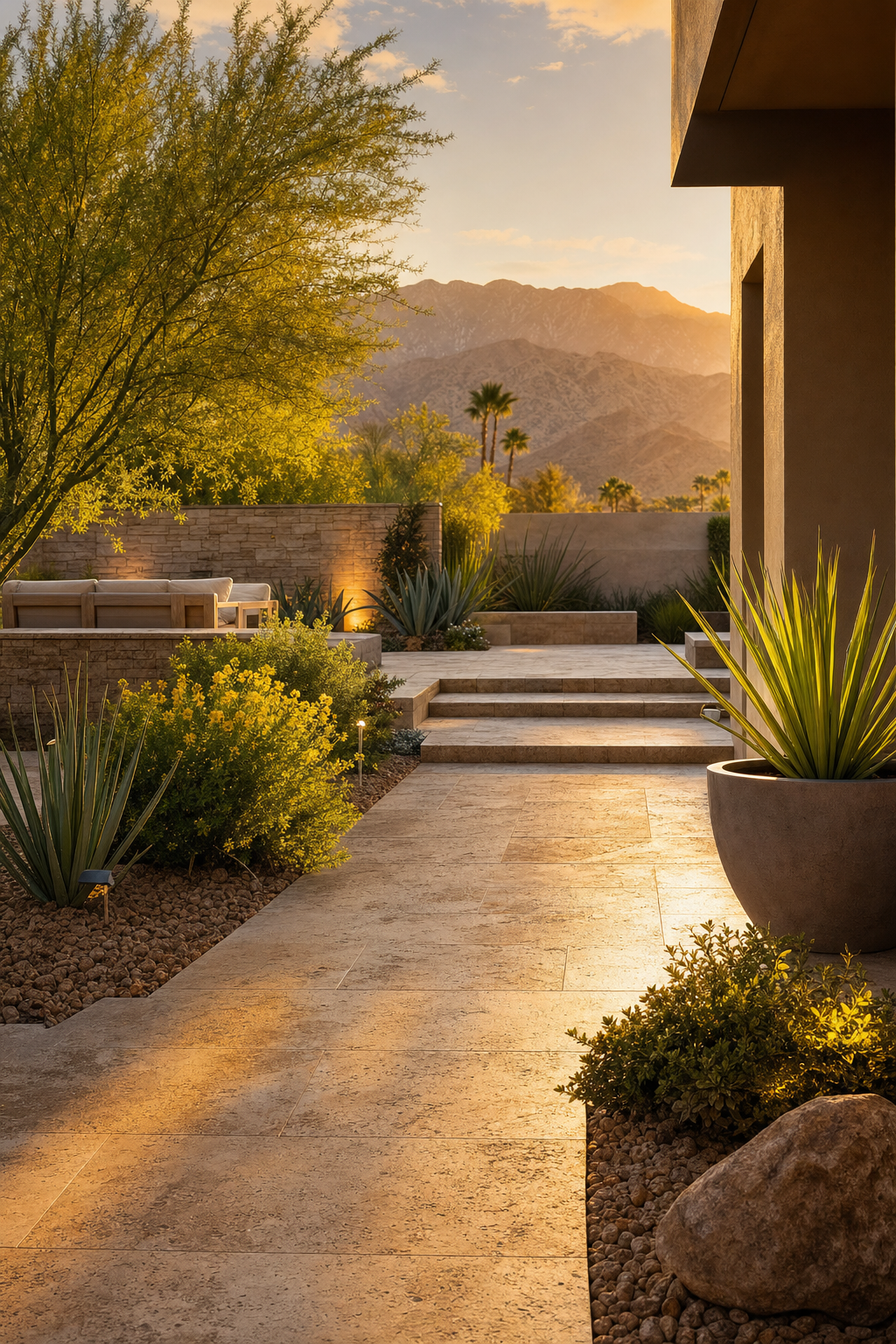
Lighting up your custom stone patios for evening use requires more than just stringing wires. When installing outdoor living space utilities before pavers Palm Desert homeowners must coordinate the placement of electrical conduits to avoid interference with other systems. A critical rule in Palm Springs and Rancho Mirage is maintaining proper clearance; typically, you need at least 12 inches of horizontal separation between gas lines and electrical conduits to prevent hazards and meet local safety codes.
High-voltage lines powering outdoor refrigerators, grills, or high-draw patio heaters require rigid conduit, usually Schedule 40 or 80 PVC, buried at the correct depth to withstand the weight of the compacted base and pavers. Conversely, low-voltage landscape lighting and irrigation controls use smaller diameter runs. While some low-voltage wire is rated for direct burial, running it through a conduit under your pavers provides a permanent pathway that protects the wire from the desert’s shifting sands and potential rodent damage.
Wiring Type | Typical Use Case | Conduit Requirement |
|---|---|---|
High-Voltage (120V/240V) | Refrigerators, Grills, Outlets | Rigid Schedule 40/80 PVC |
Low-Voltage (12V-24V) | Accent Lighting, Path Lights | Conduit recommended under pavers |
Data/Communication | Wi-Fi Extenders, Audio Systems | Shielded cable in dedicated conduit |
Modern hardscape design services now involve more than just power. You should also pull shielded Category 6 (Cat6) data cables for outdoor Wi-Fi extenders or hardwired sound systems. Wireless signals often struggle to penetrate thick stucco walls or reach the far corners of a large Coachella Valley lot; placing these data lines in their own dedicated conduit ensures your smart backyard remains connected without visible wires draped over your walls or tucked under the edge of the pavers.
Managing Water: Drainage and Irrigation Sleeves
Managing water in the Coachella Valley often feels like a secondary concern because of our arid climate, but the occasional monsoon can wreak havoc on poorly planned hardscapes. In communities like Indio or Desert Hot Springs, the sandy soil is highly permeable, yet it is also prone to rapid erosion. If surface water is not directed away from your custom stone patios, it can wash out the fine bedding sand beneath the pavers, leading to significant settling and structural failure. Addressing these outdoor living space utilities before pavers Palm Desert installations are finalized ensures that your foundation remains stable even during intense desert downpours.
We utilize a proactive sleeving method for all landscape lighting and irrigation runs. This involves burying 3 to 4 inch PVC pipes beneath the primary hardscape area before the sub-base is compacted. These sleeves act as permanent tunnels, allowing for future repairs or the addition of new irrigation zones for desert landscaping without ever needing to lift a single stone. If a poly-pipe fails years down the road, it can be pulled through the sleeve and replaced in minutes.
Sleeve Component | Recommended Material | Primary Purpose |
|---|---|---|
Irrigation Sleeve | 3" - 4" Schedule 40 PVC | Protects water lines and allows easy replacement |
Drainage Pipe | 4" Perforated or Solid PVC | Channels runoff away from home foundation |
Surface Drains | Deck Drains or Channel Drains | Collects water at the edge of pool decks or patios |
Proper grading is the final piece of the water management puzzle. A professional hardscape design services plan incorporates a minimum slope of one quarter inch per foot away from the residence. This prevents water from pooling against the home foundation or undercutting the paver edges, a critical detail in our environment where soil expansion and contraction can cause long term damage.
The Future-Proofing Strategy: Running Extra Sleeves
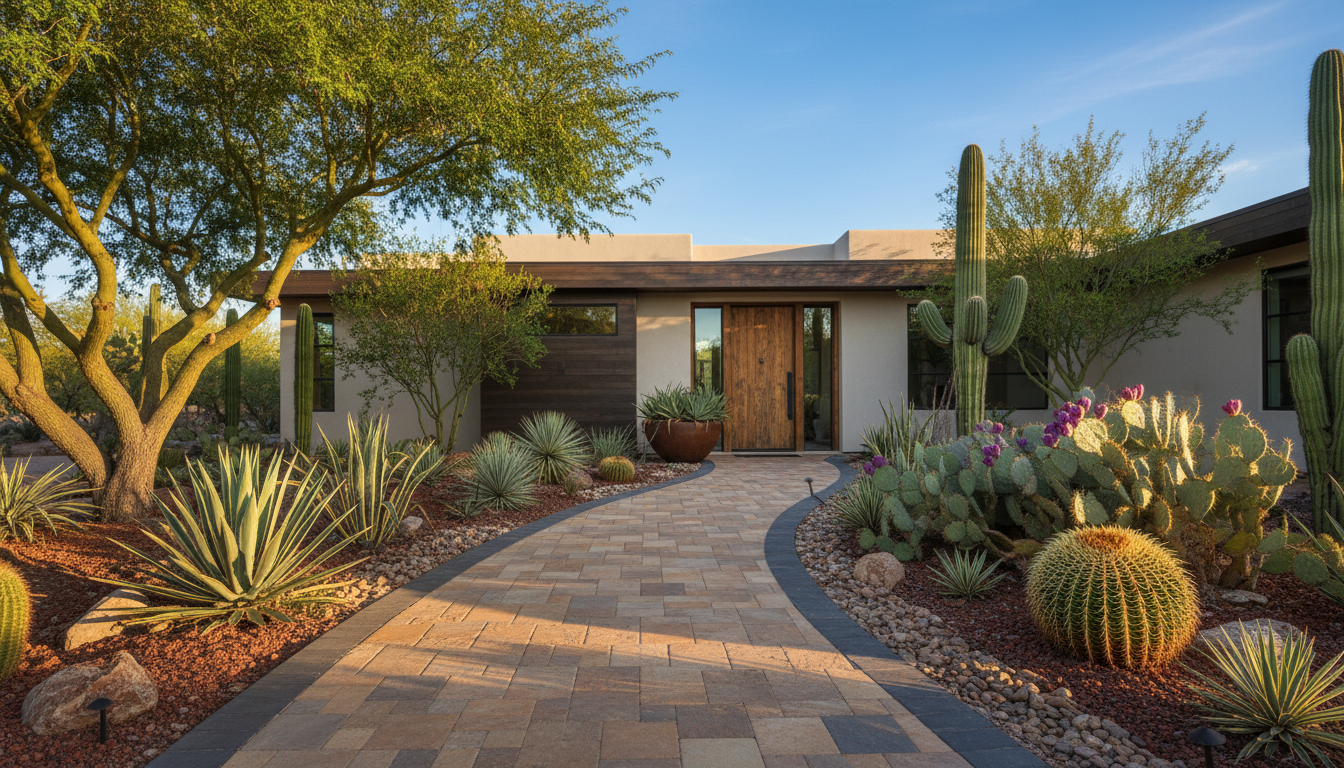
While the immediate needs of your project dictate the current utility layout, the most sophisticated hardscape design services incorporate a ghost sleeve strategy. This involves burying empty, capped lengths of 2 to 4 inch Schedule 40 PVC pipe beneath primary thoroughfares, particularly driveways and major walkways. These sleeves act as future access ports, ensuring that your custom stone patios remain undisturbed if you decide to expand your amenities several years down the road.
The benefit of this expert gap strategy is especially clear for larger Indian Wells or La Quinta properties where landscaping goals often evolve in phases. For example, you might install the primary patio today but realize later that the far corner of the yard requires additional landscape lighting and irrigation to support a new garden bed or a satellite seating area. Without these pre-installed conduits, a contractor would have to use a costly horizontal boring tool or, in the worst case, dismantle a section of your pavers. By placing these outdoor living space utilities before pavers Palm Desert project completion, you create a modular infrastructure. We recommend running at least one spare sleeve every 20 feet along significant hardscape barriers to provide total coverage for future electrical or water needs. This simple, low cost addition during the excavation phase protects the long term value of your masonry investment.
Common Patio Design Mistakes to Avoid in the Coachella Valley
The most frequent errors we see in Indio and Desert Hot Springs stem from a lack of coordination between the utility installer and the paver contractor. A primary mistake is failing to account for the total thickness of the paver base when calculating burial depth. In a typical Palm Desert installation, we might excavate six inches for a compacted rock base and another inch for bedding sand. If a gas or water line is measured from the existing soil surface rather than the finished grade, it may end up significantly shallower than local code requires once the site is excavated. This oversight compromises the safety of your outdoor living space utilities before pavers Palm Desert projects are even finished.
Another common oversight involves high-draw electrical loads. While basic landscape lighting and irrigation systems require minimal power, modern luxuries like electric infrared patio heaters or high-end outdoor sound systems can easily overload a standard 15-amp circuit. Homeowners often forget to run dedicated lines for outdoor refrigerators, particularly overlooking the dedicated water line needed for integrated ice makers. In the Coachella Valley heat, a refrigerator struggling to maintain temperature in 115-degree weather will draw maximum power; inadequate wire gauging or shared circuits often lead to tripped breakers and premature appliance failure.
Design Oversight | Impact in Coachella Valley | Professional Solution |
|---|---|---|
Shallow Utility Lines | Heat transfer from pavers can damage pipes | Measure depth from finished grade, not raw soil |
Undersized Electrical | Tripped breakers from heaters or pumps | Dedicated 20-amp circuits for high-draw appliances |
Missing Water Line | No ice maker or sink functionality | Run 1/4" or 1/2" copper/PEX in a protective sleeve |
Rigid Pipe in Shifting Soil | Cracking due to expansion/contraction | Use flexible connections or sand-bedding in trenches |
In communities like Mecca or Thermal, where soil expansion and contraction are more pronounced, failing to use proper bedding material in utility trenches can lead to pavers sinking directly over the pipe runs. Expert hardscape design services ensure that trenches are backfilled with stabilized material and compacted in lifts to prevent the telltale "trench line" from appearing in your custom stone patios months after the job is done.
Planning your in-ground utilities before laying pavers is the best way to ensure a seamless and durable result. By addressing irrigation, drainage, and lighting early, you avoid the need for costly future adjustments. If you want expert help navigating these complexities, our team is ready to assist with your project vision. You can explore our various options for Outdoor Living to see how these integrated systems enhance your space. We focus on precision so your project remains beautiful and functional for years to come.