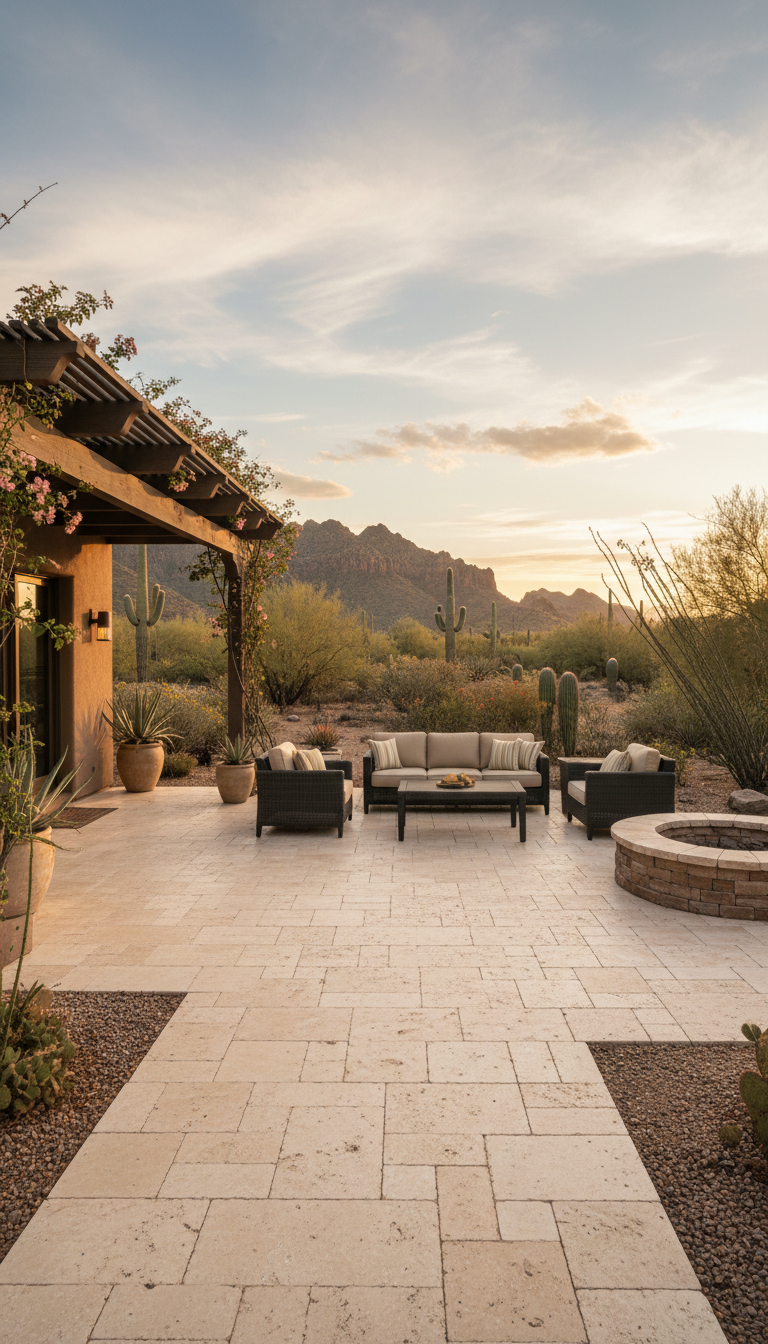
Travertine is the superior choice for a pool deck in high-heat climates because it remains significantly cooler to the touch and offers better slip resistance than concrete. When comparing a travertine vs pavers pool deck, travertine can stay up to 30 degrees cooler than concrete alternatives; however, it requires a higher initial investment for its luxury appearance and long-term durability.
Building a luxury pool in Palm Desert requires more than just picking a pretty stone. When the afternoon sun hits the Coachella Valley, your deck surface can quickly become an unbearable hazard for bare feet. This decision goes beyond simple curb appeal; it involves balancing thermal performance with long term durability in our specific desert climate. Whether you are leaning towards the natural elegance of travertine or the structural resilience of interlocking concrete pavers, the right choice determines how much you will actually enjoy your outdoor living space. In this guide, we evaluate these two leading materials across critical categories including heat retention, slip resistance, and maintenance requirements. You will gain the expert insights needed to select a surface that remains cool under the desert sun while providing a sophisticated, lasting foundation for your backyard transformation.
The Palm Desert Pool Deck Dilemma: Natural Stone or Concrete Pavers
Designing a pool deck in the Coachella Valley requires balancing sophisticated aesthetics with the reality of three months of triple-digit heat. In Palm Desert, the ground temperature can easily exceed 140 degrees, turning a beautiful backyard into a hazardous zone where footwear becomes mandatory. Selecting the right material is not just a matter of style; it is a critical decision that affects thermal comfort, poolside safety, and long term property value.
The debate over a travertine vs pavers pool deck typically pits natural luxury against engineered versatility. Travertine, a sedimentary limestone, is prized for its organic textures and an innate ability to remain cool under the intense California sun. In contrast, concrete pavers provide a robust, highly customizable solution for high-end hardscaping design, offering strength and modern geometric patterns that complement contemporary desert architecture.
While both materials are staples in premium Palm Desert landscapes, they perform differently under local conditions. Factors such as porosity, UV resistance, and mineral composition determine if a surface will be a welcoming retreat or a scorching heat sink. Understanding these technical differences is essential for homeowners who want a seamless transition from their indoor living areas to their outdoor oasis without compromising on bare-foot comfort.
Heat Retention: Is Travertine Too Hot for a Pool Deck in Palm Desert?
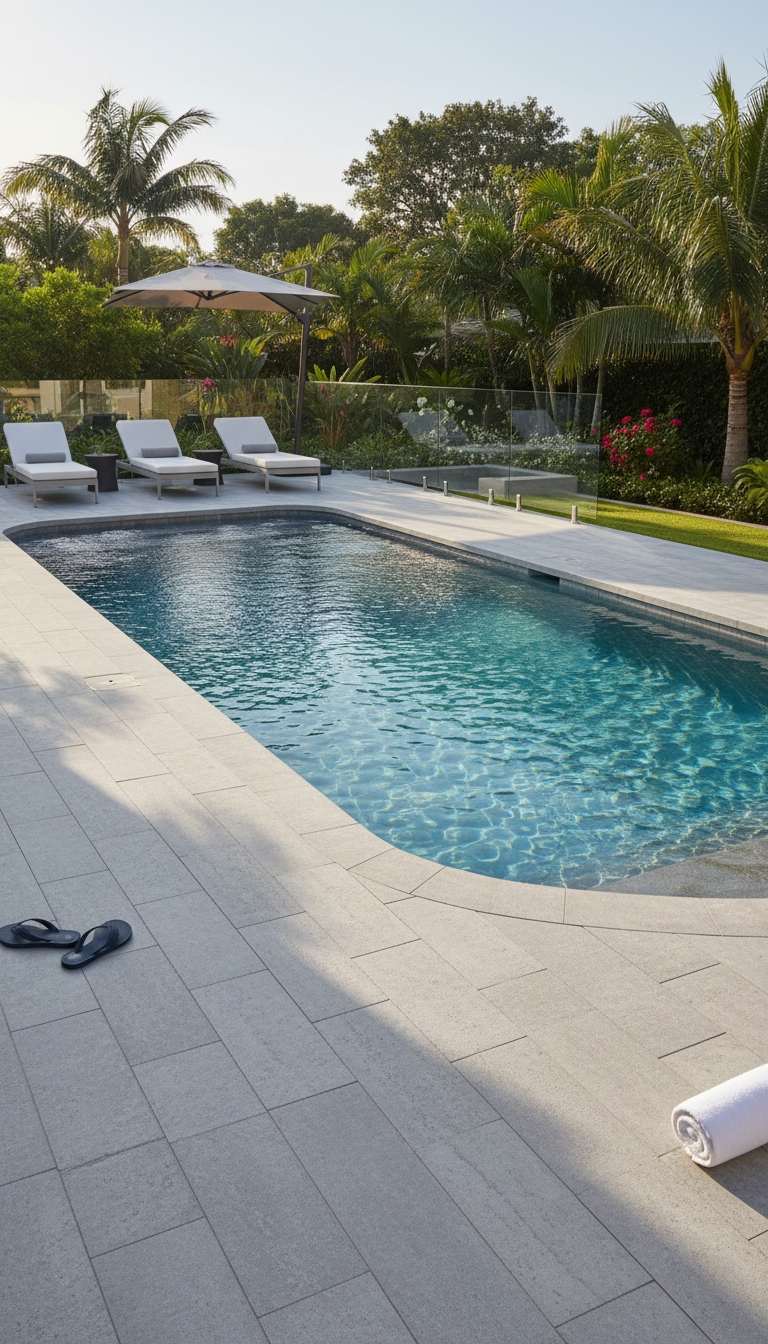
For Coachella Valley homeowners, the primary concern when evaluating a travertine vs pavers pool deck is thermal comfort. In a region where July temperatures routinely exceed 110 degrees, the surface material underfoot can reach dangerous levels. Travertine is not too hot for a Palm Desert pool deck; in fact, it is widely considered the coolest natural material available for high-exposure environments.
The science behind this cooling effect lies in the stone's mineral composition and physical structure. Unlike concrete pavers, which contain metal oxides that absorb and store thermal energy, travertine is a sedimentary limestone largely devoid of these conductive elements. Additionally, its natural porosity creates micro-voids throughout the stone. These air pockets act as insulators, allowing heat to dissipate rapidly into the earth rather than radiating back through the soles of your feet.
Material Type | Avg. Surface Temp (100°F Air) | Thermal Behavior |
|---|---|---|
Travertine Paver | 108°F - 115°F | Heat dissipating (porous) |
Light Concrete Paver | 125°F - 135°F | Heat retentive |
Dark Concrete Paver | 145°F - 155°F | Highly conductive |
Empirical data shows that travertine remains 20 to 30 degrees cooler than concrete under direct midday sun. While dark-colored concrete pavers can become scorching heat sinks in the desert, light-toned travertine allows for a comfortable barefoot walk from the house to the water. This thermal performance is a hallmark of high-end hardscaping design in the desert, ensuring the pool area remains functional even during peak summer hours. By selecting materials that mitigate the extreme desert climate, you create a space that is as practical as it is luxurious.
Slip Resistance and Safety in Wet Areas
Safety in the splash zone is as vital as heat management. When evaluating a travertine vs pavers pool deck, the coefficient of friction under wet conditions determines the long-term usability of your outdoor space. Travertine is inherently slip-resistant due to its microscopic capillary structure. This natural limestone acts like a dense sponge, drawing moisture into its pores rather than allowing water to bead on the surface. To maintain this safety feature, we strictly specify tumbled or brushed finishes for pool surrounds. Honed and filled travertine, while beautiful for indoor entryways, becomes dangerously slick when wet and should be avoided in the backyard.
Concrete pavers achieve safety through mechanical texturing. Manufacturers emboss the surface or use specialized aggregate mixes to create a tactile grip. In our high-end hardscaping design projects, we select pavers with specific textures, such as slate-top or sand-wash finishes, that provide traction without feeling abrasive on bare feet.
Surface Finish | Slip Resistance Level | Best Application |
|---|---|---|
Tumbled Travertine | High | Pool Decks and Wet Areas |
Textured Concrete Paver | High | Driveways and Pool Surrounds |
Honed & Filled Travertine | Low | Covered Patios and Interiors |
Smooth Concrete Paver | Medium | Pedestrian Walkways |
We evaluate the specific splash patterns and drainage of your Palm Desert property to recommend the safest texture for your family and guests, ensuring the transition from water to stone is secure.
Durability and Maintenance in the Coachella Valley Climate
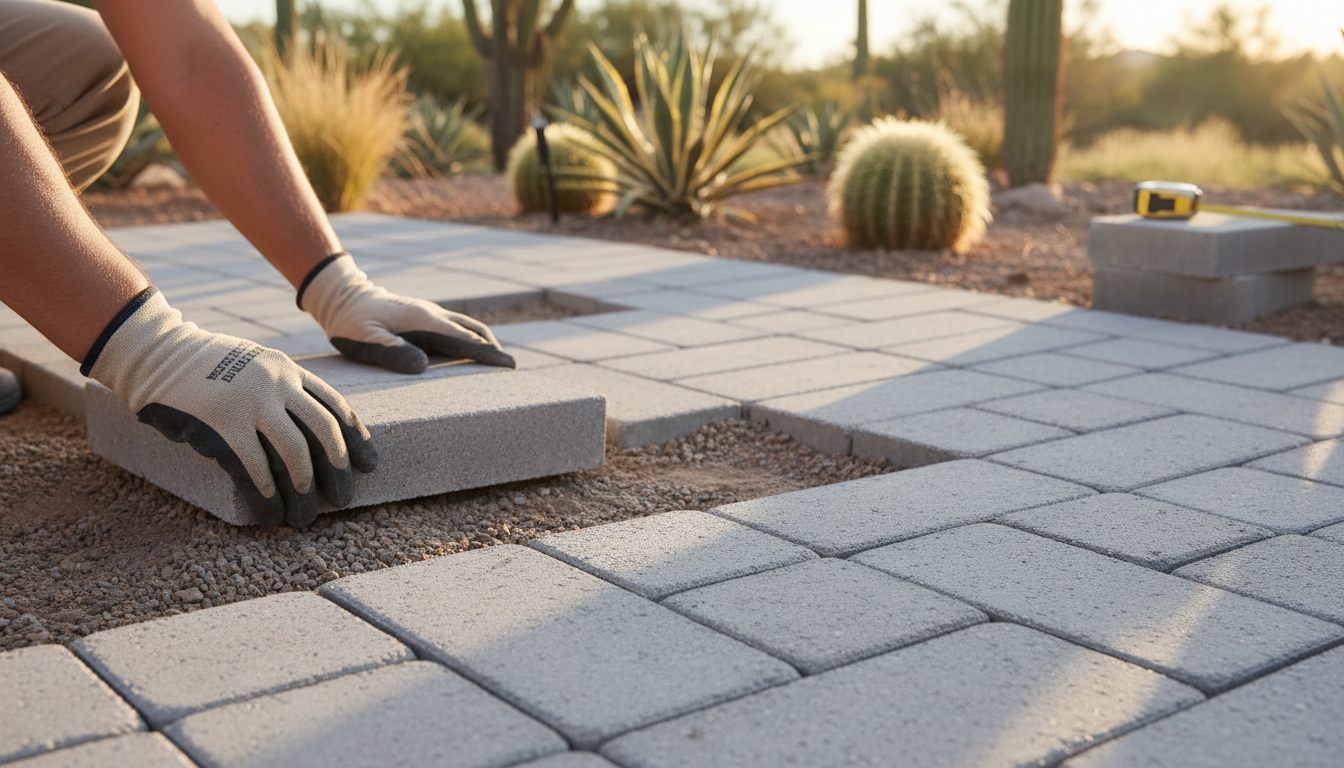
Maintaining a pristine outdoor environment in Palm Desert requires materials that can withstand the Coachella Valley’s specific environmental stresses. When comparing a travertine vs pavers pool deck, durability is measured by how well a surface resists UV degradation and chemical exposure. Travertine, as a natural limestone, is remarkably resilient to temperature fluctuations. Because it is a natural product, its color is structurally integrated into the stone; it will not fade under the relentless desert sun. However, its porous nature means it requires periodic professional sealing. This protective barrier prevents minerals in the water or organic debris from desert winds from causing deep-seated stains.
Concrete pavers offer superior compressive strength, making them excellent for areas that might occasionally support heavy furniture or high foot traffic. Modern manufacturing utilizes high-density mixes to ensure longevity, but unlike natural stone, concrete pavers use pigments that may experience subtle color shifts after decades of intense UV exposure.
Durability Factor | Travertine (Natural Stone) | Concrete Pavers (Engineered) |
|---|---|---|
UV Resistance | Excellent (No fading) | Good (Potential minor fading) |
Chemical Resistance | High (Requires sealing) | High (Salt/Chlorine resistant) |
Load Bearing | High (Pedestrian/Light traffic) | Superior (Heavy furniture/Vehicles) |
Maintenance | Annual or bi-annual sealing | Periodic joint sand top-off |
Success for both materials depends heavily on the sub-base. The shifting sands of the Coachella Valley require a compacted, multi-layer foundation to prevent settling. Our approach to high-end hardscaping design prioritizes this structural integrity, ensuring that neither natural stone nor engineered pavers shift or crack as the desert soil reacts to moisture changes. Proper installation transforms these materials into a permanent fixture of your custom stone patios, capable of handling both the chemical load of a saltwater pool and the physical demands of the desert landscape.
Travertine vs Pavers Pool Deck Cost per Square Foot
Budgeting for a pool renovation in the Coachella Valley requires balancing immediate expenses against the long-term appreciation of the property. A travertine vs pavers pool deck presents a clear pricing gap, largely dictated by the logistics of sourcing natural stone versus manufactured concrete. In the Palm Desert market, travertine typically carries a 30 to 40 percent premium over high-quality concrete alternatives. This price difference covers the specialized quarrying, international shipping, and the careful selection of stone modules to ensure color consistency across the project.
Cost Component | Concrete Pavers (Installed per sq. ft.) | Travertine (Installed per sq. ft.) |
|---|---|---|
Material Selection | $4.00 – $8.50 | $9.00 – $17.00 |
Professional Installation | $8.00 – $12.50 | $10.00 – $15.00 |
Total Estimated Range | $12.00 – $21.00 | $19.00 – $32.00 |
Professional installation costs for travertine are slightly higher due to the precision required in handling natural stone and the necessity of high-grade sealants. While concrete pavers offer a lower entry point, the higher investment in custom stone patios built with travertine pays dividends in desert luxury. In Palm Desert real estate, barefoot comfort is a premium feature. The ability to traverse the pool deck comfortably in July without footwear is a tangible asset that enhances the daily utility and the eventual resale value of the home.
Design Trends for Palm Desert Outdoor Living
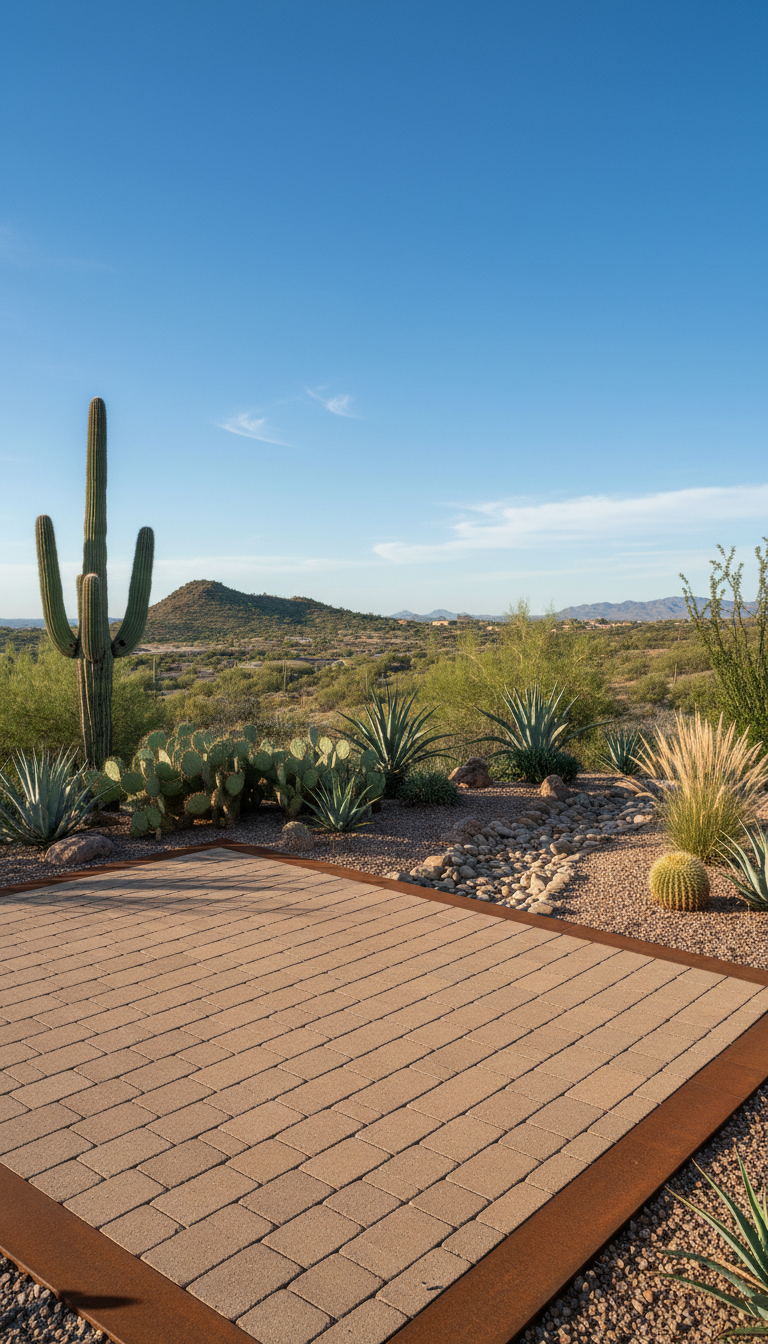
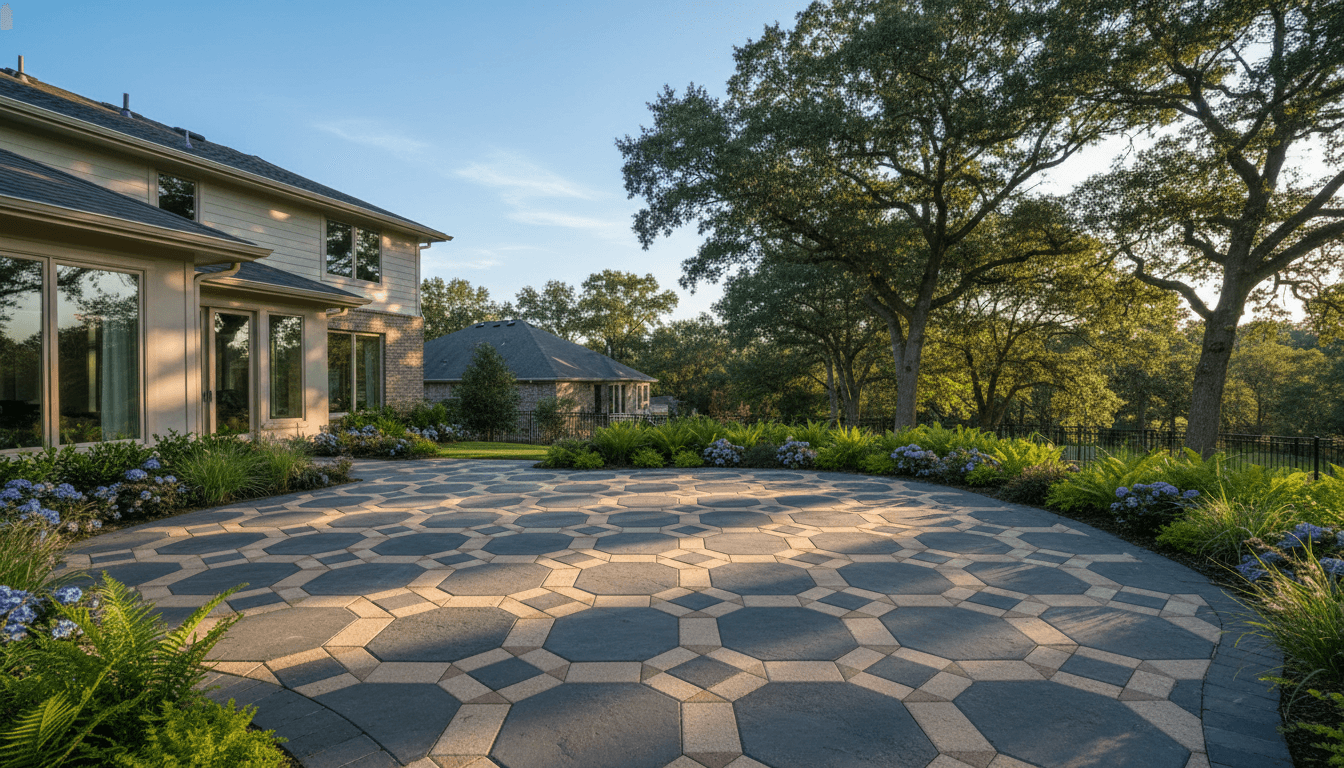
Beyond the technical performance, the choice between a travertine vs pavers pool deck defines the architectural character of your property. Travertine caters to an Old World or Mediterranean aesthetic, characterized by tumbled edges and a rich palette of crema, walnut, and gold tones. These natural variations ensure that no two installations are identical, providing an organic warmth that complements local xeriscaping and the rugged backdrop of the Santa Rosa Mountains.
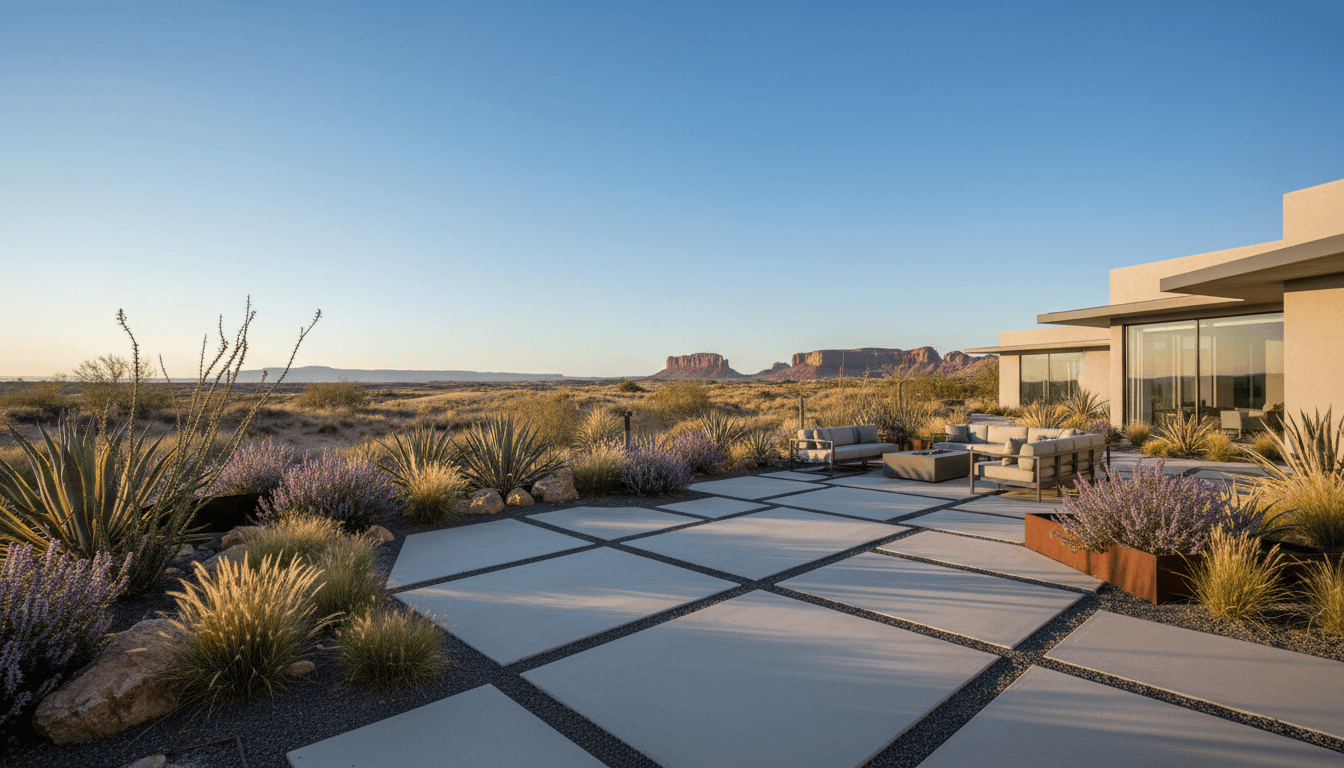
Modern concrete pavers lean into the Desert Modern movement. By utilizing large format slabs and tight, geometric patterns, designers can create a sleek, minimalist look that mirrors the clean lines of mid-century architecture. This style integrates seamlessly with contemporary elements like corten steel edging and linear fire features, offering a structured contrast to the wild textures of desert flora.
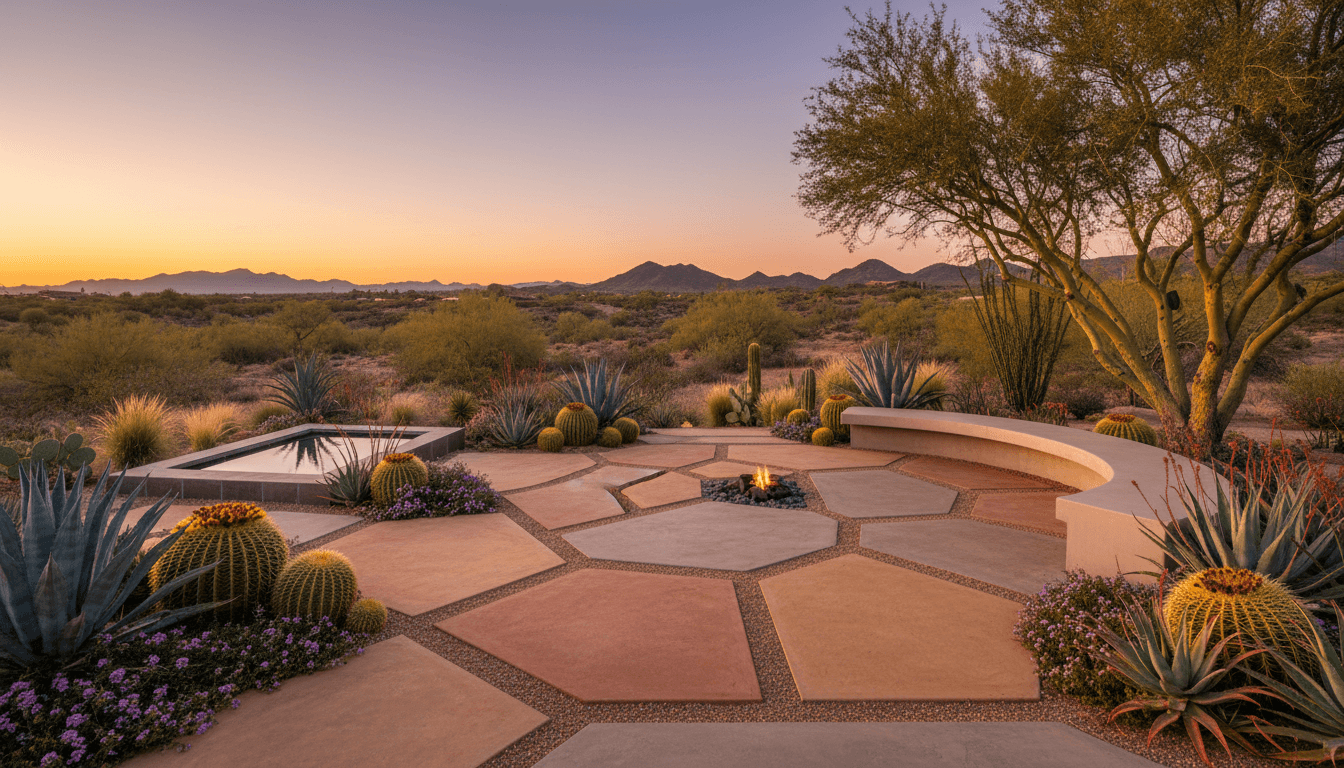
Both materials serve as a sophisticated canvas for high-end hardscaping design. We often pair the cool, neutral tones of silver travertine with architectural succulents like Agave Americana or Blue Glow to create a high-contrast palette. When these custom stone patios are integrated with low-voltage lighting that highlights the stone's texture, the pool area transforms into a high-impact visual statement after sunset, bridging the gap between functional utility and luxury desert living.
Making the Final Decision for Your Backyard Transformation
Finalizing your selection requires weighing immediate budgetary constraints against long term thermal performance. If the priority is a surface that allows children and pets to walk comfortably during a July afternoon, the natural cooling properties of travertine make it the clear frontrunner. For those focused on modern, geometric precision and maximum load-bearing capacity at a lower price point, premium concrete pavers provide an excellent alternative.
The decision often comes down to the tactile experience of the stone. While concrete pavers offer uniformity, the organic variations of custom stone patios provide a unique luxury that engineered products cannot replicate. In the Coachella Valley, we recommend travertine for most pool surrounds to ensure the space remains usable throughout the peak summer months.
Evaluating a travertine vs pavers pool deck is best done in the specific lighting of your backyard. Seeing how the stone reacts to the intense Palm Desert sun and how its texture feels against the skin is essential. We invite you to schedule a consultation to view physical samples and discuss how our high-end hardscaping design can transform your outdoor space into a functional, sophisticated retreat.
Deciding between travertine and pavers for your Palm Desert pool deck ultimately comes down to balancing heat resistance with your personal style. While travertine offers a naturally cool surface, pavers provide unmatched durability and a wide range of design options. If you want expert help navigating these choices, our team can guide you through the planning process. We specialize in creating beautiful Stone Patios that withstand the desert sun perfectly. Reaching out for a professional consultation ensures your investment lasts for many seasons to come.