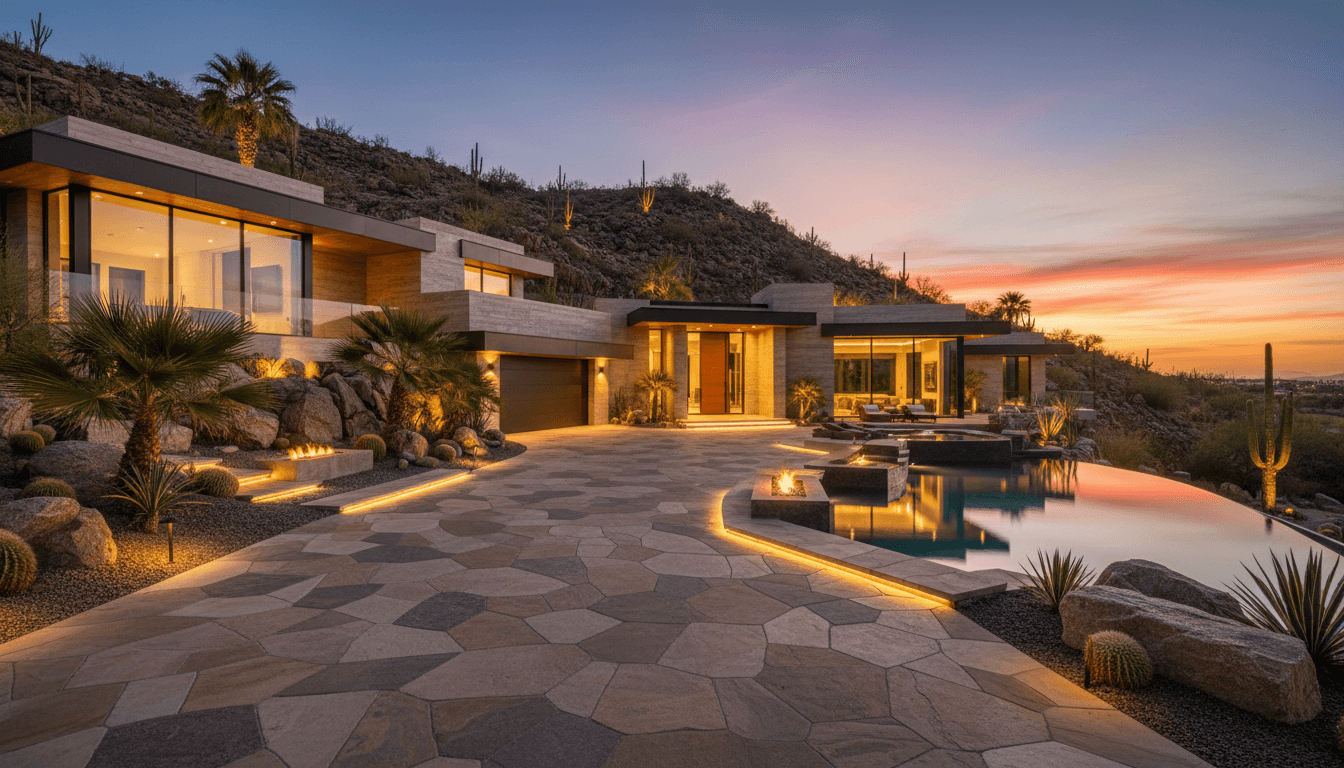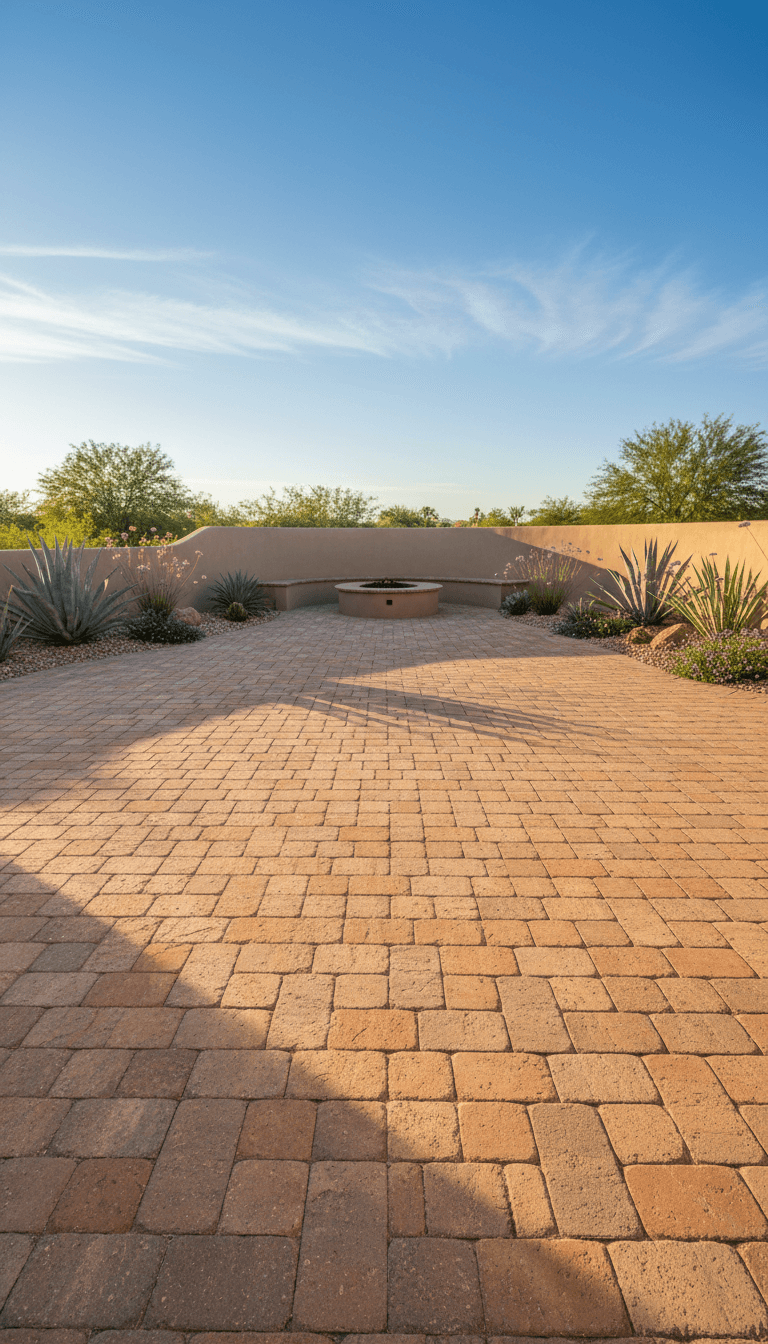
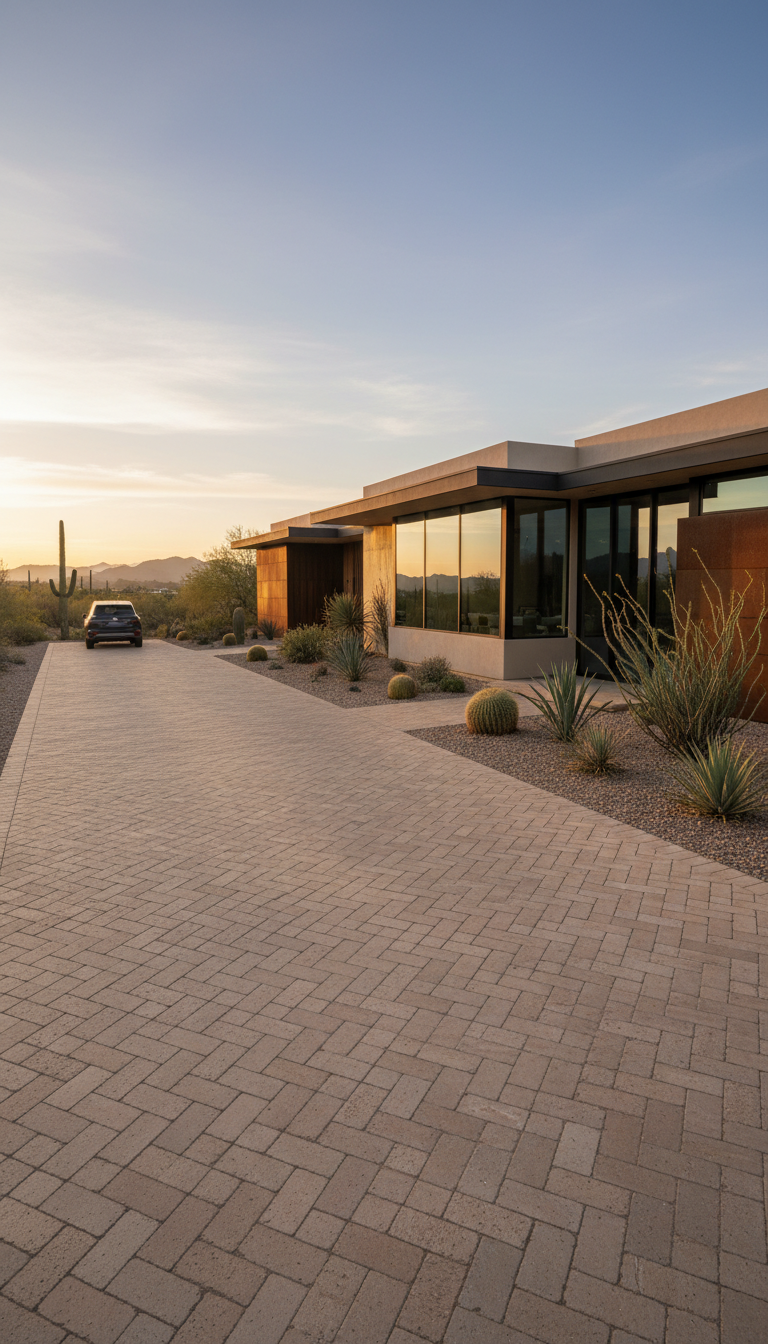
A durable desert installation requires specialized base preparation that accounts for caliche soil and extreme temperature fluctuations common in arid regions. Professionals must also prioritize robust drainage systems to withstand flash floods; furthermore, choosing heat-resistant materials ensures the hardscape maintains its structural integrity under intense sun and high winds.
Many Coachella Valley homeowners view hardscaping as a purely aesthetic choice, yet they often overlook the brutal engineering challenges lurking beneath the surface. When a desert installation fails, it usually begins with a misunderstanding of the local environment. High temperatures and unstable soil conditions can quickly turn a premium investment into a series of shifting, uneven pavers. To ensure your outdoor space remains a permanent fixture of your home, you must account for the specific geological and climatic demands of the Palm Desert region. This guide explores the critical steps of professional site preparation. You will learn how to navigate caliche layers, manage thermal expansion during peak summer months, and implement drainage strategies that withstand seasonal flash floods. By mastering these foundational principles, you can secure a hardscape that thrives in the extreme desert landscape.
Why Desert Installation Requires a Different Engineering Mindset
A premium hardscape project in the Coachella Valley is a feat of engineering as much as it is a design choice. While the aesthetics of stone patios often take center stage, the longevity of the installation depends entirely on the invisible half of the project: the site preparation and subgrade engineering. Standard landscaping guides often suggest a universal approach to base layers and compaction, but these generic methods frequently fail when subjected to the environmental extremes of Palm Desert.
A successful desert installation must account for three specific variables that do not exist in more temperate climates. First, caliche soil layers act as natural concrete, preventing proper drainage if not correctly addressed. Second, the extreme thermal expansion caused by 120 degree summer days can force pavers to shift or heave if the edge restraints and jointing materials lack the necessary flexibility. Finally, intense UV exposure degrades standard materials far faster than elsewhere in the country.
At Pavers Pavers Pavers, we approach every project, from walkways to custom driveways, with a focus on these regional technicalities. We understand that in our environment, a patio is only as stable as the soil stabilization and thermal planning beneath it. Building for the desert requires moving beyond standard practices to implement solutions tailored to the unique geological and climatic pressures of the region.
Navigating Palm Desert Soil: From Sandy Pockets to Caliche Layers
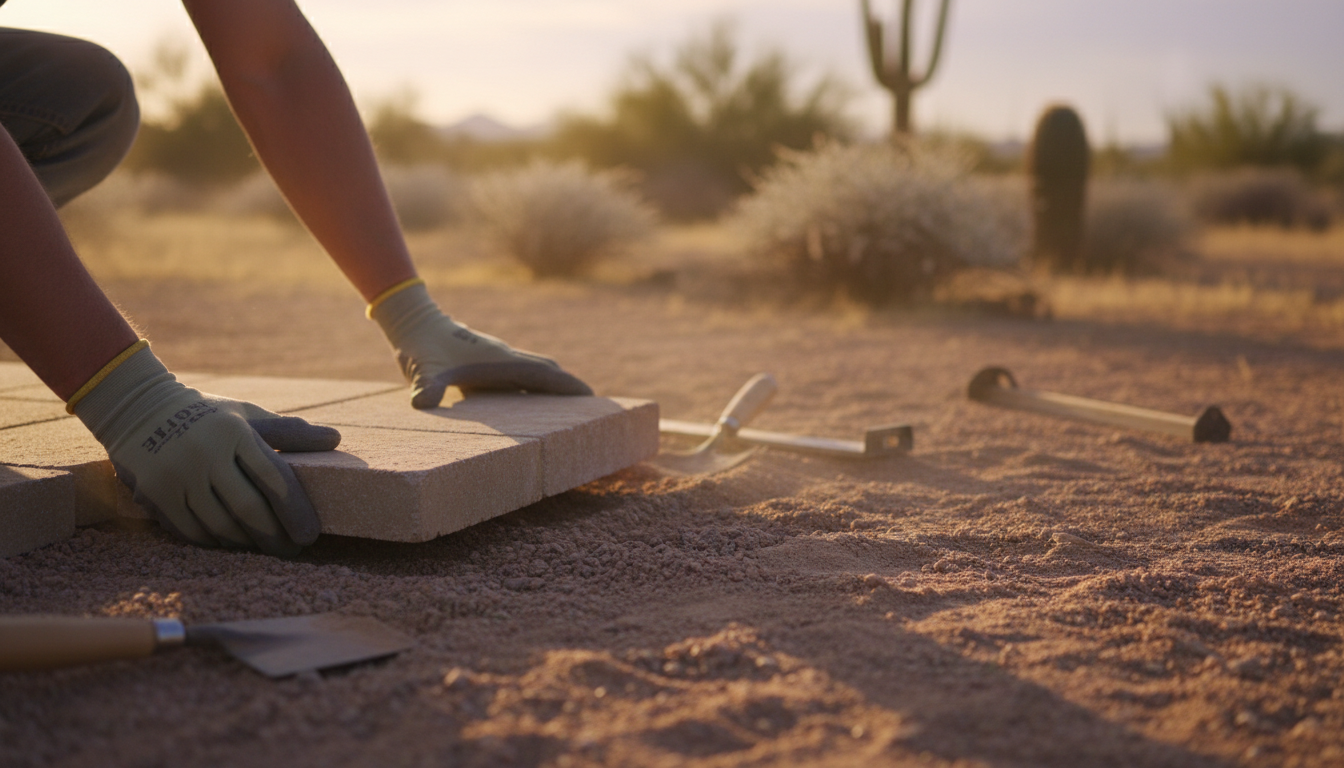
Understanding the subterranean landscape is the first technical hurdle for any project in the Coachella Valley. Unlike temperate regions where topsoil is relatively consistent, Palm Desert features a geological binary: loose, alluvial sands and impenetrable caliche layers. Identifying which one sits beneath your property dictates the entire engineering approach for a long lasting desert installation.
Caliche is particularly notorious among local engineers. These deposits of calcium carbonate act as a secondary, natural concrete layer beneath the surface. While it provides a stable foundation for load bearing, its lack of porosity creates significant drainage risks. If a contractor installs stone patios directly over a shallow caliche shelf without proper remediation, seasonal rains have nowhere to go. The water traps between the pavers and the caliche, saturating the bedding sand and causing the surface to shift or float. In these instances, we often need to penetrate the layer or design specialized drainage channels to ensure moisture exits the site.
Conversely, the sandy pockets found closer to the valley floor present the opposite challenge: instability. Desert sand lacks the cohesive organic matter found in other climates. Without a rigorous soil assessment, a standard base layer for custom driveways may simply sink or displace under the weight of a vehicle. This is why we prioritize high density compaction and, in some cases, geogrid reinforcement to bridge the gaps in loose soil.
A site specific soil assessment is non negotiable. We evaluate the depth of the caliche and the silt content of the sand to determine if extra excavation is required. This phase determines whether we need to remove six inches of native soil or twelve, and whether the subgrade requires specific stabilization or mechanical vibration. Ignoring these nuances often leads to the uneven surfaces seen in amateur projects, where one side of a patio rests on rock hard caliche while the other settles into shifting sand.
How Deep Should a Paver Base Be in Desert Soil?
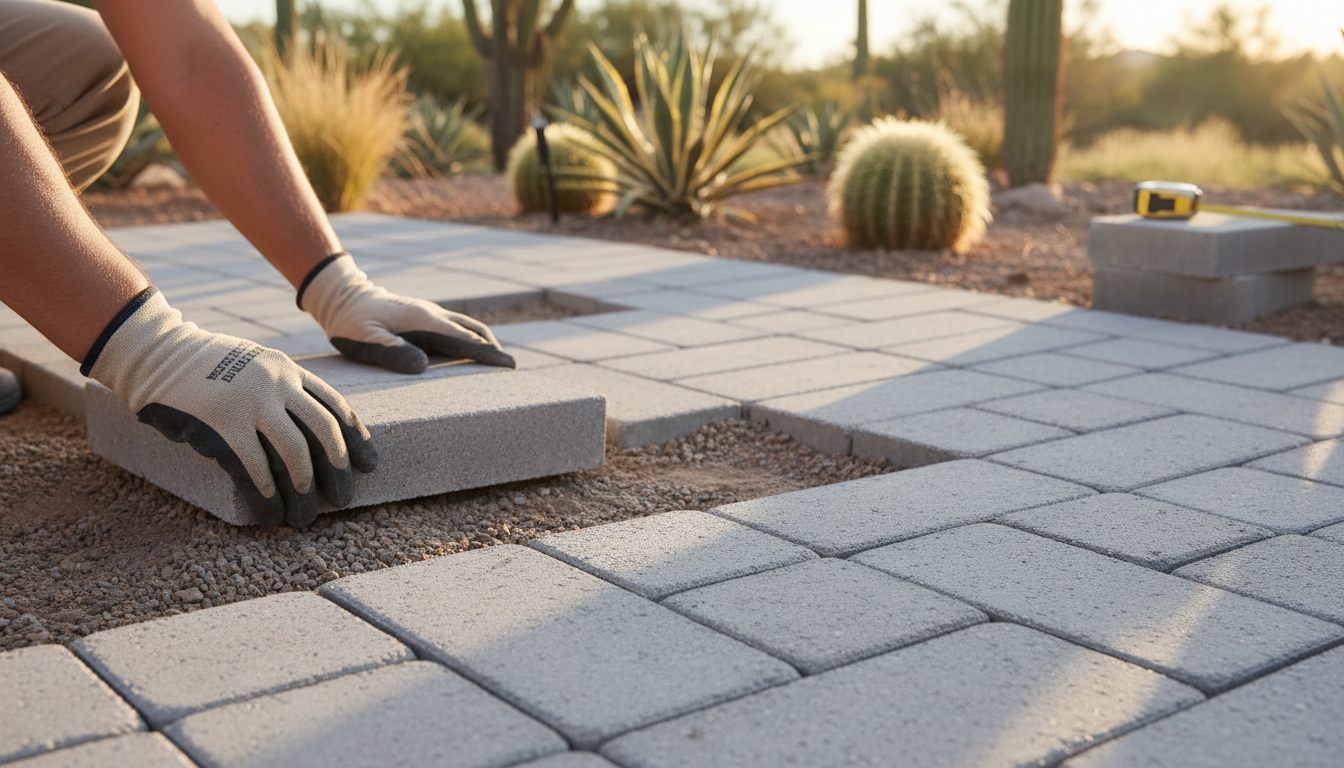
Determining the correct excavation depth is the most critical calculation in a desert installation. The question of how deep a paver base should be depends entirely on the intended use of the surface and the load it must support. In the Coachella Valley, where soil can transition from rock-hard caliche to shifting sand within a few feet, standard residential depths are often insufficient.
For pedestrian areas like walkways and stone patios, we require a minimum of 4 to 6 inches of compacted Class II base. This depth provides a structural bridge over the native soil, ensuring that furniture and foot traffic do not cause individual pavers to dip. For custom driveways, the requirement increases significantly to 8 to 12 inches. This thicker profile is necessary to distribute the localized weight of vehicles, preventing the rutting and tire-track depressions common in subpar installations.
Project Type | Recommended Base Depth | Material Type |
|---|---|---|
Pedestrian Patios & Walkways | 4–6 Inches | Class II Road Base |
Residential Driveways | 8–12 Inches | Class II Road Base |
Heavy Vehicle Access | 12+ Inches | Reinforced Sub-base |
Depth is only half of the equation; the integrity of the base depends on subgrade compaction. Before the first bucket of base material is poured, the native desert sand must be vibrated to 95 percent proctor density. Because local sand is often exceptionally dry and loose, it lacks the natural cohesion found in clay-heavy regions. If this subgrade is not mechanically compacted to a professional density, the weight of the new hardscape will eventually force the sand to settle, leading to surface failure regardless of how much base material was used.
Combatting Thermal Expansion: Why Pavers Shift in Extreme Heat
Palm Desert summers often reach 120 degrees, a level of heat that fundamentally changes the physical properties of building materials. One of the most common questions property owners ask is why pavers shift in extreme heat. The answer lies in thermal expansion. Every individual unit in stone patios or custom driveways expands as it absorbs solar radiation. When thousands of pavers expand simultaneously without adequate relief, they exert massive lateral pressure on one another. If this pressure has nowhere to go, the surface will heave, causing pavers to pop up or the entire installation to buckle.
A durable desert installation must incorporate specialized flexibility to survive these cycles. Generic contractors often use rigid mortar joints or wet-set methods common in milder climates. However, mortar lacks the tensile strength to withstand the constant micro-movements of thermal cycles. In the Coachella Valley sun, mortar inevitably cracks, creating gaps that allow water and debris to reach the bedding layer and undermine the entire foundation.
We mitigate these forces by using high-performance edge restraints and specialized jointing sand. Our edge restraints are engineered to stay pinned in the native soil even as the pavers push outward under peak heat. We utilize specific jointing sands that act as a shock absorber, allowing each paver to move on a microscopic level without compromising the structural integrity of the field. This engineering approach accommodates the physics of the desert rather than fighting against it, ensuring the surface remains flat and aligned through decades of high-heat cycles.
Drainage Strategies for Flash Floods and Seasonal Rains
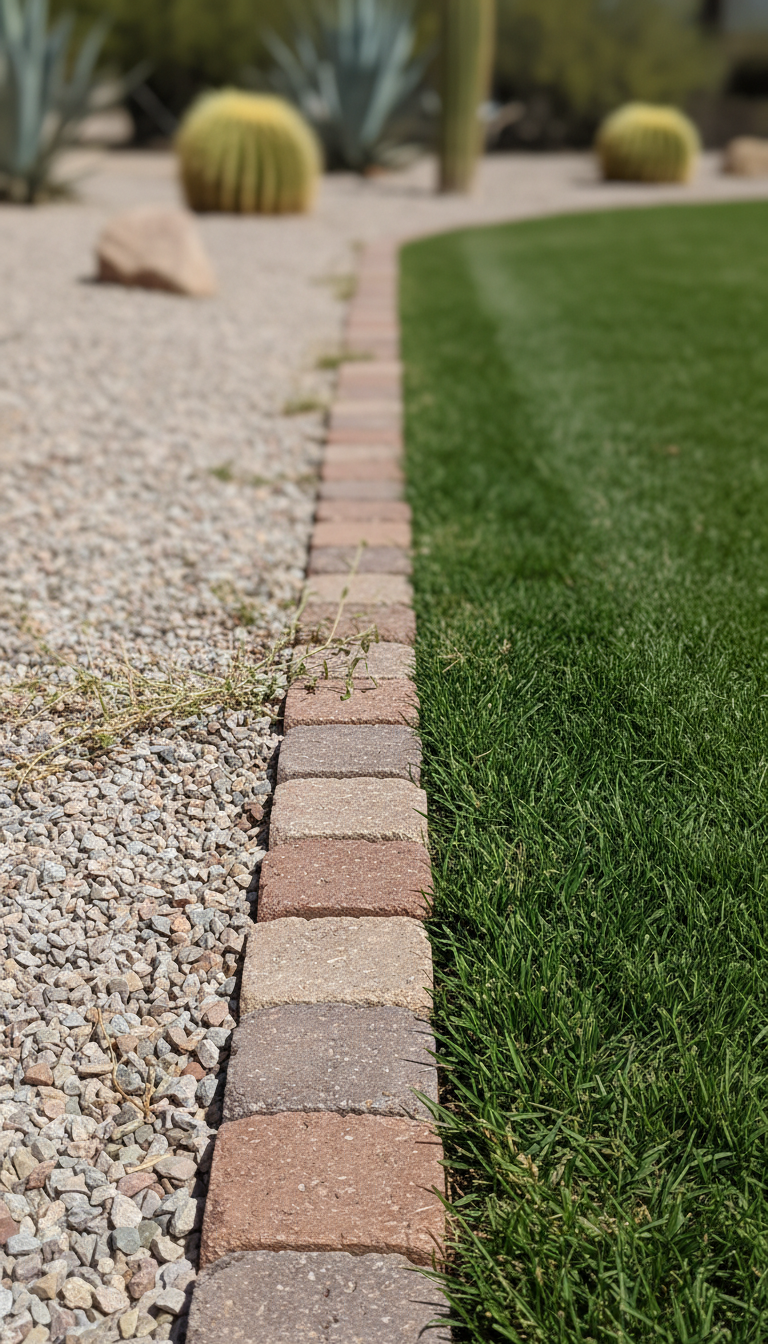
Managing the transition from extreme heat to the sudden, high volume deluges of the monsoon season requires a sophisticated drainage strategy. While Palm Desert is synonymous with aridity, the region experiences intense flash floods that can overwhelm standard hardscape designs. A successful desert installation must prioritize water mitigation to prevent hydrostatic pressure from lifting pavers or eroding the underlying bedding sand.
Engineered pitch is the first line of defense. Even in seemingly flat desert lots, we calculate a precise slope; typically a minimum of one inch of drop for every eight feet of distance; to direct water away from the home and toward designated catchment areas. Without this subtle grade, water pools on the surface, eventually seeping into the base and compromising the structural integrity of stone patios.
For properties located in flood prone zones or areas with heavy caliche deposits, we often implement permeable base systems. Unlike traditional compacted bases, permeable systems utilize open graded aggregates that allow water to infiltrate the ground directly through the joints. This prevents surface runoff from gaining the velocity needed to wash out jointing materials. By transforming a driveway or patio into a functional drainage plane, we protect custom driveways from the scouring effects of seasonal rains, ensuring the foundation remains stable regardless of the weather volume.
The Finishing Touch: UV Resistant Polymeric Sand and Sealing
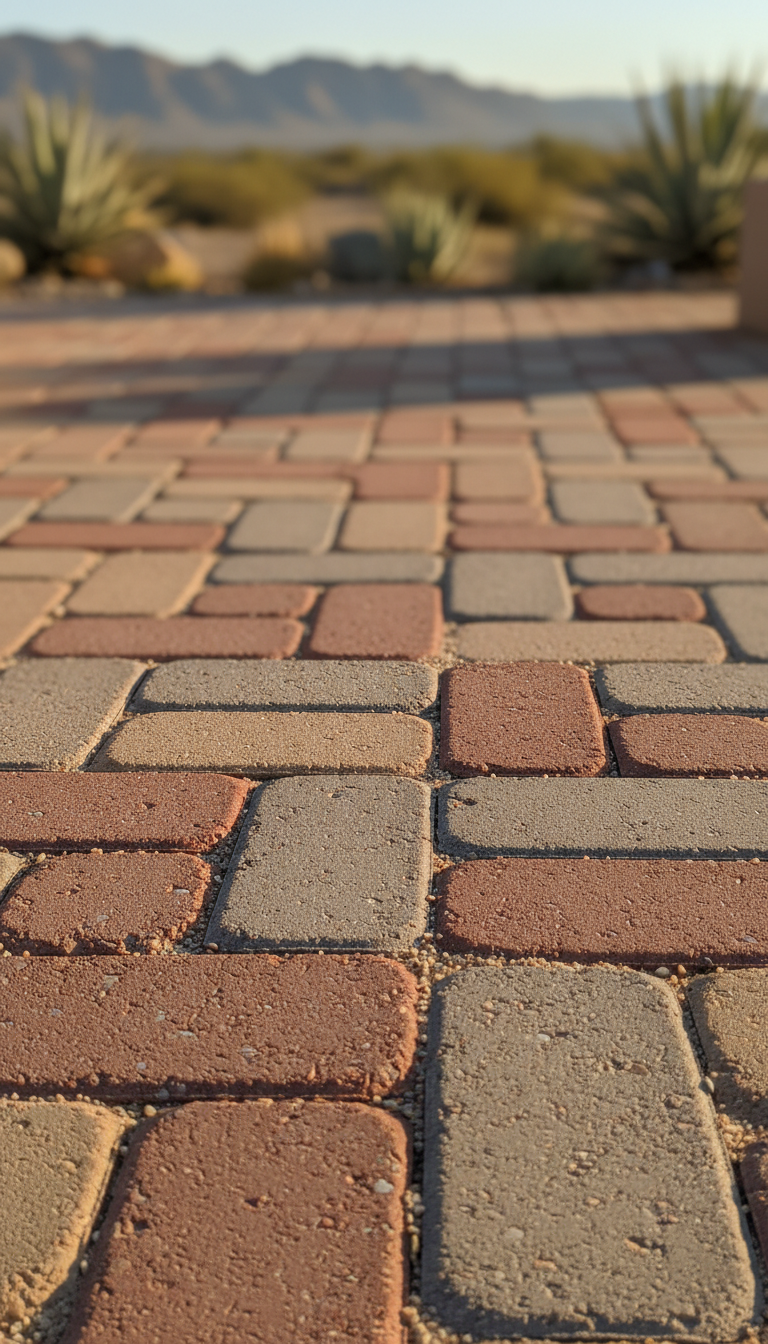
The final phase of a desert installation involves securing the surface against the very elements that define our region: wind and light. While the subgrade provides the structural foundation, the jointing material is what maintains the interlock. Standard masonry sand is ill-suited for the Coachella Valley. High winds can easily blow loose sand out of the joints, and the infrequent but heavy rains will wash it away, leaving the edges of stone patios unsupported and prone to chipping.
We utilize high-performance polymeric sand to prevent this erosion. This material uses specialized binders that, once activated with water, create a durable and flexible bond between units. However, in Palm Desert, the choice of polymer is critical. The intense UV index can degrade lower-grade binders, causing them to turn brittle and fail within a single season. We specify only professional-grade, heat-tested polymers that maintain their elasticity despite extreme surface temperatures.
Material Component | Benefit in Desert Climate |
|---|---|
UV-Resistant Binders | Prevents sun-induced cracking and powdering. |
Erosion-Resistant Gradients | Withstands high-velocity wind and seasonal flash floods. |
Thermal-Flex Additives | Allows joints to expand without losing the seal. |
Following the jointing, applying a high-grade sealer provides a final shield for custom driveways. This stabilizes the sand further and protects the paver pigments from solar bleaching, ensuring the aesthetic investment remains as vibrant as the day it was installed.
Local Expertise for Palm Desert Hardscaping
Successful hardscaping in the Coachella Valley requires a deep understanding of local building codes and the specific geological pressures of the region. A specialized desert installation accounts for variables that general contractors often overlook, such as the subterranean moisture traps created by caliche or the specific setback requirements for Palm Desert properties. By integrating climate specific engineering with high end design, Pavers Pavers Pavers ensures that custom driveways and stone patios remain level and structurally sound for decades.
We treat the unique soil and thermal conditions of your site as the true foundation of your investment, protecting both the beauty and the function of your outdoor space against the harshest desert elements. This technical focus ensures that your landscape survives seasonal flash floods and triple digit temperatures without shifting or cracking.
A lasting hardscape in the desert requires a deep understanding of soil stability and extreme temperature shifts. While the surface looks beautiful, the true strength of your installation lies in the meticulous preparation work completed beneath the ground. If you want expert help ensuring your property stands the test of time, our team is here to assist. For homeowners considering Custom Driveways, we provide the specialized knowledge needed for this unique climate. We would be happy to help you navigate every step of the process.