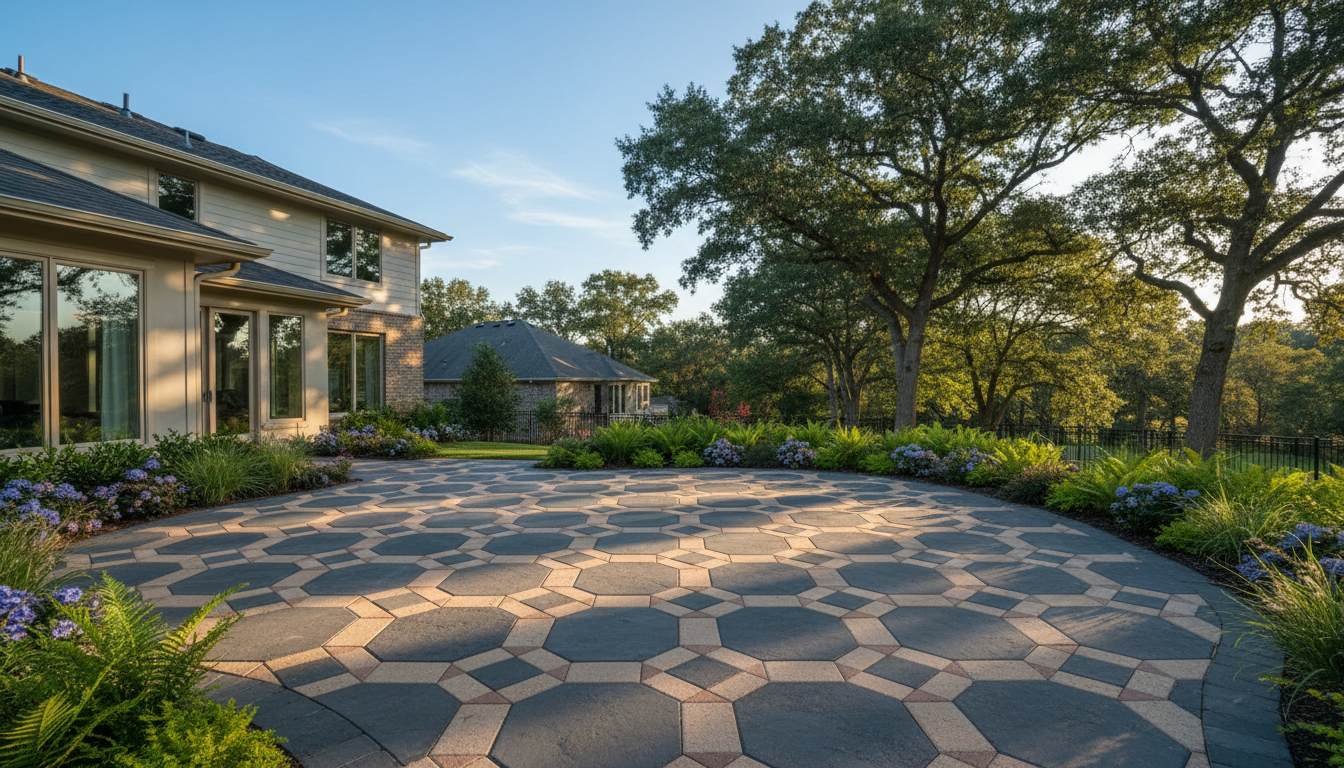
Pavers are the superior choice when evaluating pavers vs concrete palm desert because they resist cracking during intense heat cycles and remain significantly cooler on bare feet. While concrete offers a lower upfront price, the flexible joints and easy repairability of pavers provide better long term durability for Coachella Valley landscapes.
Homeowners in Palm Desert understand the frustration of watching a pristine concrete driveway or patio succumb to the brutal Coachella Valley sun. Between the relentless heat and the shifting desert soil, rigid surfaces often develop unsightly cracks that are nearly impossible to repair seamlessly. Choosing the right hardscape material is about more than just curb appeal; it is a long term investment in your property's durability and comfort. In this comparison, we examine why pavers are the superior choice for our unique climate. You will learn how interlocking systems manage thermal expansion, the true cost breakdown between materials, and why pavers offer a cooler, more resilient surface for your pool deck. We provide the expert insight you need to make an informed decision for your landscape transformation.
The Desert Hardscape Debate: Pavers vs Concrete in the Coachella Valley
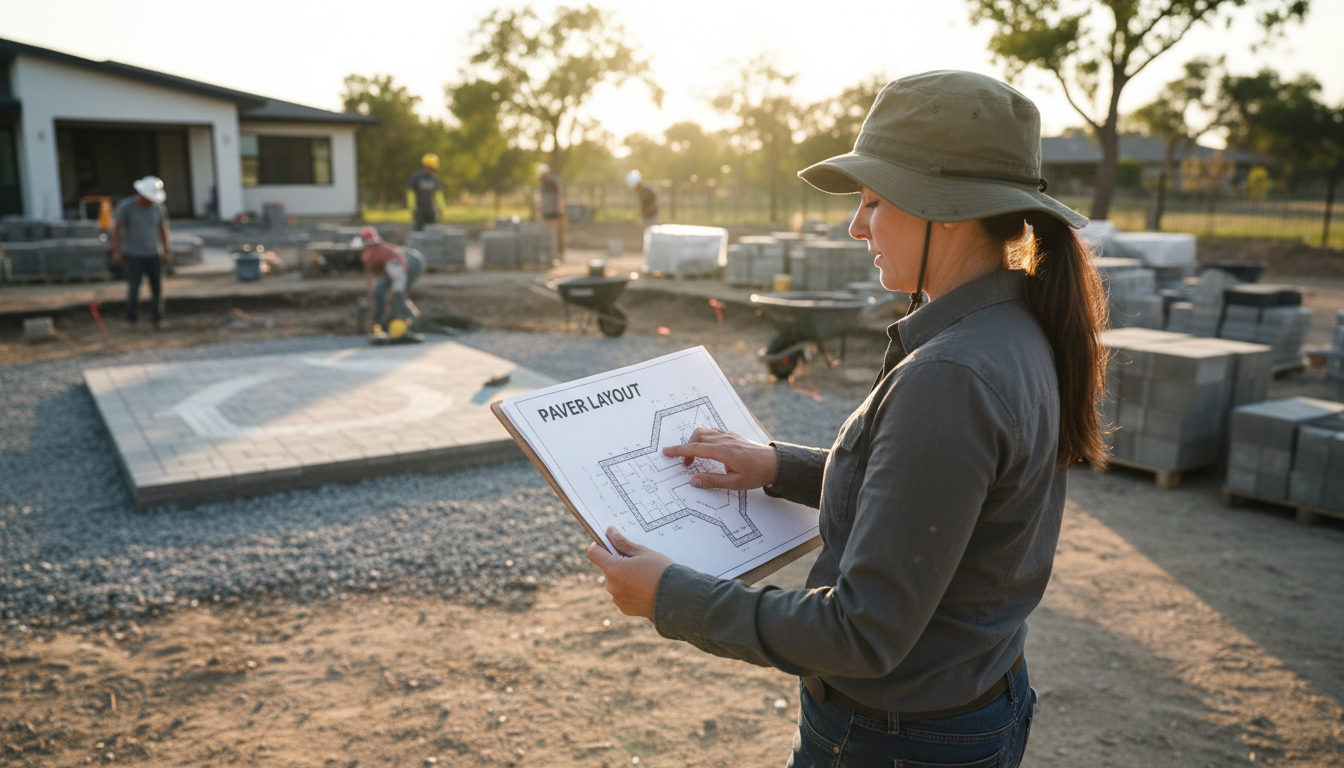
Property owners in Palm Desert, Indian Wells, and Rancho Mirage operate under environmental constraints that most standard construction guidelines ignore. The Coachella Valley presents a brutal cycle of intense UV radiation, 120 degree summer peaks, and unstable, shifting sandy soil. When weighing the choice between pavers vs concrete palm desert homeowners often find that the builder grade default, a poured concrete slab, fails to meet the long term demands of this unique climate.
A solid slab is rigid and unforgiving. In our region, this rigidity is a liability. While a custom driveway installation using concrete might look clean on day one, the inevitable thermal expansion and soil movement lead to unsightly fissures and structural degradation. Transitioning to a modular system represents a shift toward durability and performance. When we design durable stone patios, we prioritize three critical factors:
Durability against extreme thermal cycles.
Surface heat management for barefoot comfort during peak summer months.
Long term return on investment through localized repairability and aesthetic longevity.
Investing in high end hardscaping requires looking past the initial pour and considering how your outdoor space will handle a decade of desert sun. A sophisticated landscape requires materials that work with the environment, not against it.
Do Pavers Crack in the Desert Heat? Understanding Thermal Expansion
Homeowners often ask: do pavers crack in the heat? The reality of the Coachella Valley is that thermal expansion is not an occasional occurrence; it is a daily structural stressor. When temperatures soar to 120 degrees and drop rapidly at night, materials must physically expand and contract. A monolithic concrete slab is trapped by its own rigidity. Because it cannot flex, the internal pressure resulting from this expansion inevitably finds a weak point, leading to surface cracks and structural spalling.
When comparing pavers vs concrete palm desert residents must account for the mechanical physics of thermal expansion. Pavers solve this through a modular, interlocking system. Unlike a continuous pour, a paver installation consists of hundreds of individual units separated by specialized sand joints. These joints function as built in expansion gaps. When the desert sun heats the stones, each unit moves independently. The sand allows for microscopic shifting without transferring stress to the neighboring stones. This prevents the system from buckling or fracturing under extreme thermal loads.
In our specific arid environment, these sand joints offer an additional advantage. While concrete becomes brittle over time, a paver system remains a flexible mat. This flexibility is essential for maintaining the integrity of durable stone patios even when the underlying sandy soil shifts. By choosing an interlocking design, you are installing a surface that adapts to the environment rather than resisting it. This mechanical advantage ensures that while the surrounding concrete surfaces in Indian Wells may be showing their age through fissures, your pavers remain structurally intact.
Pavers vs Concrete Cost: Analyzing the Investment for Palm Desert Properties
While the initial sticker price often drives the decision-making process, a sophisticated analysis of pavers vs concrete palm desert properties reveals that upfront costs tell only half the story. Standard poured concrete typically ranges from $5 to $15 per square foot, while a professional paver installation generally falls between $15 and $25 per square foot. However, in the Coachella Valley, the cheaper option often becomes the most expensive over time due to the environmental factors discussed previously.
The true differentiator is the lifecycle cost. Concrete is a monolithic structure; when the desert sun and shifting sands inevitably cause a fissure, the repair options are limited and often unsightly. Patching a slab leaves a permanent scar that never matches the original pour, eventually forcing homeowners into expensive full-scale resurfacing or total removal. Conversely, the lifecycle of durable stone patios is defined by modularity. If a single stone is damaged or stained, it is swapped out for a new one at a fraction of the cost of a slab repair. This localized maintenance preserves the original aesthetic indefinitely.
Investment Factor | Poured Concrete | Professional Paver System |
|---|---|---|
Initial Cost (per sq. ft.) | $5 to $15 | $15 to $25 |
Long-term Repairability | Full Slab Replacement | Individual Unit Replacement |
Coachella Valley Durability | High Risk of Cracking | High Resistance to Soil Shifts |
Typical Property Value Impact | Neutral/Standard | High-End Premium |
In luxury enclaves such as Indian Wells and La Quinta, hardscaping is viewed as an extension of the home’s architecture. High-end buyers prioritize materials that offer both longevity and aesthetic prestige. A custom driveway installation using premium pavers acts as a significant value multiplier, signaling a level of quality and structural integrity that a basic concrete pour cannot match. When you account for the lack of future repair costs and the immediate boost to property equity, the higher initial investment in pavers is the more fiscally responsible choice for desert estates.
Driveway Performance: Handling Heavy Loads and Soil Shifting
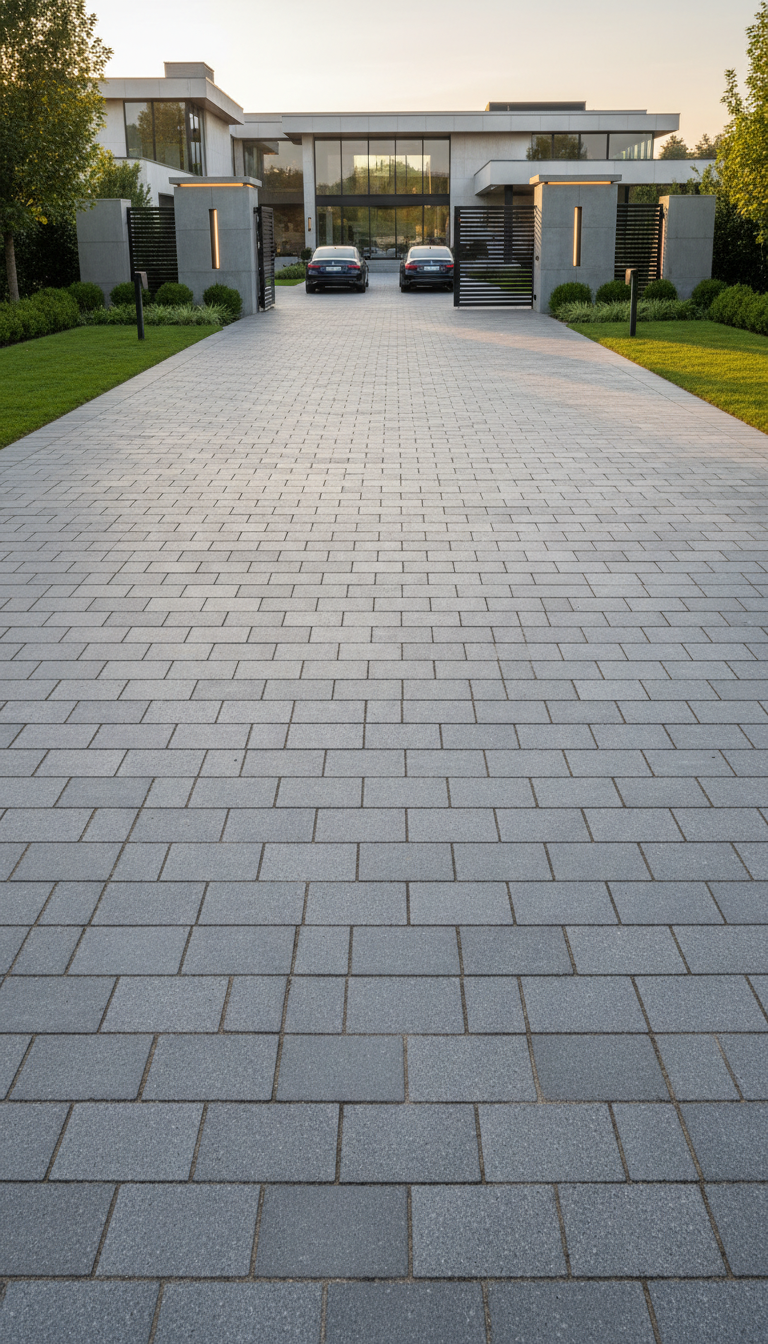
The proximity to the San Andreas Fault and frequent minor seismic activity in the Coachella Valley means the ground beneath your home is never truly static. For a driveway, these subtle soil shifts are catastrophic to rigid materials. A standard concrete slab lacks the tensile strength to withstand subterranean movement. When the sandy soil settles or shifts, the slab loses its uniform support, leading to deep structural fractures that are impossible to hide.
In the context of pavers vs concrete palm desert homeowners must consider how a surface handles high-load vehicles. A custom driveway installation using interlocking pavers functions as a high performance structural mat. Rather than resisting soil movement, the system moves with the earth. The individual stones distribute the weight of heavy SUVs and delivery trucks across the entire surface area, reducing the localized pressure that causes concrete to buckle.
To ensure long term stability, our specialized installation process focuses on a multi layered, compacted sub-base tailored to local soil conditions. This precision prevents common failures like rutting or sinking that occur with amateur installations. By creating a flexible yet stabilized foundation, we ensure the driveway remains level and functional, regardless of seismic vibrations or the seasonal expansion of the surrounding desert terrain.
Heat Retention and Foot Comfort: The Pool Deck and Patio Test
Selecting a surface for a pool deck in the Coachella Valley requires an understanding of thermal mass. Standard gray or stamped concrete acts as a heat sink, absorbing intense UV radiation and holding it long after the sun sets. During peak summer months, a typical concrete slab can reach surface temperatures exceeding 150 degrees Fahrenheit, which effectively renders your outdoor space unusable for barefoot traffic. Stamped concrete often compounds this issue; the dark pigments and heavy sealers required for the finish absorb significantly more solar energy than plain concrete.
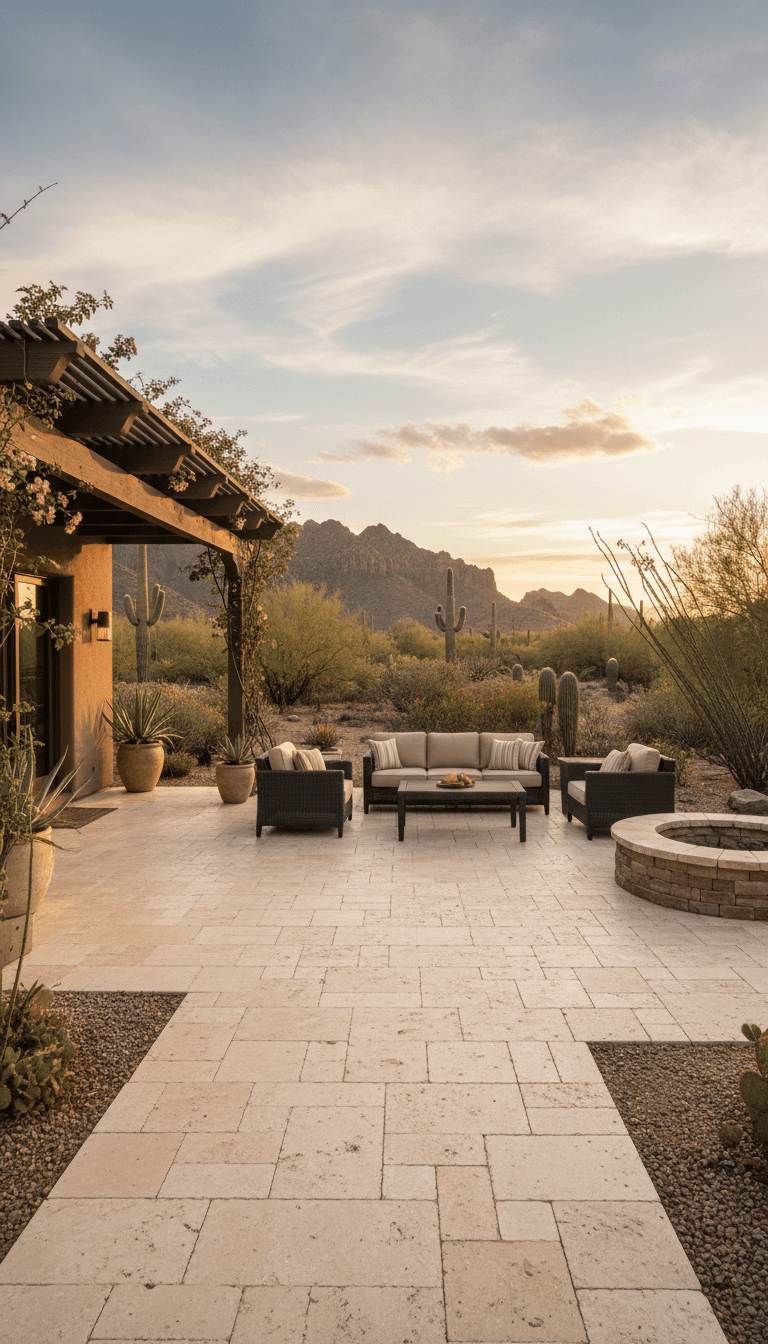
When comparing pavers vs concrete palm desert residents should prioritize materials with a high Solar Reflectance Index (SRI). Natural travertine is the premier choice for durable stone patios because its unique cellular structure and light color profile naturally dissipate heat. Unlike dense, monolithic concrete, travertine stays remarkably cool to the touch even in direct sunlight. If you prefer concrete based products, selecting light colored pavers in shades of cream, sand, or silver provides a significant thermal advantage. These modular units allow for heat dissipation through the sand joints, preventing the entire surface from becoming a thermal trap. A cool walking surface is essential for maintaining a functional transition between your home and your pool, ensuring that your luxury outdoor living space remains comfortable throughout the hottest months of the year.
Maintenance and Repair: Can You Really Fix a Cracked Concrete Slab?
A frequent concern for property owners in Rancho Mirage and Palm Desert is whether a cracked concrete slab can be truly repaired. While epoxy injections or surface patches exist, these solutions are rarely successful in the long term. Because concrete is a continuous pour, any patch applied will have a different color, texture, and expansion rate than the original material. The desert sun accelerates this aesthetic mismatch, leaving a visible scar that detracts from the property's value. More importantly, these patches do not address the underlying cause of the crack, which is usually soil movement or thermal stress, meaning the fissure will likely reappear.
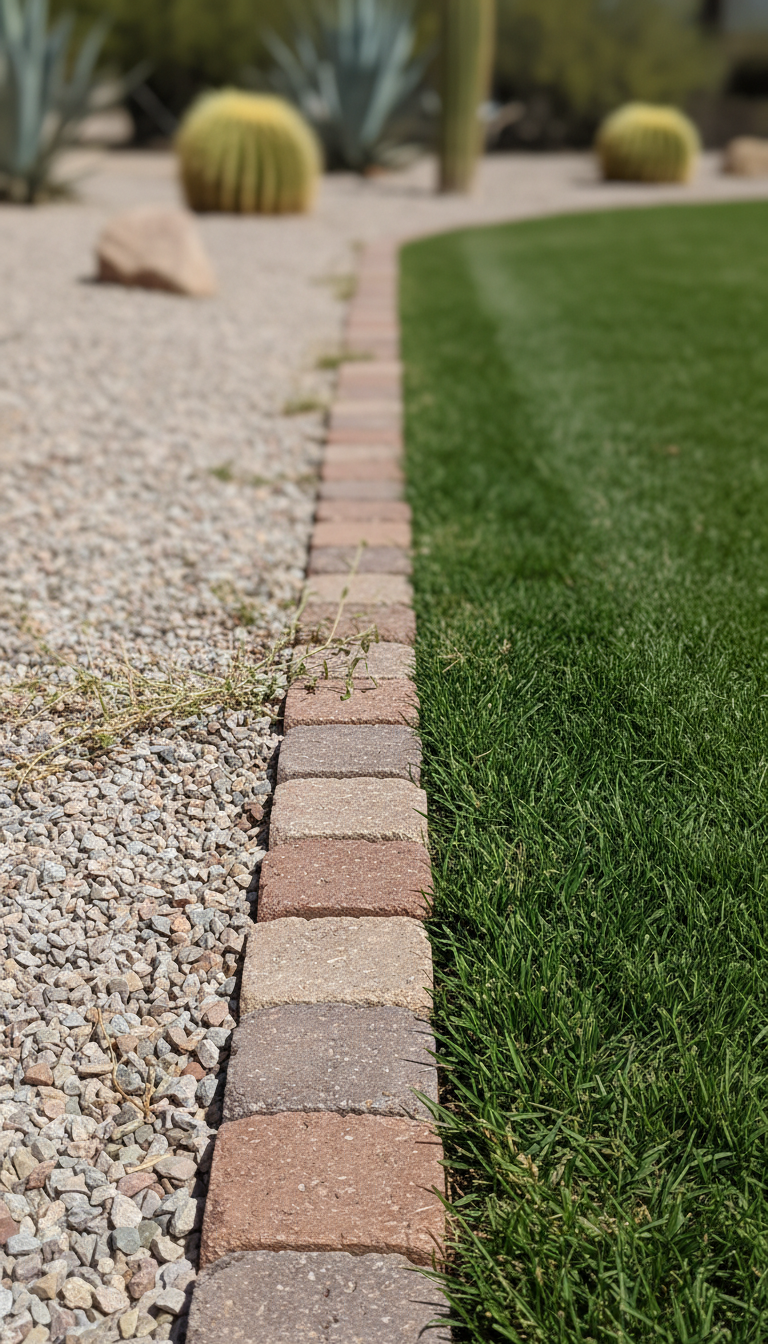
When evaluating pavers vs concrete palm desert homeowners should consider the advantage of modular maintenance. If a single paver is damaged by a heavy impact or permanently stained by motor oil, the repair is seamless. A technician can remove the specific stone and replace it with a new one in minutes. There is no need for large scale demolition or specialized blending. This process maintains the visual uniformity of your durable stone patios without the telltale signs of a repair.
This modularity also solves a common Coachella Valley headache: utility access. The complex landscape lighting and irrigation systems required to maintain desert greenery often run beneath driveways and walkways. When a pipe leaks or a wire fails under a concrete slab, the only solution is costly core drilling or jackhammering, followed by an unsightly patch. With a paver system, the stones are simply lifted to reveal the ground below, the repair is made, and the stones are reinstalled to their original state. This preservation of the hardscape's integrity makes pavers the only logical choice for high end properties.
Integrating Lighting and Irrigation for a Complete Landscape Transformation
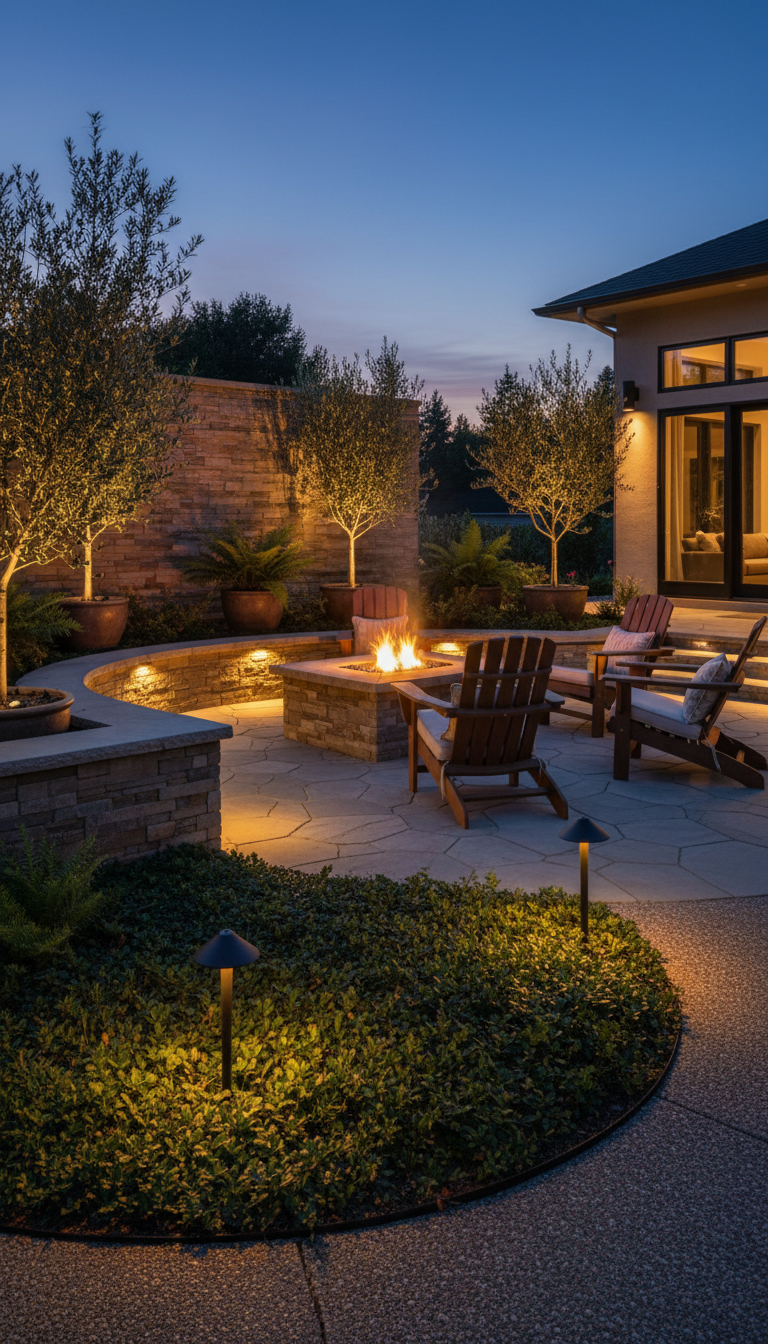
Professional outdoor design in the Coachella Valley requires a holistic approach where hardscaping, water management, and illumination work in concert. When weighing pavers vs concrete palm desert properties often face limitations with poured slabs that act as rigid barriers to future landscape evolution. Installing landscape lighting and irrigation beneath a concrete patio requires invasive core drilling or specialized boring equipment, adding significant labor costs and potential for structural damage.
Paver systems allow for the discreet routing of low voltage wiring and PVC conduit directly through the bedding sand. This accessibility enables us to hide transformers and valves while ensuring every palm tree and architectural feature is perfectly lit. At Pavers Pavers Pavers, we view the hardscape as a functional framework. By integrating these systems during the initial installation, we create a unified landscape that is both technologically advanced and easy to modify as your garden matures. This foresight ensures that your outdoor environment remains a cohesive, high performing asset for the life of the property.
Choosing between pavers and concrete in the Coachella Valley often comes down to long term durability and aesthetic flexibility. While concrete may seem simple, pavers offer superior resistance to intense heat and shifting desert soil. If you are ready to transform your property but want expert guidance, professional installation ensures the most reliable results. Our team specializes in designing Custom Driveways that stand the test of time. Let us help you create a functional space that perfectly complements your home style.