Effective paver repair Palm Desert monsoon recovery involves removing debris, replenishing eroded polymeric sand joints, and professionally sealing the surface to prevent water infiltration. These steps stabilize the hardscape and protect against the cycle of heavy rain and intense heat characteristic of the Coachella Valley.
When the summer monsoons sweep through the Coachella Valley, they bring more than just a reprieve from the heat. For homeowners in Palm Desert, these heavy downpours often leave behind a wake of shifting soil and compromised hardscaping. Flash flooding and intense humidity can quickly turn a pristine travertine patio or cobblestone driveway into a landscape of sunken stones and washed-out joints. Ignoring these minor shifts now leads to costly structural failures later; the unique sandy soil of our region is particularly prone to base erosion. In this guide, we will detail a practical recovery plan for your hardscape. You will learn how to conduct a professional grade inspection, address critical base washouts, and restore joint sand to its peak functionality. We will also cover essential cleaning and sealing techniques to ensure your outdoor living space is restored to its original elegance before the fall entertaining season begins.
The Impact of Coachella Valley Monsoons on Desert Hardscaping
The Coachella Valley monsoon season, occurring between July and September, presents a set of environmental stressors entirely unique to the low desert. While national home maintenance guides focus heavily on snow loads and freeze-thaw cycles, these concerns are irrelevant in Palm Desert, Indian Wells, and Rancho Mirage. Instead, our local hardscaping faces the combined assault of extreme thermal expansion and high-velocity flash flooding.
In the desert, the sandy soil is generally prized for its drainage capabilities. However, during a monsoon event, the sheer volume of water delivered in a thirty minute window can overwhelm the soil's infiltration rate. This leads to a phenomenon known as piping. As water rushes across or beneath stone patios and custom driveways, it seeks the path of least resistance. In sandy sub-grades, this concentrated flow can literally carve out tunnels beneath the pavers, leading to rapid base erosion. Unlike the slow settlement seen in clay-heavy regions, desert erosion often happens invisibly until a structural failure occurs.
High winds accompanying these storms also drive fine alkaline dust and organic debris into the joints of the paver system. When mixed with sudden rain, this creates a sludge that can compromise the integrity of the sand bond. Understanding these specific local dynamics is the first step in effective paver repair Palm Desert monsoon recovery. We must look past surface-level aesthetics to address how these atmospheric shifts impact the foundational layers of your landscape, including the performance of irrigation systems and subsurface drainage.
A 5 Step Post Monsoon Paver Inspection Checklist
Once the storm clouds clear, wait for the ground to dry completely before beginning your walkthrough. In our arid climate, surface moisture evaporates quickly, but the sandy sub-base can remain saturated for days. Performing an inspection too early might cause you to miss subtle shifts that only become apparent once the soil has regained its stability. Follow this five-step checklist to evaluate the health of your hardscape.
Identify Edge Creep: Walk the entire perimeter of your installation. Look for gaps between the pavers and the edge restraint, whether it is concrete or plastic. If the outer row has shifted outward, even by a fraction of an inch, the structural integrity of the entire field is at risk. This lateral movement is a sign that the surrounding soil failed to hold against the hydraulic pressure of the rain.
Spot the Birdbaths: Look for "birdbaths," or low spots where water lingers longer than in surrounding areas. On high-quality stone patios, water should shed efficiently toward a drain or landscape bed. Any standing water indicates the sub-base has compressed or migrated, which will require professional leveling.
Document Joint Voids: Inspect the gaps between individual units. Monsoon rains often flush out the sand that provides vital interlock. If you can see deeper than the bevel of the paver, you have a joint void. Recognizing these voids early is essential for effective paver repair Palm Desert monsoon recovery, as missing sand allows for units to rock and eventually crack.
Locate Tripping Hazards: Check for sudden vertical shifts where one paver sits higher than its neighbor. These "lips" are common in custom driveways after heavy rain as the heavy weight of vehicles presses down on a compromised, wet base. These are safety hazards that signal localized base failure.
Clear Transition Areas: Check where pavers meet garden beds. If mulch or soil has washed onto the stone, your irrigation systems or area drains may have been overwhelmed. This debris traps moisture against the pavers, which can lead to permanent staining or the acceleration of mineral deposits.
Addressing Base Washout and Sinking Pavers in Sandy Soil
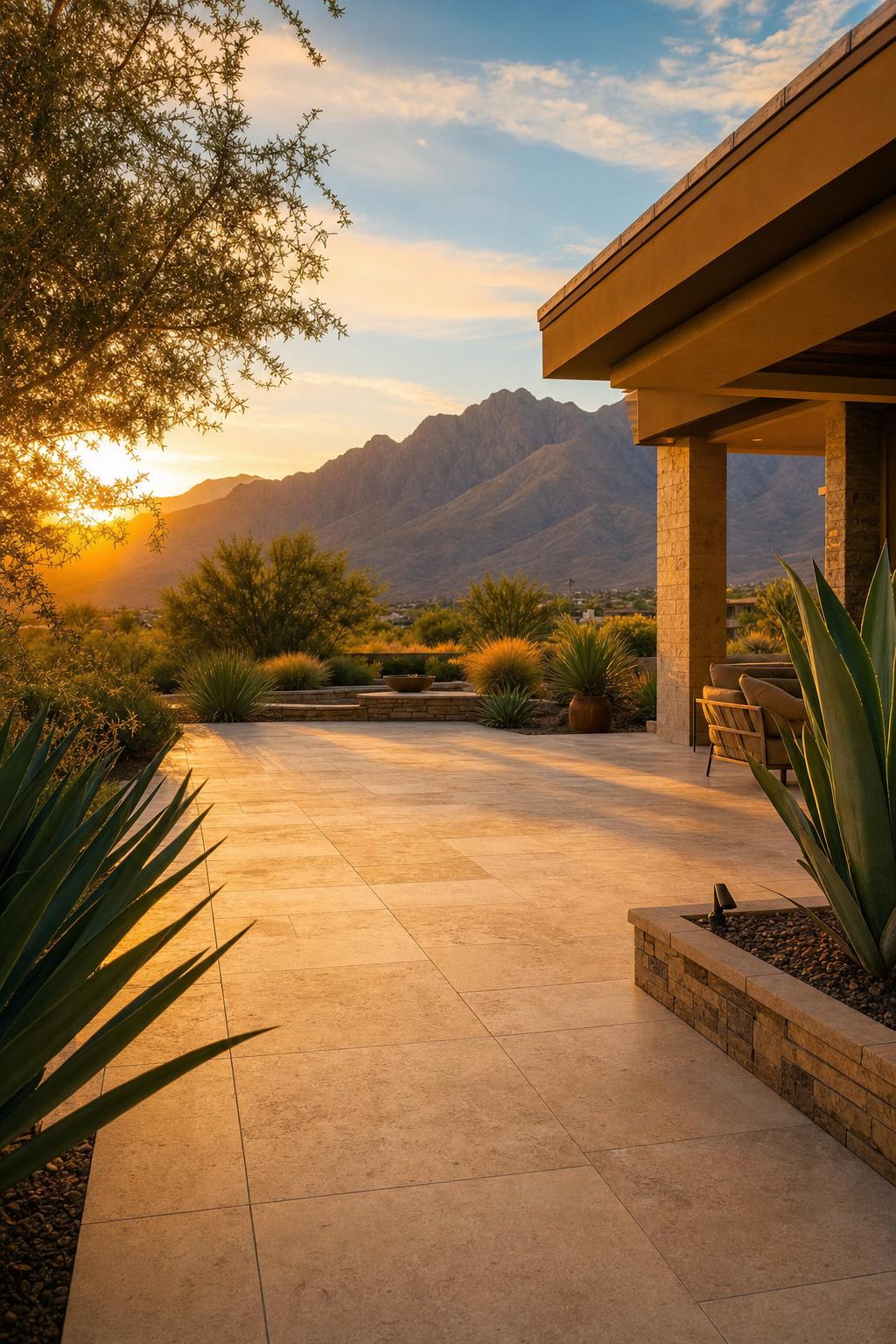
Once you identify low spots during your inspection, it is crucial to understand the mechanics of what is happening beneath the surface. In the Coachella Valley, we primarily work with sandy, well draining soils. While this is advantageous for general runoff, the intensity of monsoon rains can cause the fine bedding sand directly beneath your pavers to migrate. This process, known as base washout, occurs when water infiltrates the joints and creates subsurface channels. As the bedding layer shifts, the pavers lose their uniform support, leading to the birdbaths often seen on stone patios or the deep ruts found in custom driveways.
A common mistake in DIY maintenance is simply pouring new sand into the surface of a sunken area. This is a cosmetic, temporary fix that fails to address the structural void. True paver repair Palm Desert monsoon recovery requires a technical approach; the affected pavers must be lifted to expose the compromised base. We then evaluate the extent of the washout, replenish the bedding layer with angular sand, and use mechanical plate compactors to reset the sub-grade to its original density.
Long term stability also depends on how well your irrigation systems and area drains handle overflow. If water is allowed to pool against the edge of the hardscape, the hydrostatic pressure will eventually force the sand out again. Correcting the slope of the sub-base and ensuring water is directed away from the installation is the only way to prevent recurrent settlement in our unique desert environment.
Restoring Joint Sand to Prevent Structural Failure
Joint sand is often misunderstood as a cosmetic filler, but it is actually the functional glue that maintains the structural interlock of your entire system. In stone patios, this sand creates the necessary friction to distribute weight evenly and prevent individual units from shifting or tilting. The velocity of a Coachella Valley monsoon can easily scour these joints, washing away traditional sand and even degrading older polymeric sand that has been weakened by years of intense UV exposure.
To evaluate your joint integrity, perform a tactile test once the area is dry. High quality sand should feel firm and stable. If the material feels soft, mushy, or resembles a silt-filled muddy mess, the binding agents have failed and the sand is no longer providing structural support. Effective paver repair Palm Desert monsoon recovery often requires the complete removal of this compromised material followed by the installation of a premium polymeric sand specifically rated for desert climates.
This specialized sand is essential for the weeks following a storm when the desert landscape sees a surge in biological activity. Properly cured polymeric sand creates a hardened barrier that prevents desert ants from tunneling through your custom driveways and stops opportunistic weeds from germinating in the damp gaps. If your irrigation systems have experienced runoff issues during the rain, pay special attention to those saturated zones, as they are the most likely to require a full joint restoration to prevent future failure.
Removing Monsoon Stains and Efflorescence
The saturation caused by monsoon events often leaves a lingering aesthetic aftermath: a hazy, chalky coating known as efflorescence. While the dust and silt deposited by high winds can usually be blown off or lightly rinsed, efflorescence is a chemical process where water-soluble mineral salts rise to the surface as moisture evaporates. In the Coachella Valley, our highly mineralized water and soil accelerate this process. Distinguishing between simple dust and mineral deposits is straightforward; dust is loose and abrasive, whereas efflorescence appears as a stubborn, white crystalline residue that persists even after a standard wash.
For homeowners with high-end stone patios or custom driveways, the method of removal is critical. You must avoid the common impulse to use harsh muriatic acids, which are far too aggressive for the travertine and natural stones prevalent in Palm Desert architecture. These acids can etch the stone surface, leading to permanent damage that complicates any future paver repair Palm Desert monsoon restoration efforts. Instead, utilize pH-neutral cleaners specifically formulated for porous masonry. These solutions break down mineral salts without compromising the stone’s integrity or reacting with nearby irrigation systems. If the white haze returns, it indicates that the sub-base is still holding excess moisture, a sign that the drainage issues discussed previously require further professional attention.
Sealing Pavers Before the Fall Entertaining Season
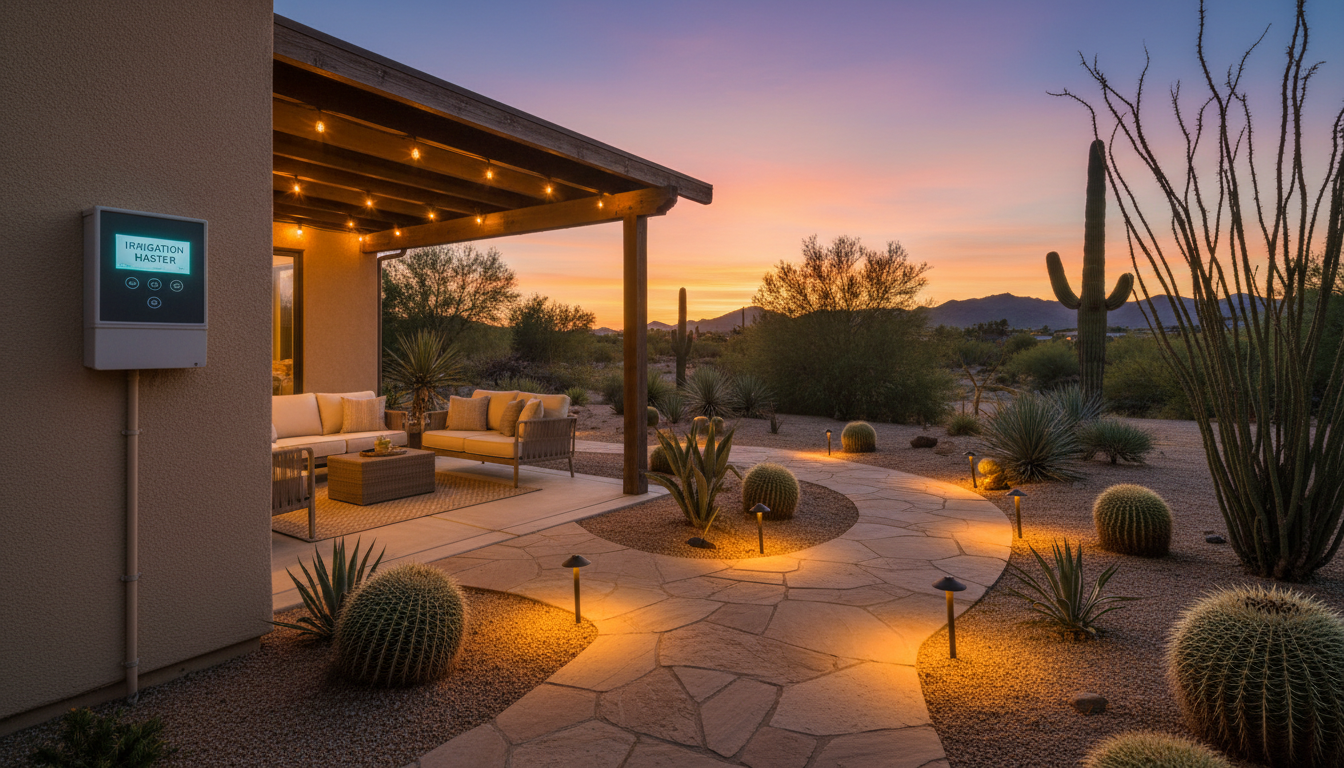
Fall in Palm Desert is the Goldilocks window for sealing. The blistering summer heat has subsided, preventing the sealer from flash drying and streaking, yet daytime temperatures remain high enough for the product to cure properly before the winter rains arrive. Once the cleaning and structural paver repair Palm Desert monsoon tasks are complete, applying a high quality, breathable sealer is the final step in protecting your investment. This barrier shields stone patios from the intense Coachella Valley UV, which otherwise causes pigments to fade and stone surfaces to spall.
Sealing also simplifies ongoing maintenance. By filling the microscopic pores of the masonry, it prevents fine desert dust and mud from windstorms from bonding to the surface. This allows you to blow off debris or lightly hose down custom driveways rather than resorting to heavy scrubbing. This protection is particularly useful if your irrigation systems produce any overspray, as it helps repel mineral deposits. For modern desert design, you can choose between a natural look sealer to preserve organic textures or a wet look finish for a sophisticated sheen that deepens the stone’s color profile.
When to Hire a Palm Desert Paver Repair Specialist
Distinguishing between routine maintenance and structural intervention is essential for the longevity of your hardscape. Homeowners can easily manage surface debris, blowing off windblown silt or performing a light rinse on stone patios after a minor dust storm. However, structural instability requires technical proficiency. If you notice more than three to five pavers have significantly sunk, or if the edge restraint has separated from the perimeter, DIY fixes will likely fail. These symptoms indicate a deeper compromise of the sub-grade that simple surface sanding cannot resolve.
Engaging a specialist for paver repair Palm Desert monsoon recovery ensures that the root cause, typically base erosion or drainage failure, is corrected using mechanical compaction and precise grading. Our team at Pavers Pavers Pavers understands the unique behavior of Coachella Valley’s sandy soils and how they interact with custom driveways during flash floods. We provide specialized solutions, including the integration of irrigation systems and custom subsurface drainage, to prevent a localized shift from escalating into a total patio failure.
Restoring your hardscape after the Coachella Valley monsoons is essential for maintaining the safety and beauty of your property. By addressing shifting stones and erosion quickly, you ensure your investment lasts for many seasons to come. While these maintenance tasks are vital, the process can become complex for larger areas. If you want expert help with your restoration project, our professionals are ready to assist. You can read more about our experience and commitment to Palm Desert homeowners to see if our services are the right fit for your home.