The most effective desert landscaping plants Palm Desert gardens can feature include native species like desert willow, brittlebrush, and hardy succulents that thrive in high-heat environments. Planting these varieties during the fall ensures they establish deep root systems; this results in a water-efficient landscape that offers vibrant color and minimal maintenance throughout the year.
Homeowners in Palm Desert frequently face the frustration of watching expensive greenery wither under the Coachella Valley sun or seeing their water bills climb without achieving a truly lush aesthetic. Creating a resilient, high end landscape requires a strategic shift away from thirsty lawns toward a sophisticated palette of arid adapted species that can withstand extreme thermal conditions. This guide examines the essential desert landscaping plants that thrive in our local climate, specifically focusing on the critical fall planting window. We will detail how to integrate these selections with proper hardscape grading, drainage, and irrigation systems. By understanding the relationship between structural design and botanical health, you can build a sustainable outdoor environment that maintains its beauty and structural integrity throughout the seasons.
The Strategic Fall Planting Window in the Coachella Valley
Successful installations of desert landscaping plants Palm Desert residents admire rely on timing as much as soil quality. In the Coachella Valley, the period from October through early December is considered the golden window for planting. While many homeowners instinctively associate gardening with the spring, the desert environment rewards those who plant in the fall. During these months, the soil retains significant warmth from the summer sun, while the air temperature begins its steady decline. This specific combination encourages rapid root development without the metabolic stress caused by extreme atmospheric heat.
Establishing a deep root system during this window is critical for long term survival. When a plant is installed in October, it gains nearly eight months of root growth before the first triple digit day of the following summer. In contrast, spring plantings often struggle to build sufficient root mass before the intense June heat arrives. We typically coordinate the construction of custom stone patios and surrounding greenery to coincide with this schedule, ensuring that new additions have a significant head start.
Timing is also dictated by the regional frost schedule. The first killing frost in Palm Desert typically arrives around late November. This creates a specific urgency; plants need at least four to six weeks in the ground to acclimate before temperatures dip near freezing. Integrating landscape lighting and irrigation systems during this phase ensures that young specimens receive consistent, deep moisture during their most vulnerable establishment stage. By prioritizing the October and early November window, you provide your landscape the biological advantage needed to thrive in our unique Coachella Valley climate.
Top Low Water Desert Landscaping Plants for Palm Desert Properties
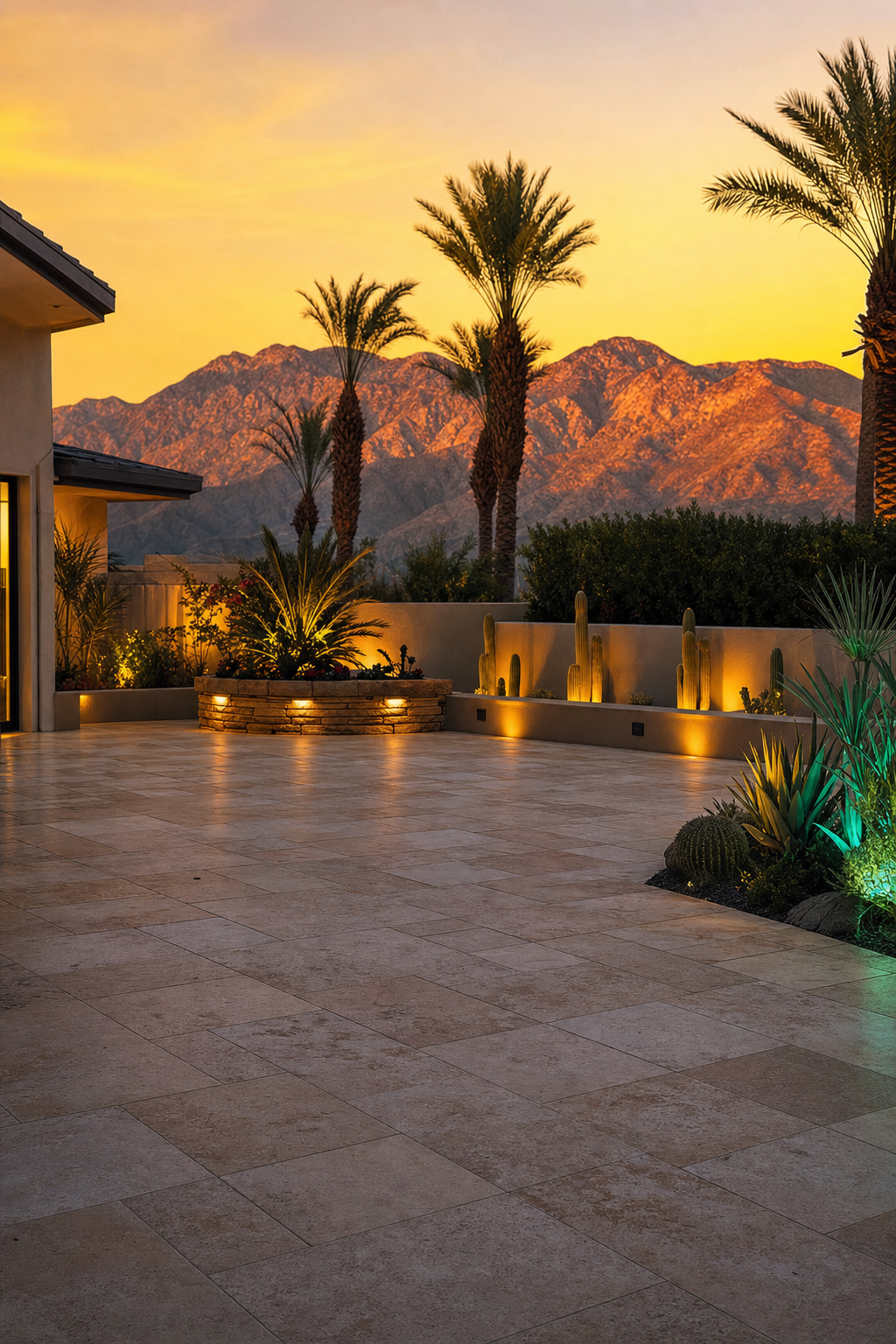
Selecting the right desert landscaping plants Palm Desert properties require involves more than just picking drought-tolerant species. You must account for the specific microclimates created by hardscapes and the intense wind pressure characteristic of the Coachella Valley. Because air moves through the San Gorgonio Pass at significant speeds, and light-colored stone surfaces reflect intense thermal energy, plant selection must prioritize structural integrity and heat reflection.
Trees for Structure and Shade
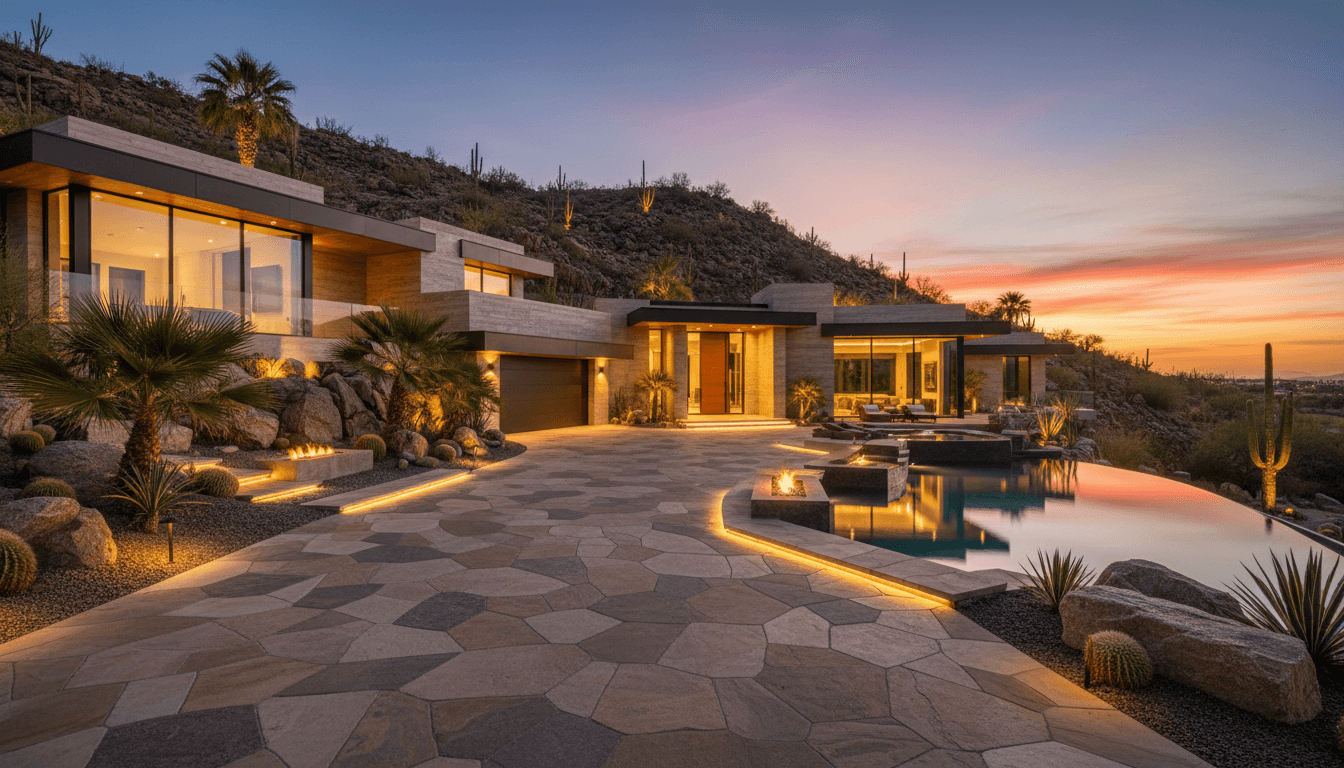
Desert Willow (Chilopsis linearis): This tree is prized for its showy, trumpet-shaped purple and pink flowers that bloom throughout the warmer months. It provides a soft, airy canopy that contrasts beautifully with a sharp paver driveway design. Unlike many decorative trees, the Desert Willow is highly wind-resistant, making it a stable choice for exposed perimeters.
Blue Palo Verde (Parkinsonia florida): Recognized by its striking blue-green bark, this native species produces a vibrant canopy of golden yellow blooms from March through May. It is structurally robust and handles desert gusts far better than the invasive Mexican Palo Verde often found in generic nursery stock.
Shrubs for Texture and Resilience
Ocotillo (Fouquieria splendens): While technically a shrub, the Ocotillo acts as a living sculpture. Its tall, whip-like canes handle high winds with ease and provide dramatic verticality near custom stone patios.
Brittlebush (Encelia farinosa): The silvery-gray foliage of the Brittlebush is a biological adaptation that reflects intense sunlight. This makes it an ideal choice for planting near light-colored travertine or concrete, where reflected heat would scorch darker green plants.
Creosote (Larrea tridentata): Famous for the distinct scent it releases after a desert rain, the Creosote is perhaps the most drought-tolerant shrub in the region. It thrives in high-heat zones adjacent to stone surfaces and requires virtually no supplemental water once established.
Succulents and Accents
Plant Variety | Aesthetic Value | Tolerance Level |
|---|---|---|
Agave | Clean, architectural lines; geometric shadows. | High heat and drought. |
Desert Spoon | Spherical form with serrated, blue-gray leaves. | Excellent wind resistance. |
Rush Milkweed | Leafless green stems; attracts Monarch butterflies. | High reflected heat tolerance. |
Integrating these succulents into your landscape lighting and irrigation plan allows their geometric forms to become focal points at night. The Desert Spoon, in particular, is a practical choice for areas near the San Gorgonio Pass, as its tough, narrow leaves do not tatter or tear in 15 mph winds. By choosing plants adapted to these specific stressors, you ensure your landscape remains lush without excessive water consumption.
Why Hardscape Grading and Drainage Dictate Your Plant Choice
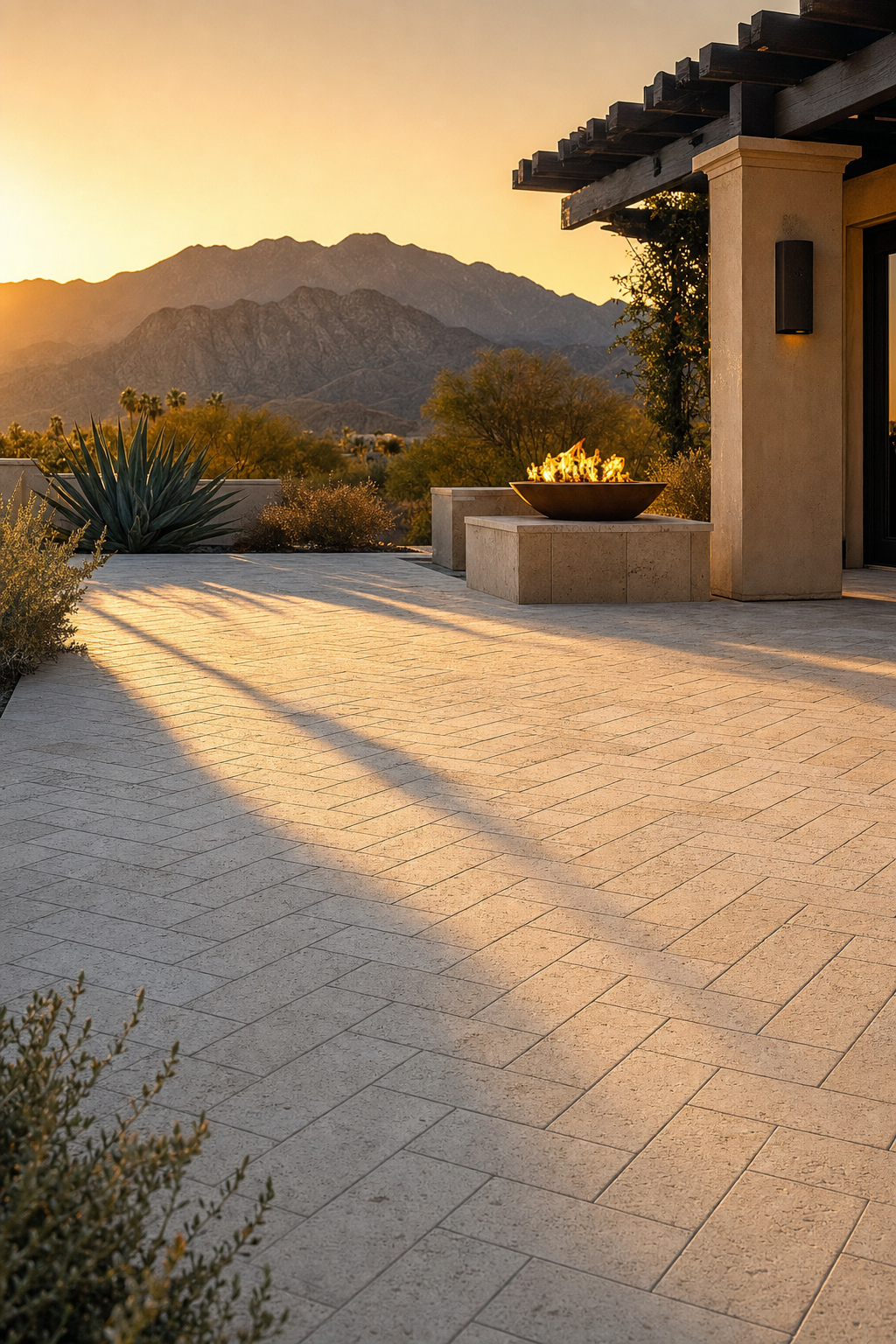
The long term vitality of your desert landscaping plants Palm Desert depends heavily on the invisible engineering beneath the surface. When we design a custom stone patio, the primary objective is directing water away from the home foundation to prevent structural damage. However, professional grading offers a strategic opportunity to manage water as a resource. By sculpting the sub-grade, we can direct runoff toward bio-swales or recessed planting zones. These areas act as natural reservoirs, allowing water to percolate slowly into the root zone of larger trees like the Desert Willow, rather than wasting it as surface runoff.
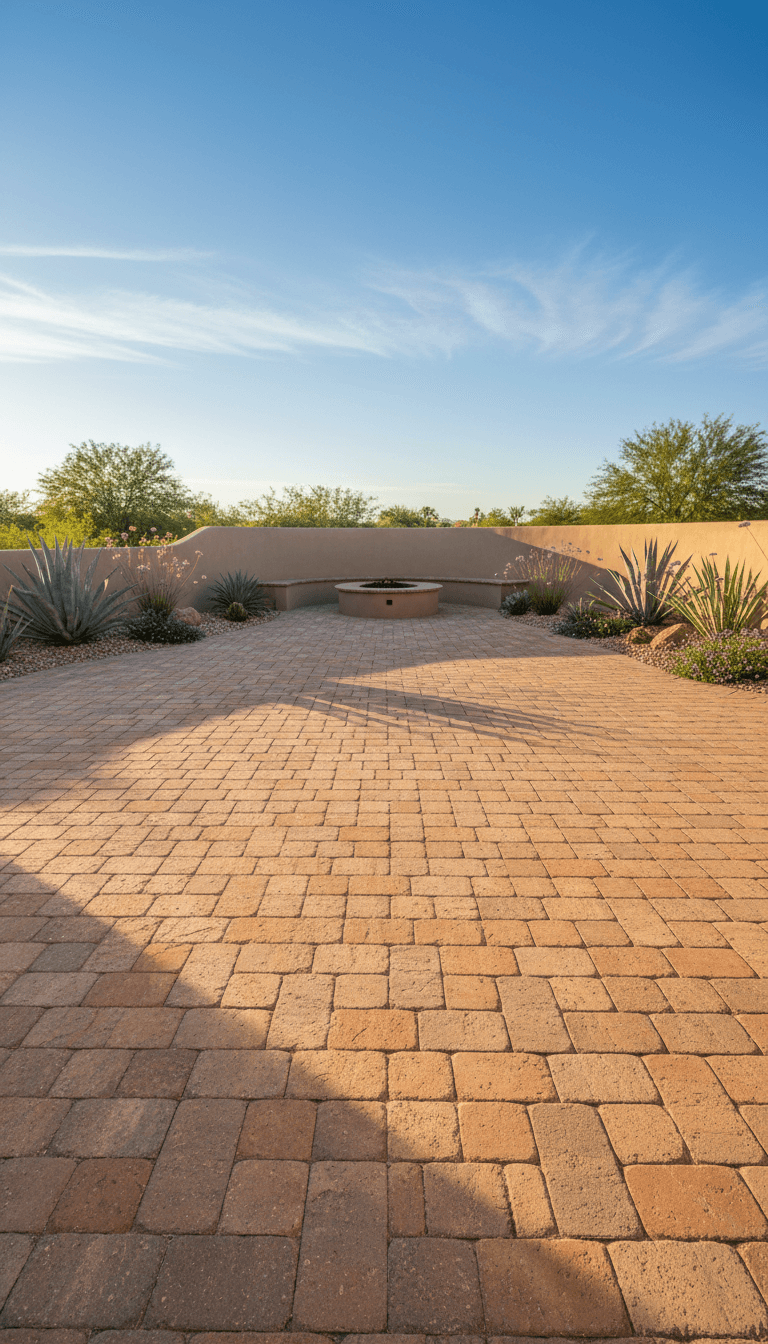
The materials used under a paver driveway design also dictate the moisture levels of adjacent soil. A standard installation utilizes layers of crushed stone and bedding sand, creating a high-drainage environment that can pull moisture away from the surrounding earth. This localized hydrology is a critical factor in plant selection. If you install a plant with moderate water needs directly against the edge of a high-drainage paver base, it will likely suffer from chronic dehydration. Conversely, placing a drought-tolerant succulent in a low-lying area where water naturally collects due to grading will lead to root rot.
Matching a plant's water requirements to the drainage capacity of the site is essential for Coachella Valley properties, where up to 80 percent of residential water is used for irrigation. We analyze the specific slope and soil base to ensure that the landscape lighting and irrigation systems are not fighting against the physical landscape. Proper grading ensures that even during intense desert rains, the water moves predictably, supporting deep root growth without compromising the integrity of the stone surfaces. This technical alignment between hardscape and softscape prevents soil temperature spikes and root stress, ensuring your investment remains vibrant through every season.
Integrating Irrigation Systems Beneath Your Pavers
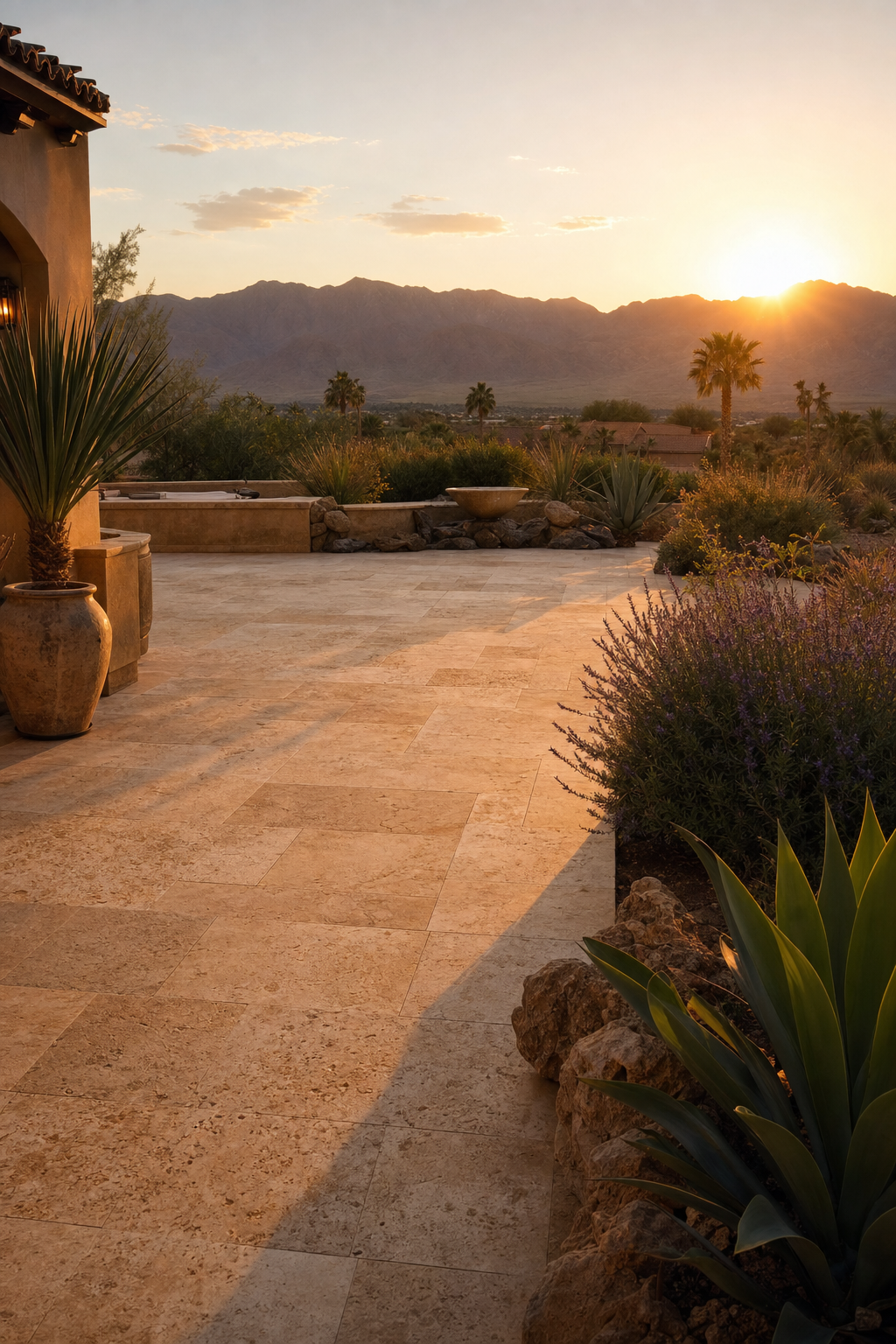
Effective hydration for desert landscaping plants Palm Desert relies on a sub-surface infrastructure that must be established before the first stone is set. Attempting to retrofit irrigation lines after a project is finished is a costly mistake that often involves cutting into established pavers or tunneling beneath settled foundations; these methods compromise the structural integrity of the hardscape and often lead to uneven settling later.
We mitigate this risk by installing heavy-duty PVC sleeves beneath every paver driveway design and walkway. These sleeves act as dedicated conduits, allowing for future expansions or repairs to the water lines without disturbing the finished stone surface. This foresight ensures that as your garden matures or you decide to add new botanical features, your infrastructure remains adaptable and intact.
Efficiency in the Coachella Valley also requires strict adherence to hydrozoning. This practice involves grouping plants with identical water requirements on the same irrigation valve to prevent waste. For instance, high-desert trees like the Blue Palo Verde should never share a line with succulents like Agave. By separating these zones, the landscape lighting and irrigation system can deliver deep, targeted moisture to trees while preventing the overwatering that causes root rot in water-miser species. This methodical approach is the most effective way to manage high urban water consumption while maintaining a lush, professional aesthetic.
Designing for Reflected Heat and Microclimates
Successful placement of desert landscaping plants Palm Desert properties require depends on understanding microclimates. The thermal energy reflected from light-colored travertine or concrete custom stone patios can significantly increase ambient temperatures in specific zones. South-facing walls and expansive paved surfaces act as heat sinks; these areas require heat-shield plants that possess high thermal tolerance. Agave, Cacti, and the structural Yucca are ideal here, as their thick cuticles and specialized photosynthesis processes allow them to thrive where reflected glare would scorch other species.
Conversely, the north-facing edges of a building or a shaded courtyard offer a respite from the most punishing rays. These cooler pockets allow for slightly more sensitive succulents that might otherwise shrivel in direct July sun. When organizing your layout, consider the human element as well as the botanical. While a Golden Barrel Cactus or a sharp-tipped Agave looks striking against a paver driveway design, they should be kept at least three feet back from the edge of high-traffic walkways to prevent accidental injury. Strategic placement ensures that your landscape lighting and irrigation can highlight architectural textures without creating a safety hazard for guests moving through the space.
Maintaining Your Desert Landscape During the Winter Transition
Transitioning into the cooler months requires a shift in maintenance strategy to protect your investment. The foundation of healthy desert landscaping plants Palm Desert properties rely on is the deep and infrequent watering technique. During winter, soil temperatures drop and plant metabolism slows down. By delivering water deeply but less often, you encourage roots to seek moisture further down in the soil profile, away from the surface where they are vulnerable to fluctuations in air temperature. This practice is especially vital for specimens adjacent to a paver driveway design, where the surrounding base materials can influence how quickly the soil dries out.
Frost protection is another critical factor for success. While the Coachella Valley is known for warmth, the first killing frost typically arrives around late November. New plantings lack the bark thickness or foliage density to withstand freezing temperatures without help. Use frost blankets for sensitive species, ensuring the material is anchored to the ground to trap radiant heat. Finally, topping planting beds with two to three inches of decorative rock or organic mulch is essential. This layer acts as an insulator for local soils, retaining moisture during dry winter winds and preventing the sun from baking the root zone. Integrating these maintenance steps alongside a professional landscape lighting and irrigation schedule ensures your garden enters the new year with maximum resilience.