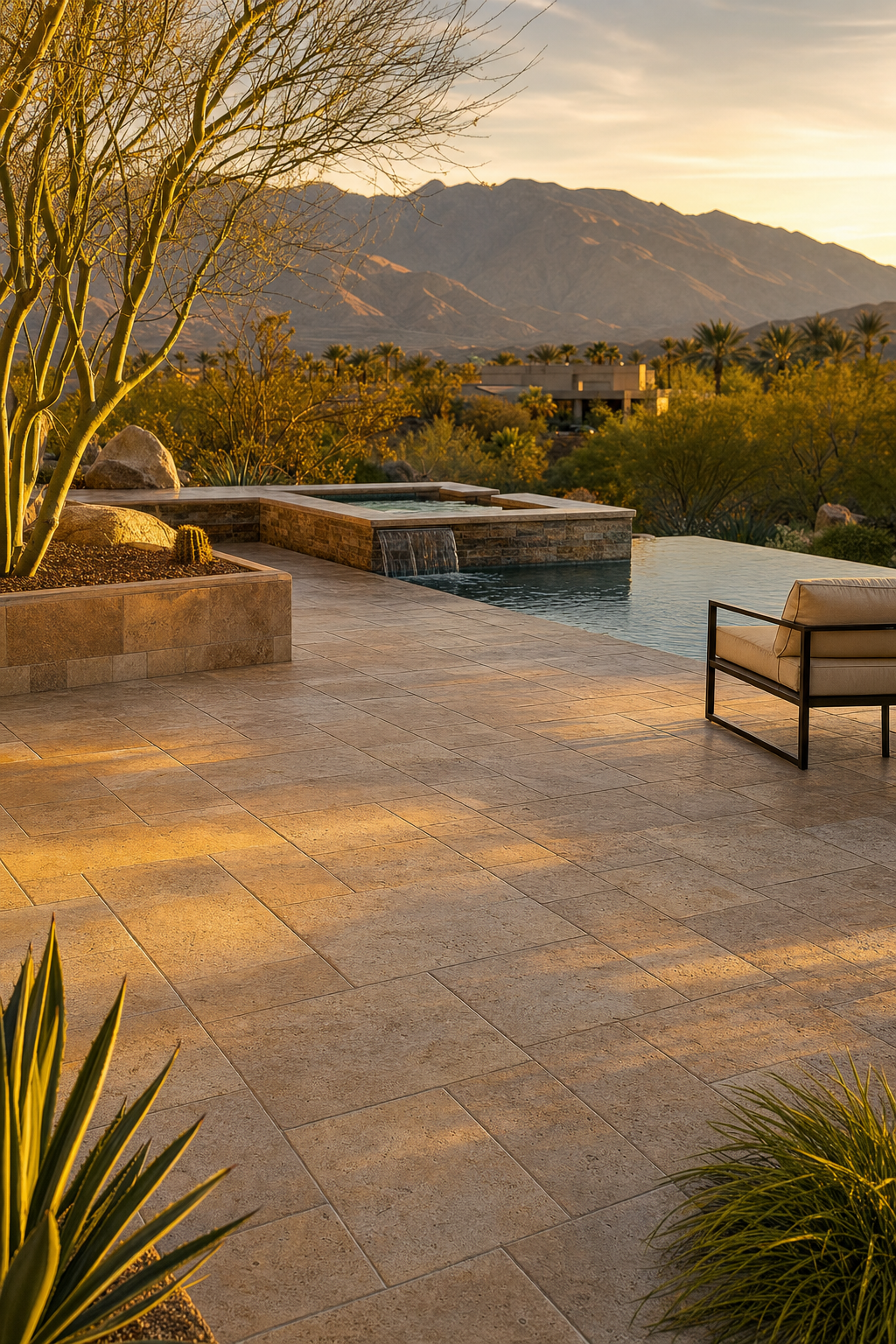
Permeable pavers Palm Desert installations must comply with local drainage codes requiring at least 25 percent of a residential lot to be pervious surface area. These eco-friendly systems typically cost between $10 and $40 per square foot; they offer a durable solution for managing runoff while meeting city landscaping standards.
Managing a landscape in Palm Desert presents a unique challenge where intense heat meets the sudden, heavy downpours of monsoon season. Standard concrete driveways often lead to standing water or runoff issues that compromise your property’s foundation. As experts at Pavers Pavers Pavers, we understand that sophisticated outdoor design must function as well as it looks. In this guide, we examine why permeable pavers are the definitive solution for the Coachella Valley. We will walk you through the specific Palm Desert pervious surface codes you must follow, the engineering behind flood mitigation, and the realistic costs of professional installation. Whether you are planning a new stone patio or a high performance driveway, you will gain the technical insights needed to balance aesthetic elegance with essential drainage performance.
Understanding Permeable Pavers in the Coachella Valley
In the Coachella Valley, permeable pavers represent more than just a surface material; they are an integrated drainage system engineered specifically for the desert's unique environment. While standard interlocking pavers rely on tight joints usually filled with fine sand, permeable systems utilize wider joints filled with small, clean aggregates. This design allows water to bypass the surface and enter a multi-layered, open-graded stone base. This base acts as a subterranean reservoir, allowing water to infiltrate the soil naturally rather than contributing to surface runoff.
Property owners should distinguish between three common industry terms. Permeable surfaces use solid units with gaps for drainage. Pervious surfaces, such as specialized concrete, contain internal voids within the material itself. Porous surfaces typically refer to open-cell asphalt or grid systems. For high-end custom driveways and stone patios in cities like Indian Wells and Rancho Mirage, high-grade concrete pavers are the preferred choice. These materials are specifically manufactured to withstand the intense UV exposure of the Low Desert. Unlike inferior products that may fade or crack, the specialized permeable pavers Palm Desert residents choose offer long-term structural integrity and color retention, even when subjected to triple-digit summer heat. When integrated with professional landscape lighting and irrigation, these systems provide a high-performance solution for modern desert estates.
Palm Desert Pervious Surface Code: Rules for Residential Properties
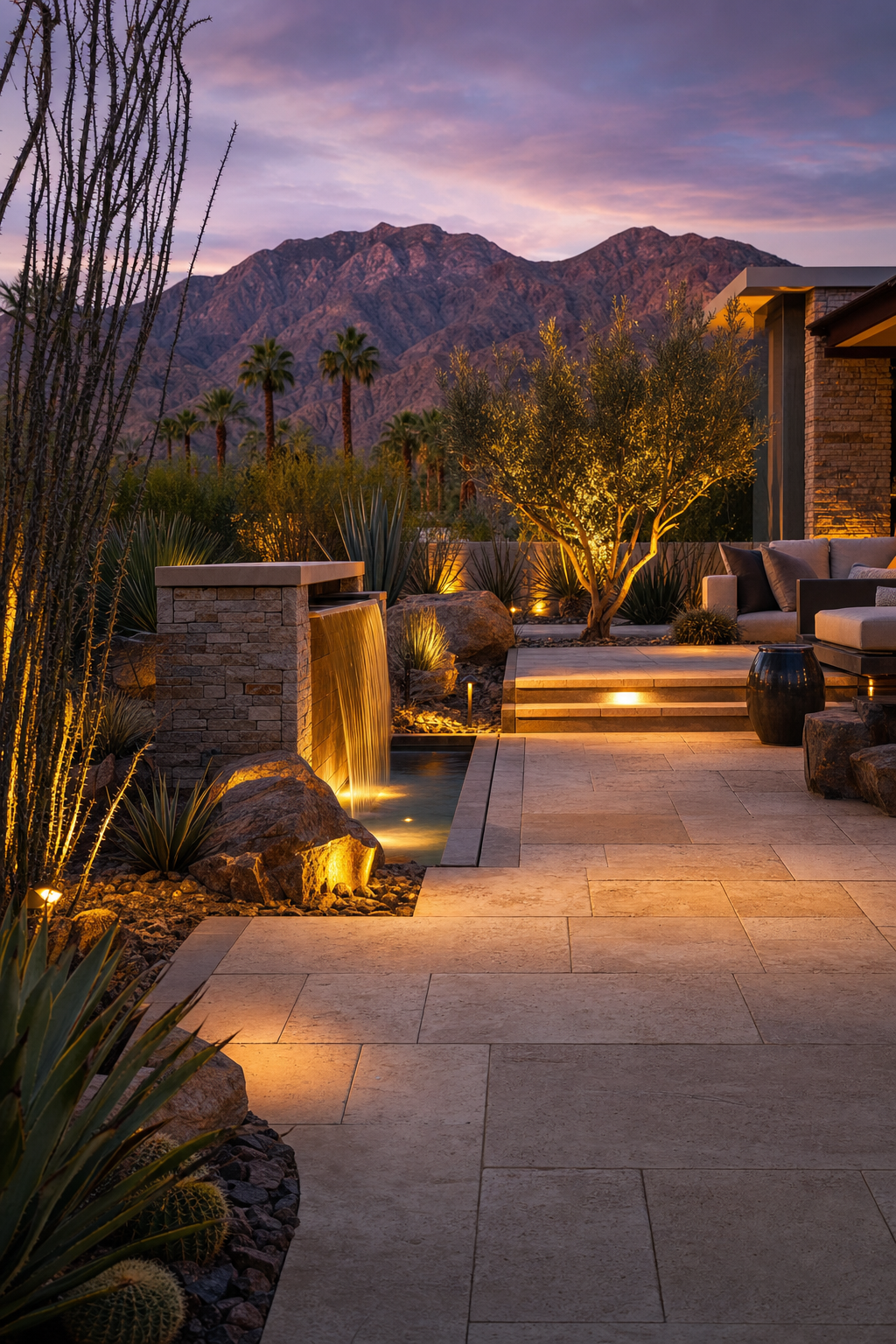
Navigating the technical specifications of filtration is only the first step; the second is ensuring your project aligns with the City of Palm Desert's Landscaping Code. Chapter 25.52 of the municipal code establishes strict guidelines for residential properties to manage runoff and maintain the local water table. Specifically, the city requires that at least 25 percent of a residential lot must remain a pervious surface. Furthermore, the code stipulates that no more than 40 percent of a residential front yard can be covered by non-pervious materials.
For many homeowners planning significant upgrades, these percentages can be restrictive. Traditional poured concrete or standard interlocking pavers are classified as non-pervious surfaces because they shed water rather than absorbing it. If you are designing expansive stone patios or widening custom driveways to accommodate larger vehicles or golf carts, you may quickly exceed the 40 percent front yard threshold. Exceeding these limits without a specialized drainage solution can lead to permit denials or code enforcement citations during property inspections.
This regulatory framework is why installing permeable pavers Palm Desert homeowners can rely on is a strategic design choice. Because these systems allow water to infiltrate the ground through specialized aggregate joints and base layers, they qualify as pervious surfaces under local mandates. By utilizing a permeable system, you can effectively expand your hardscape footprint beyond the limitations of standard concrete. This allows for a more functional outdoor living space while staying in full compliance with municipal drainage requirements. These systems also integrate seamlessly with high-end landscape lighting and irrigation plans, ensuring that your property remains both aesthetically superior and legally sound. By addressing these code requirements during the design phase, you avoid the complications of retrofitting drainage solutions after a project has already begun.
How Permeable Systems Handle Flash Floods and Monsoons
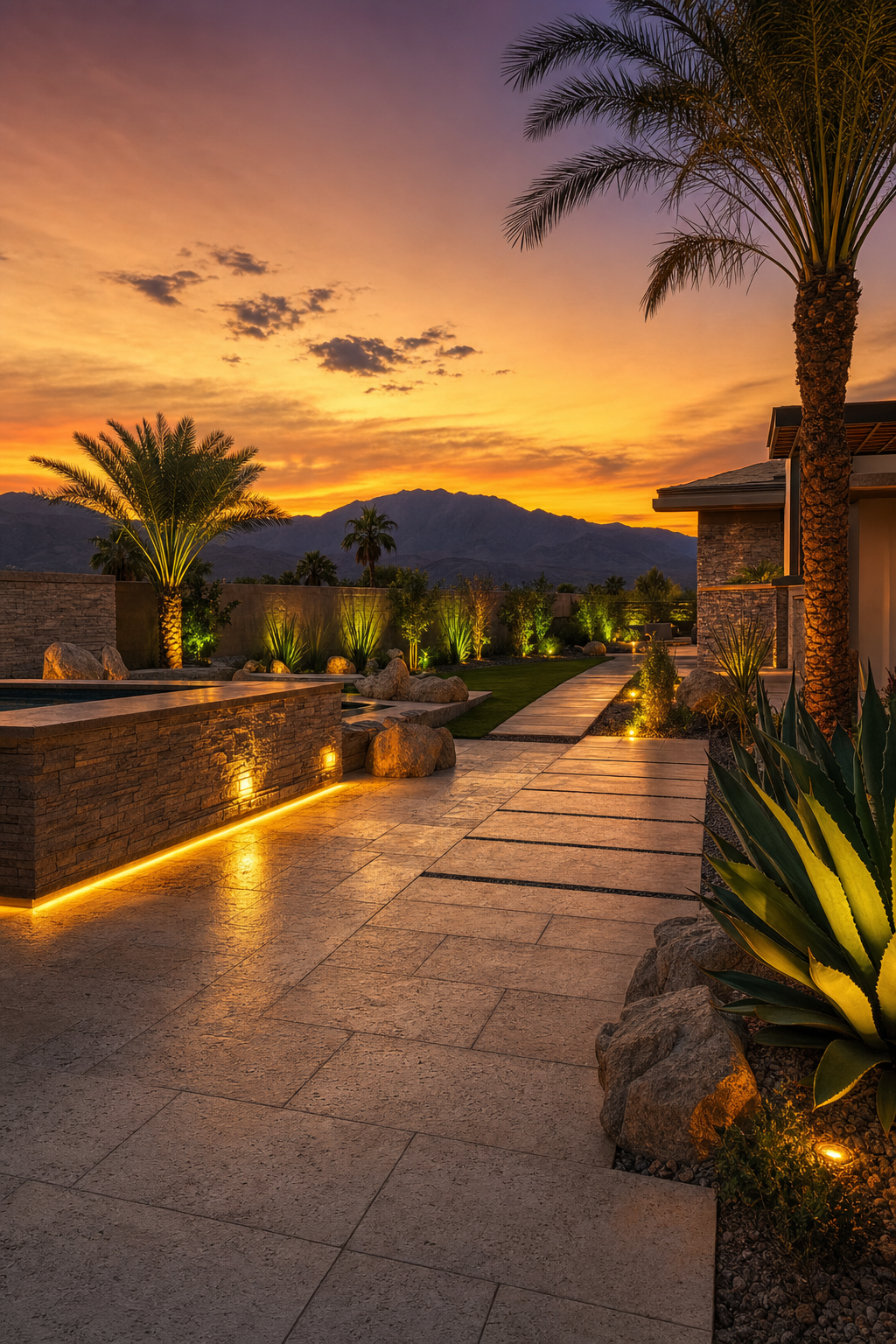
Coachella Valley monsoons bring intense, high-volume rainfall in very short periods, often overwhelming standard drainage systems. Traditional poured concrete or asphalt surfaces are impervious, forcing water to flow rapidly across the surface. In Palm Desert, this frequently results in hazardous puddling on custom driveways or aggressive runoff that can erode soil and compromise home foundations, particularly for properties situated near the foothills.
A system of permeable pavers Palm Desert homeowners install functions as an engineered vertical drainage solution rather than a simple surface covering. The technology relies on a sequence of open-graded aggregate layers that serve as a subterranean reservoir. Unlike standard road base, which contains fine particles that block water flow, these layers are comprised of clean, angular stone with high void spaces.
Layer | Material Type | Primary Function |
|---|---|---|
Surface Pavers | High-density concrete units | Traffic support and initial water entry via wide joints. |
Bedding Layer | Small angular chips (No. 8 or 9 stone) | Provides a level setting bed while allowing rapid filtration. |
Base Layer | Medium crushed stone (No. 57 stone) | Distributes loads and provides initial water storage capacity. |
Sub-base Layer | Large clean stone (No. 2 stone) | The main reservoir that holds water for slow soil infiltration. |
During a flash flood, these layers allow water to drop instantly into the reservoir rather than sheeting across stone patios. This subsurface storage capacity prevents the saturated pooling effect common with non-permeable hardscaping. By managing water on-site, the system protects sensitive landscaping and ensures that your landscape lighting and irrigation components are not undermined by sudden torrents. This localized infiltration maintains the structural integrity of the property even during the valley's most volatile weather events.
Installation Costs for Permeable Pavers in Palm Desert
Investing in a high-performance drainage system requires a clear understanding of the financial commitment involved. In the Coachella Valley, installation costs for permeable pavers Palm Desert homeowners should expect typically range from $10 to $40 per square foot. This price reflects the complexity of the subterranean engineering described in the previous section. While standard interlocking pavers focus on surface aesthetics, permeable systems require significantly more intensive site preparation.
Several specific factors drive the premium for these installations compared to traditional poured concrete or standard pavers:
Excavation Depth: A standard patio may only require a six-inch dig. Conversely, a permeable reservoir for custom driveways often necessitates excavating 12 to 24 inches to accommodate the necessary layers of No. 2 and No. 57 stone.
Specialized Aggregates: The clean, angular stone used in these systems is more expensive than standard compactable road base. These materials must be free of fine particles to maintain their filtration capacity.
Labor and Precision: Setting permeable units requires highly skilled labor to ensure the bedding layer is perfectly level while maintaining the integrity of the open joints.
Cost Factor | Impact on Pricing |
|---|---|
Project Size | Larger stone patios often benefit from economies of scale in material deliveries. |
Site Accessibility | Limited access for heavy excavation equipment in gated communities can increase labor hours. |
Paver Selection | High-end architectural finishes or natural stone integrations carry a higher material cost than standard concrete units. |
Although the upfront cost is higher, the long-term value is significant. A system that integrates seamlessly with your landscape lighting and irrigation prevents the costly structural damage associated with foundation erosion and standing water. Furthermore, the expense of retrofitting a property to meet Palm Desert’s pervious surface codes after a failed inspection far outweighs the initial investment in a compliant, professional installation.
Design Options: Driveways and Stone Patios
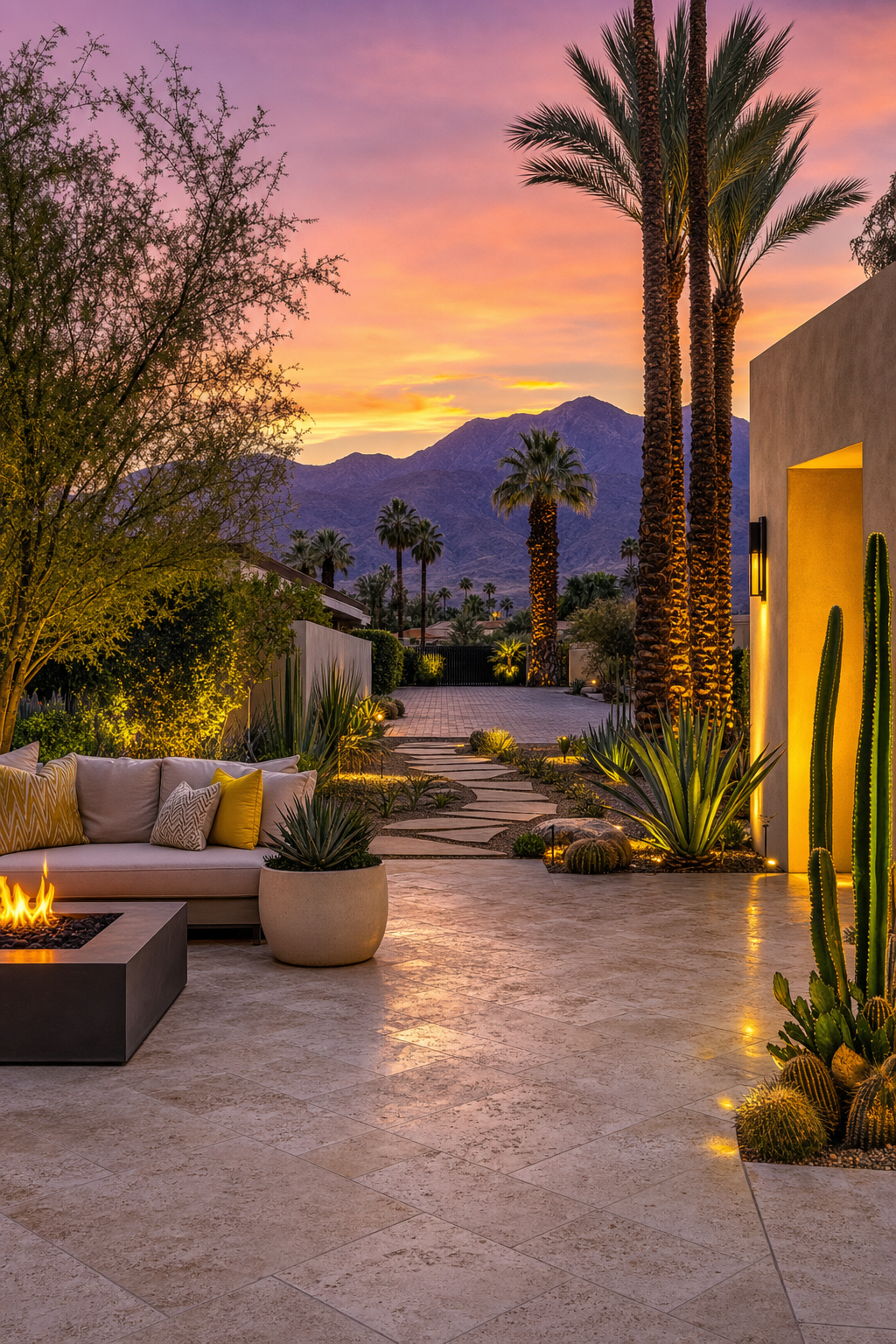
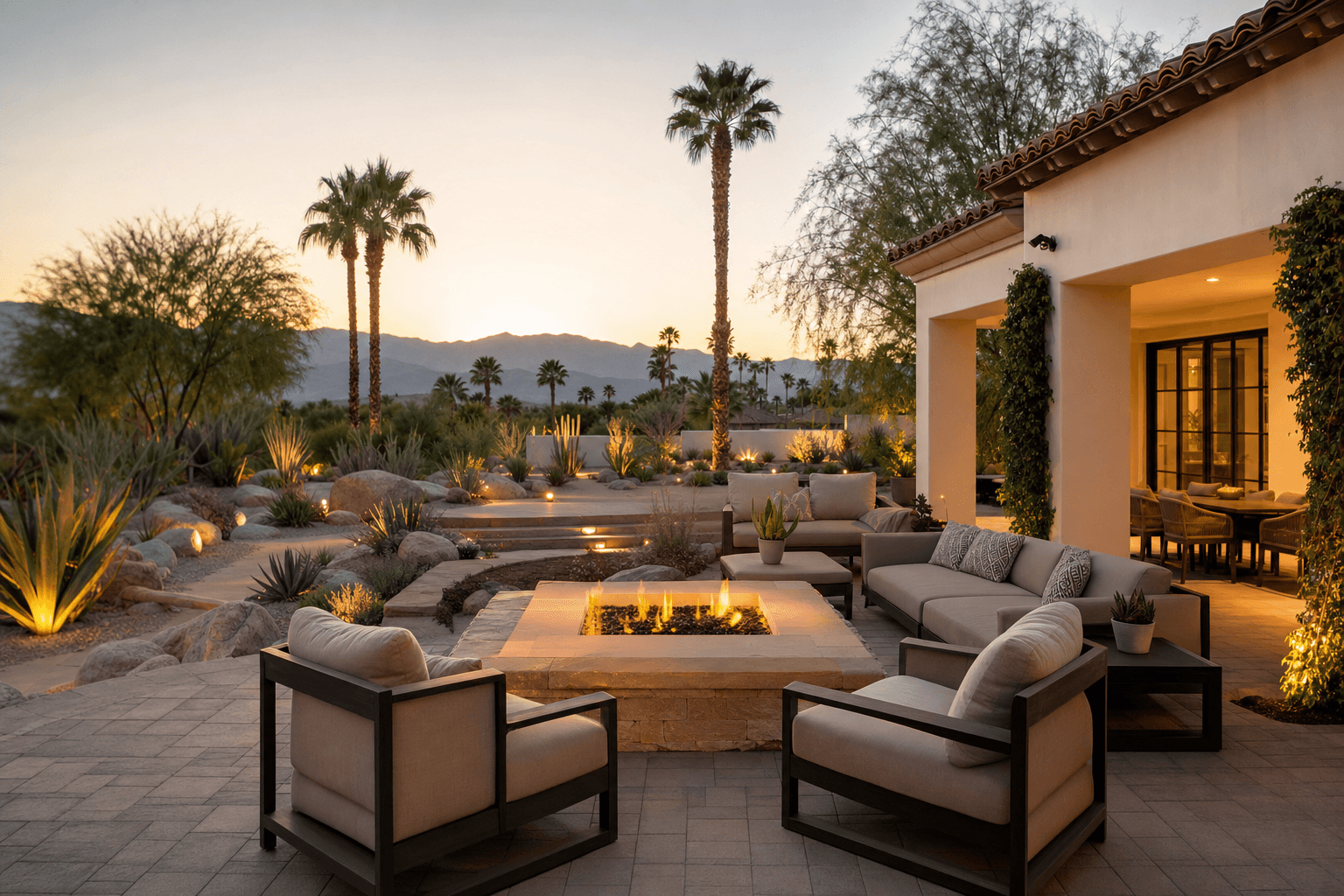
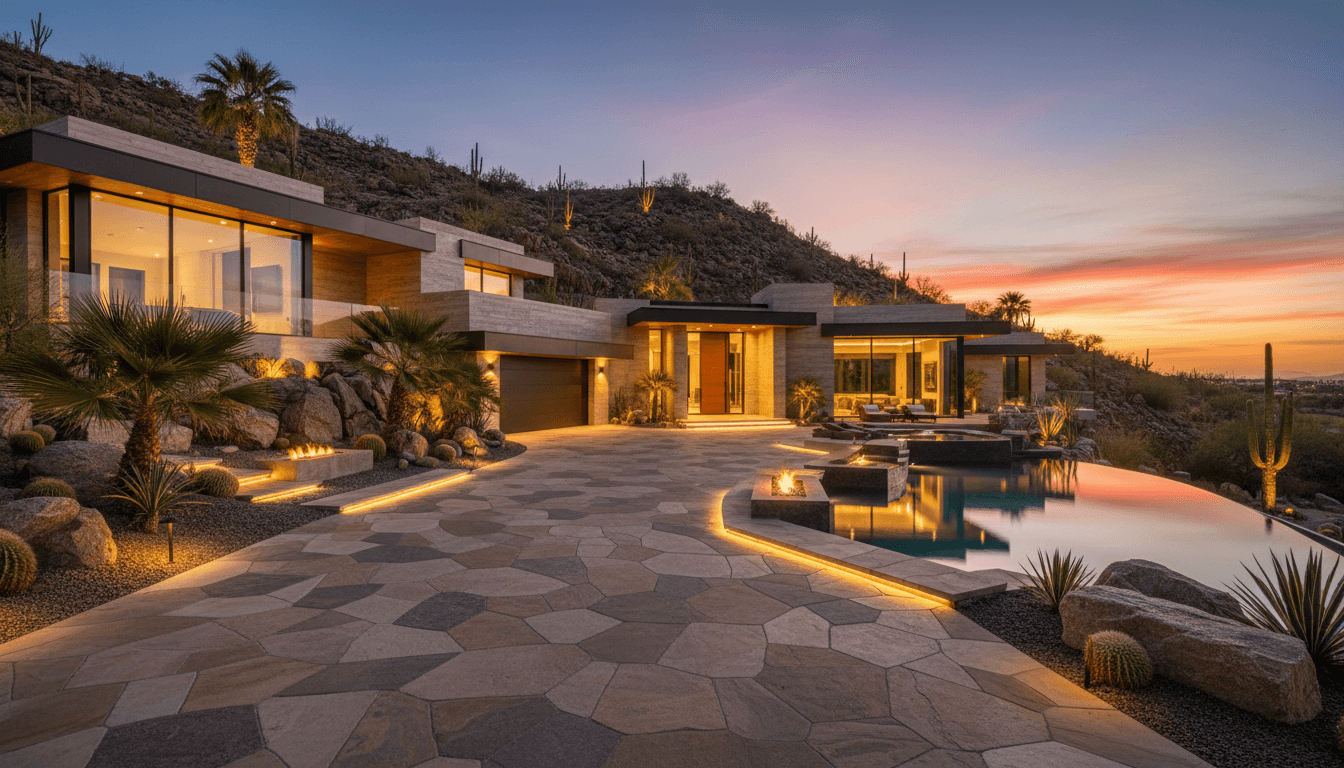
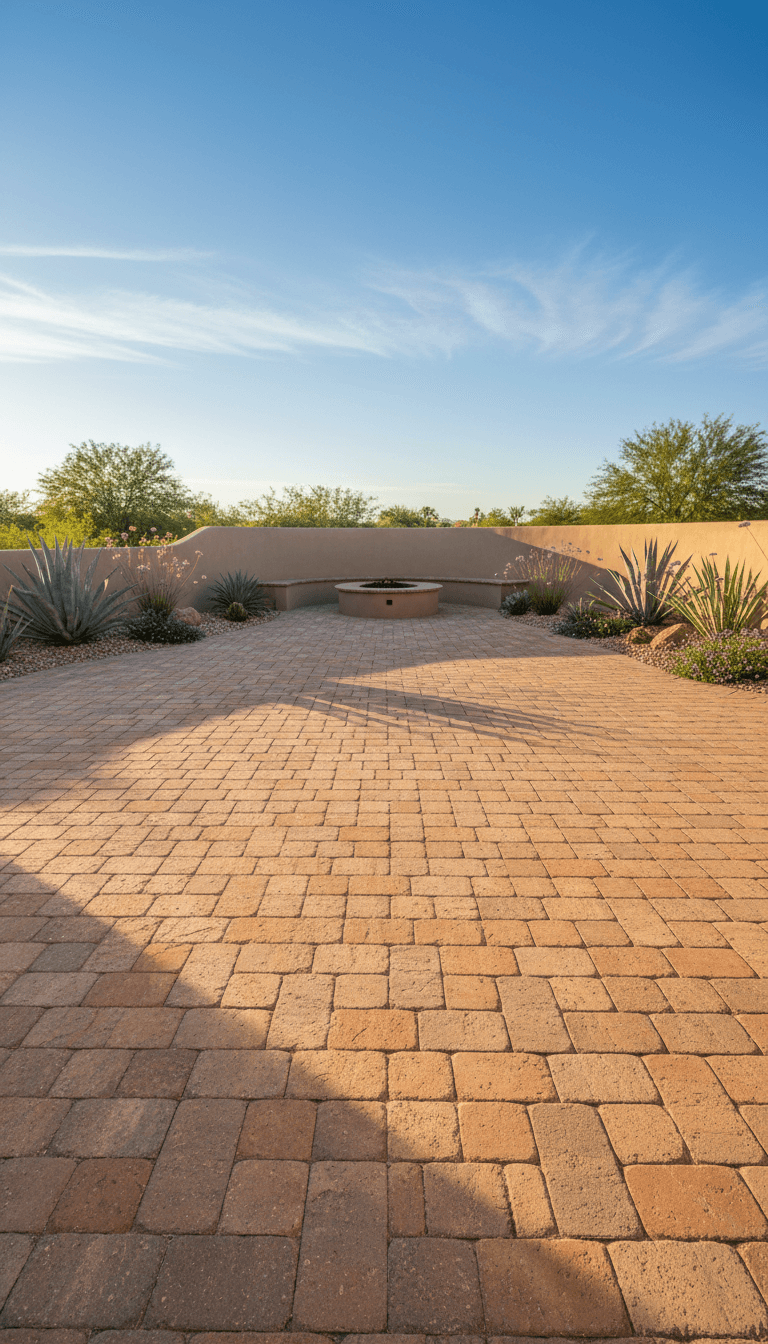
A common misconception suggests that choosing a functional drainage solution requires sacrificing the high-end aesthetic of a Coachella Valley estate. In reality, the permeable pavers Palm Desert homeowners select for their properties can be indistinguishable from traditional luxury installations. For a mid-century modern residence in South Palm Desert, we often recommend large-format, linear concrete planks with smooth finishes that emphasize clean horizontal lines. Conversely, Spanish Colonial and Mediterranean homes benefit from tumbled natural stone or pavers that mimic the texture of weathered cobblestone.
Natural stone, including premium travertine, can be integrated into a permeable layout by utilizing specialized spacers and specific jointing aggregates. This allows for sophisticated stone patios that retain their elegance while meeting strict drainage requirements. These designs are further enhanced when coordinated with landscape lighting and irrigation. Our team designs these systems so that lighting fixtures and irrigation lines are discreetly tucked within the sub-base or alongside the perimeter, creating a clean, professional finish. For custom driveways, combining different textures or colors can define borders and walkways, proving that permeable engineering is a design asset rather than a limitation.
Maintenance Tips for Desert Permeable Surfaces
Maintaining high-performance drainage systems in the Coachella Valley requires a specific approach tailored to the arid, wind-swept climate. While homeowners in other parts of the country might struggle with moss or organic debris, the primary challenge for systems of permeable pavers Palm Desert residents install is the accumulation of fine wind-blown sand and silt. Over time, these particulates can settle into the aggregate-filled joints, essentially sealing the system and reducing its filtration capacity.
Periodic maintenance preserves the longevity of your custom driveways and ensures they continue to handle flash floods effectively. We recommend using a high-powered industrial vacuum or a wet-dry vacuum specifically designed for hardscapes at least twice a year to pull out the top layer of trapped sand and debris. If you notice water pooling during a routine wash, a light power washing can dislodge deeper clogs. Always direct the spray at an angle to avoid displacing the foundational bedding layer.
When the joints need refilling due to natural settlement or the cleaning process, avoid using standard fine-grained joint sand. This is a common error that immediately defeats the permeability of the system by creating a waterproof barrier. You must use clean, angular stone chips, typically No. 8 or No. 9 stone, to maintain the necessary void space. Keeping these voids open allows water to bypass the surface and reach the reservoir layers beneath your stone patios.
Following a significant monsoon event, fine silts from the surrounding desert can migrate onto your hardscape and harden. Pavers Pavers Pavers offers professional assessments for post-monsoon recovery to evaluate infiltration rates and performance. This proactive care ensures that your hardscape, along with integrated landscape lighting and irrigation, remains in peak condition throughout the extreme desert seasons.
Choosing the right permeable pavers for your Palm Desert home involves balancing local drainage requirements with your personal aesthetic goals. While understanding the codes and installation costs is a great starting point, the technical side of the project can often feel quite complex. If you want expert help navigating these details to ensure a perfect result, you can explore our full range of services to see how we can assist. We are here to help turn your vision into a functional and beautiful reality.