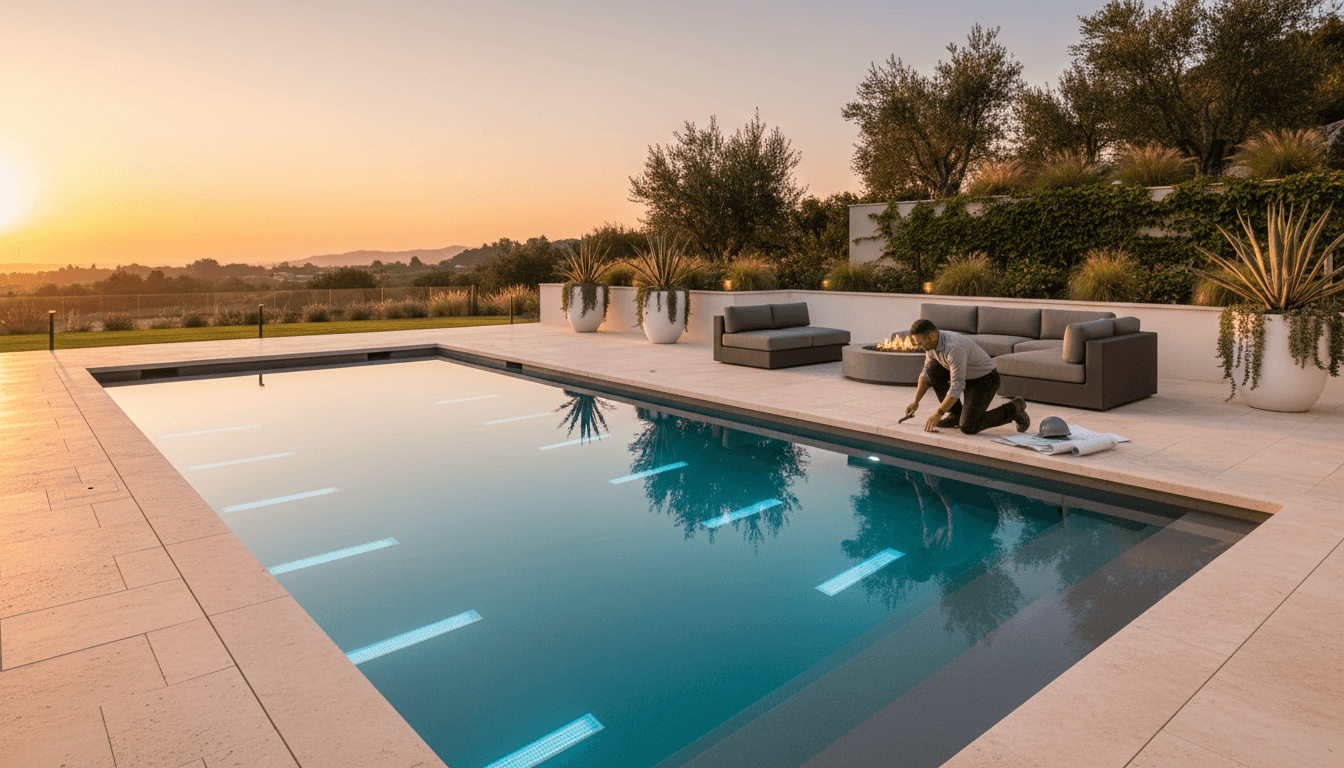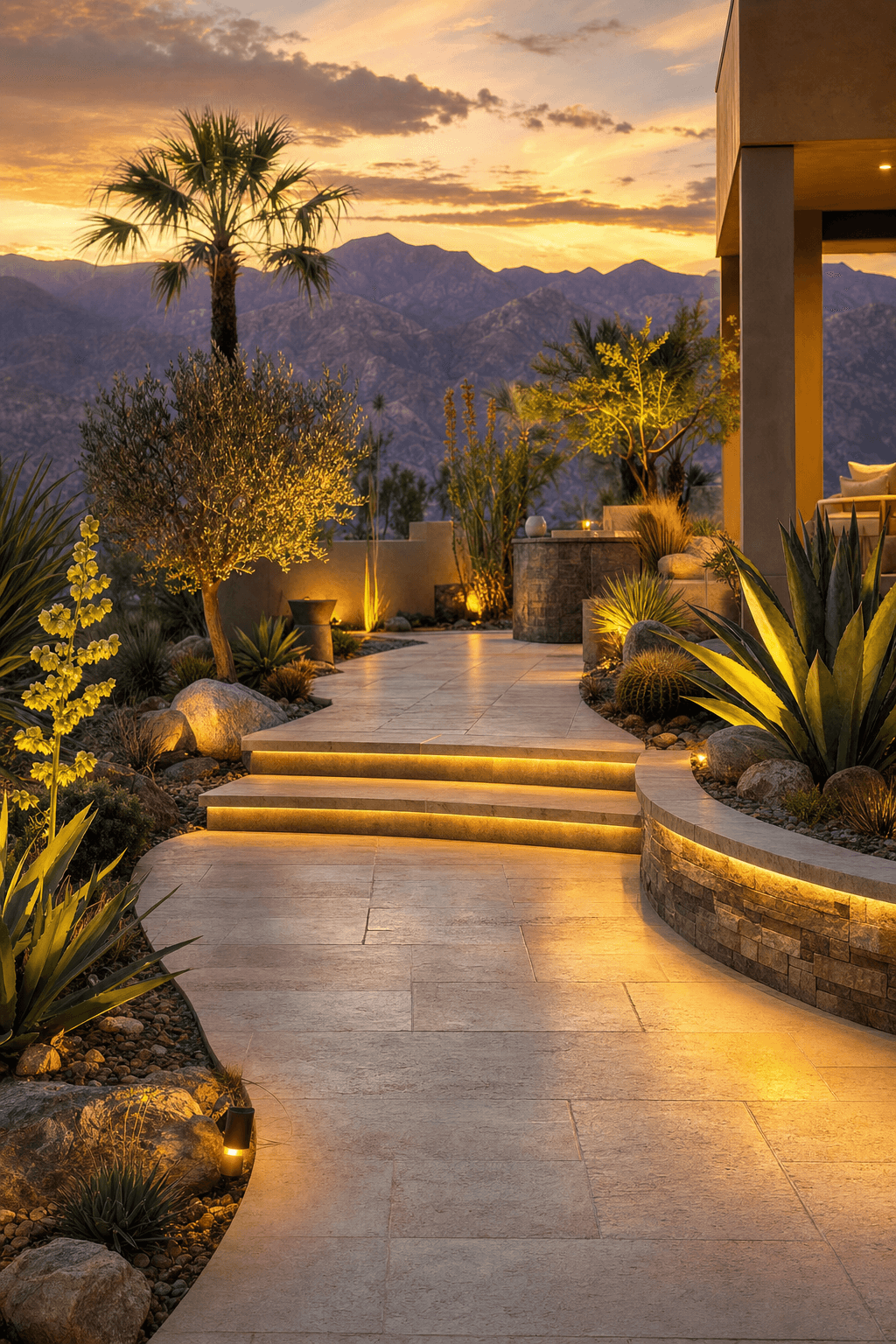
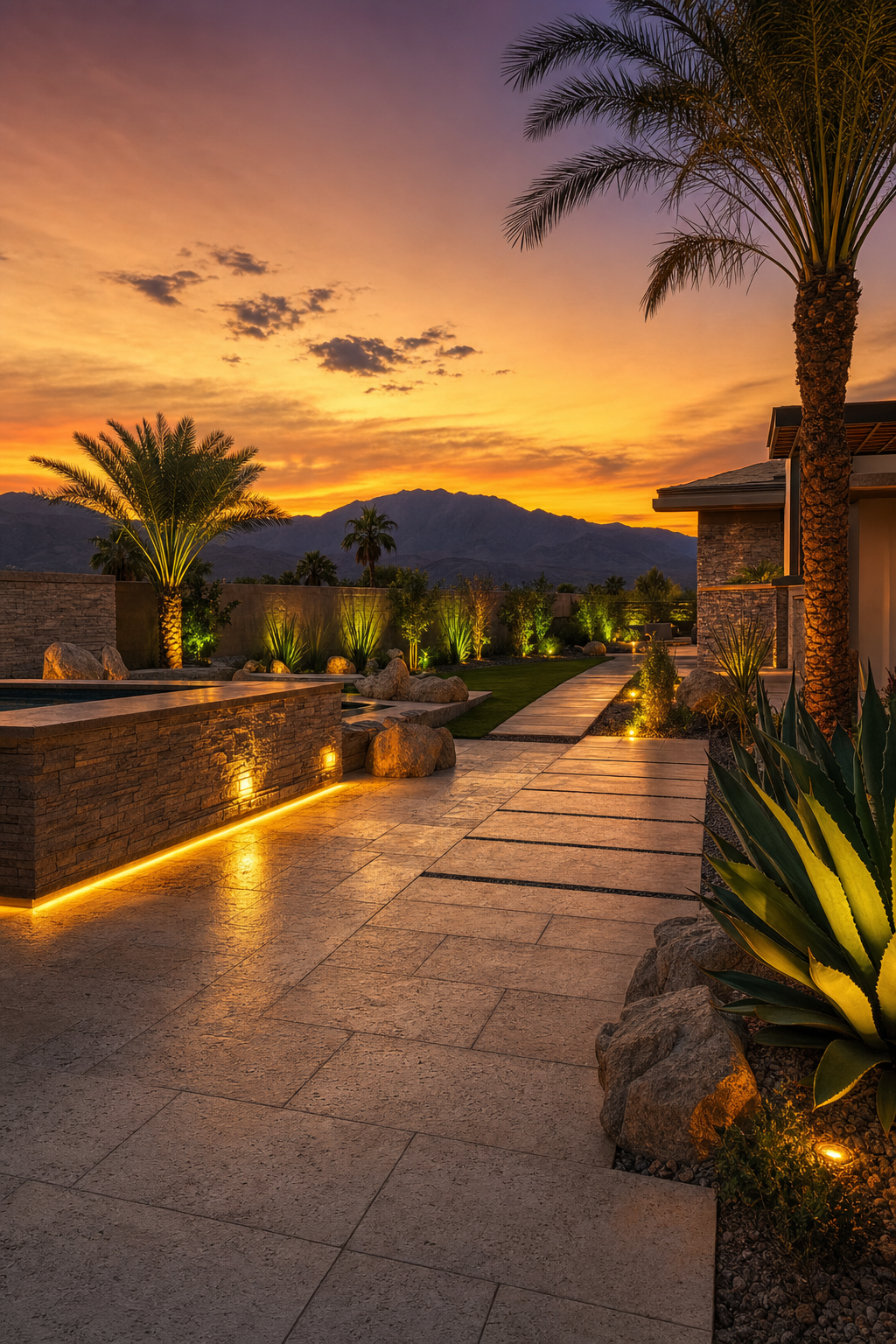
The average paver patio cost Palm Desert ranges from $18 to $45 per square foot installed, with most 200-square-foot projects totaling between $3,600 and $9,000. Final pricing depends on specific material choices like concrete, travertine, or porcelain, as well as the complexity of site preparation and labor requirements.
Navigating the financial landscape of hardscaping in Palm Desert often feels like a guessing game for many homeowners. The frustration of receiving wildly inconsistent quotes is compounded by the unique environmental demands of the Coachella Valley, where extreme thermal expansion and local drainage ordinances directly influence project feasibility. Understanding the true investment required for a premium outdoor living space is critical for making informed decisions that preserve both your aesthetic vision and property value. In this 2026 pricing guide, we provide a comprehensive breakdown of current market rates for local installations. You will gain insight into how material selections like desert travertine or high performance porcelain impact your budget; furthermore, we will analyze the specific labor costs associated with site preparation and the regulatory nuances of pervious surface requirements. This roadmap ensures your next project is grounded in fiscal reality and professional expertise.
Average Paver Patio Costs in the Coachella Valley for 2026
Estimating the investment for a significant outdoor transformation requires an understanding of regional market shifts and material availability. In Palm Desert, the typical paver patio cost for 2026 ranges from $18 to $45 per square foot for a professional installation. This pricing reflects the high standards of local craftsmanship and the specific structural requirements necessitated by the Coachella Valley environment.
Southern California labor rates remain a primary driver of project budgets, frequently accounting for 40 to 50 percent of the total expenditure. This portion of the budget covers essential skilled tasks including deep excavation, precision grading for desert drainage, and the technical compaction of sub-base layers. We categorize most residential hardscaping projects into three distinct tiers based on material performance and design complexity.
Tier | Material Description | Estimated Cost (Installed per sq ft) |
|---|---|---|
Standard | Basic concrete interlocking pavers (e.g., Angelus) | $18 to $24 |
Mid-Range | High-quality interlocking systems or natural travertine | $25 to $34 |
Luxury | custom stone patios or high-performance porcelain | $35 to $45+ |
Standard installations generally utilize durable concrete blocks, which offer excellent utility for side yards or utility areas. Mid-range projects are the most common choice for pool surrounds and main entertaining spaces, often utilizing travertine for its natural cooling properties. The luxury tier focuses on porcelain and premium natural stones, which provide the sophisticated finish seen in high-end estates. While these figures provide a high-level baseline, specific site conditions or the integration of high end paver driveways can influence the final quote. Establishing a realistic budget at the outset ensures that the design maximizes both aesthetic impact and long-term property value.
Palm Desert Pervious Surface Rules and How They Affect Your Budget
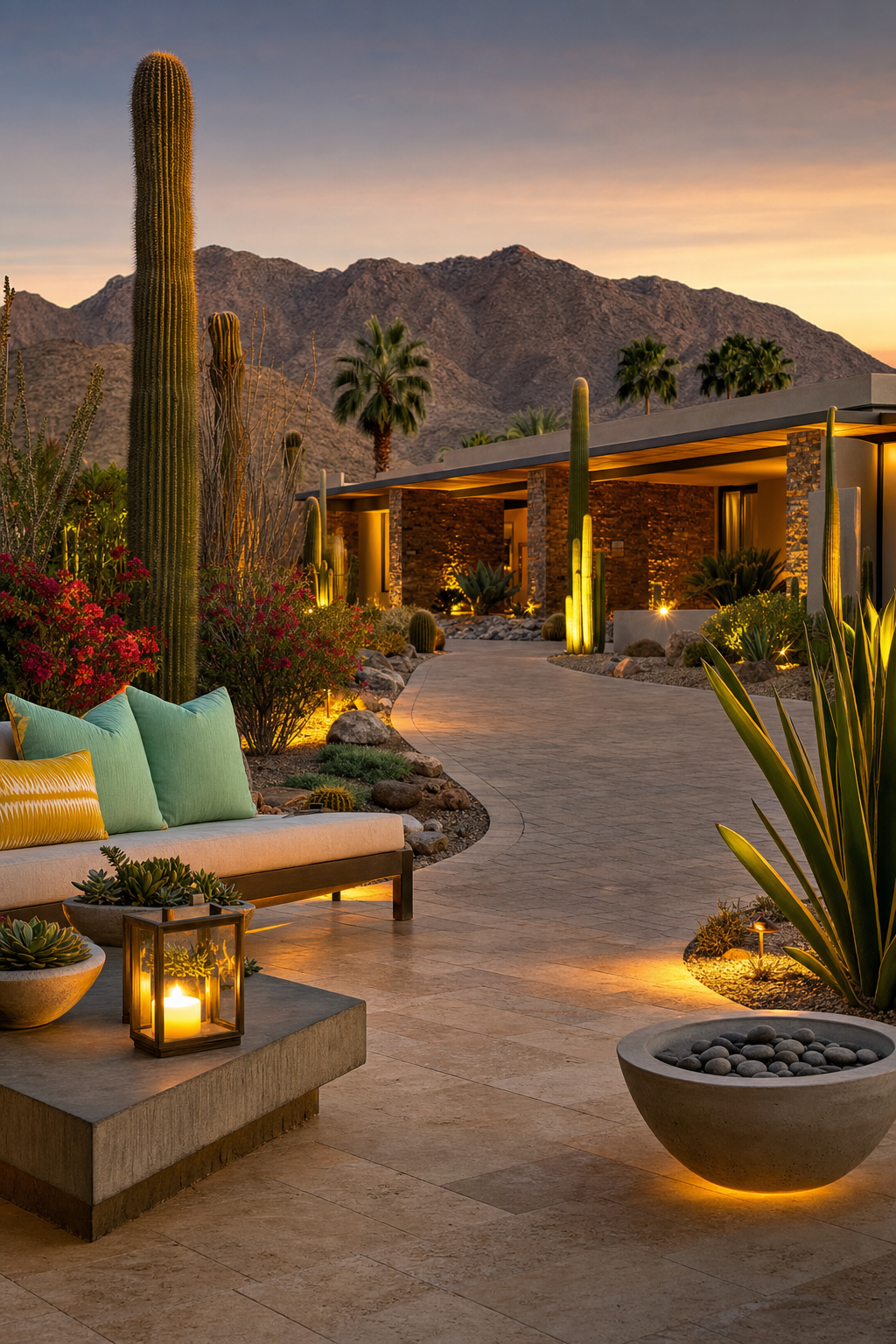
Beyond basic material choices, local zoning codes in the Coachella Valley play a significant role in determining your final paver patio cost Palm Desert. Specifically, the City of Palm Desert enforces Chapter 25.52 of the Landscaping rule, which mandates that at least 25 percent of a residential lot remains a pervious surface. This regulation is particularly impactful for front yard transformations where the combined area of high end paver driveways and entryways might otherwise exceed the allowable non-porous coverage.
To remain compliant while maximizing usable space, many homeowners must opt for permeable paver systems. These installations are engineered to allow water to infiltrate the ground through widened joints filled with small aggregates rather than running off into the municipal storm drains. This technical requirement shifts the project budget because the engineering beneath the surface is more intensive.
System Type | Installation Components | Estimated Cost (Installed per sq ft) |
|---|---|---|
Traditional Pavers | Standard sand base and joints | $18 to $34 |
Permeable Pavers | Open-graded stone base and specialized aggregates | $22 to $40 |
The higher price point for permeable systems is driven by the complexity of the sub-surface preparation. Unlike standard patios, these require a deep profile of specialized crushed stone layers without the fine particles that typically clog drainage. While the upfront investment is higher, it serves as a necessary insurance policy against the flash flooding common during the Coachella Valley monsoon season. Furthermore, failing to account for these rules during the planning phase can result in costly permit rejections or the requirement to tear out non-compliant surfaces later.
Cost Breakdown by Common Project Sizes
Navigating the paver patio cost Palm Desert requires looking beyond square foot averages to the actual footprint of the project. Small, specialized areas often carry a higher per unit price due to the fixed costs of mobilization; conversely, expansive layouts benefit from significant economies of scale. Understanding how these dimensions translate to total project expenditure helps in aligning design goals with realistic 2026 market rates.
For a 200 square foot project, which typically serves as a private seating area or a dedicated fire pit nook, homeowners should budget between $3,600 and $9,000. These smaller projects are often more labor intensive relative to their size because they require the same precision grading and equipment transport as a much larger job. The fixed costs for permitting and site protection remain constant, regardless of the area covered.
The most common residential request is the 400 square foot patio, effectively a 20x20 foot square. This size offers enough room for a full dining set and lounge area. Depending on the material chosen, from standard concrete to luxury porcelain, a 20x20 paver patio ranges from $7,200 to $18,000.
Project Size | Typical Use Case | Estimated Cost Range |
|---|---|---|
200 sq ft | Small seating area or fire pit | $3,600 to $9,000 |
400 sq ft | Standard 20x20 outdoor living | $7,200 to $18,000 |
1,000 sq ft | Pool deck or large entertaining | $17,000 to $40,000 |
Large scale installations, such as 1,000 square foot pool decks or multi-zone custom stone patios, often see a slight decrease in the cost per square foot. This reduction occurs because the logistical overhead, including delivery fees for bulk base aggregates and the time spent transporting heavy compaction equipment, is spread over a larger surface area. When we mobilize a crew for a major project, we maximize the efficiency of excavation and grading machinery. This efficiency is even more pronounced when combining a patio with high end paver driveways, as the shared mobilization of equipment reduces the overall project burden compared to executing the two projects separately.
Material Matters: From Desert Travertine to High Performance Porcelain
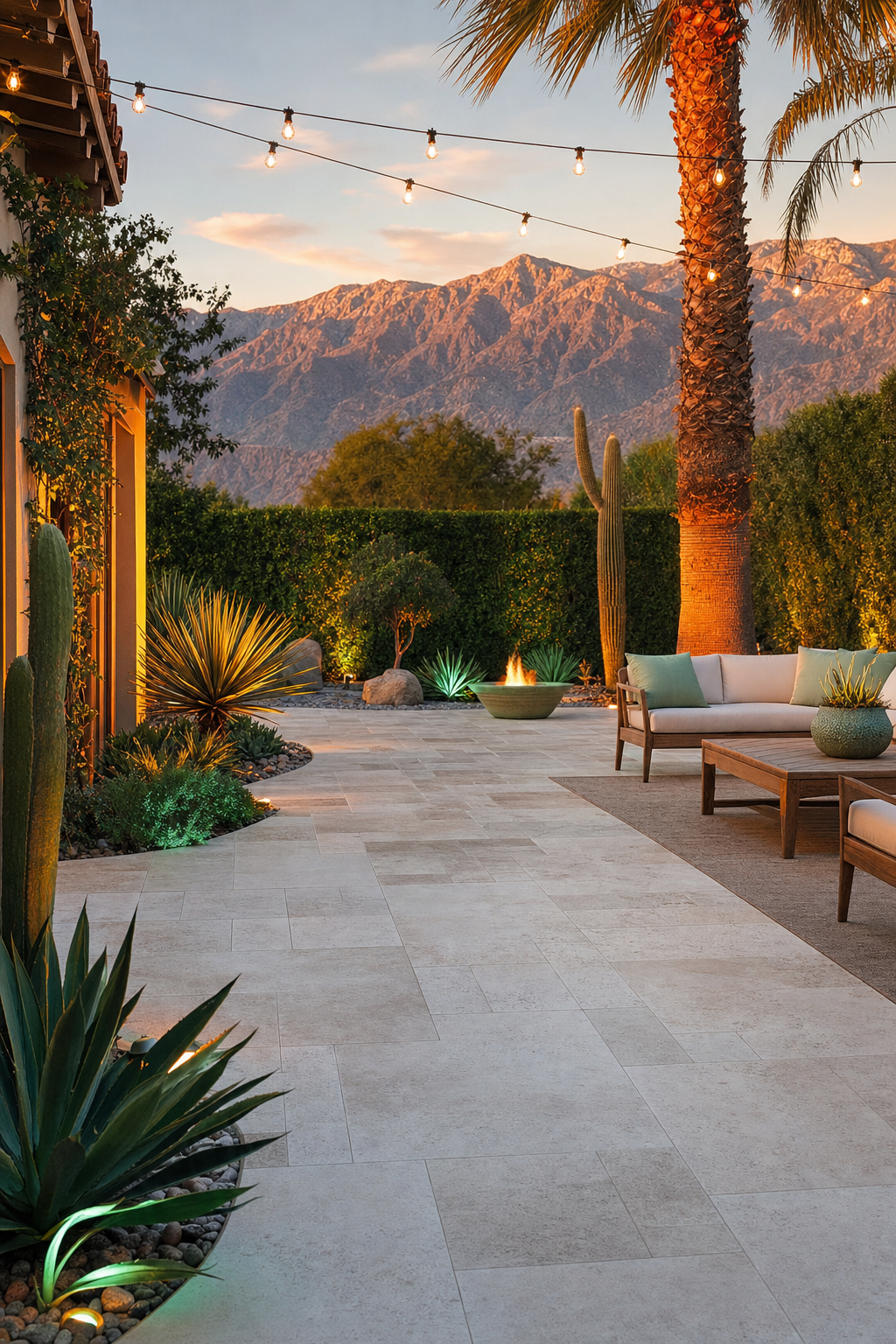
Choosing the right surface is the most significant variable in the overall paver patio cost Palm Desert residents encounter during the design phase. In our climate, material performance is not just an aesthetic choice; it is a thermal necessity. Standard concrete pavers, such as those from Angelus, typically range from $4 to $9 per square foot for the units alone. While these are highly durable and offer various textures, they tend to absorb and hold solar heat, which can be a drawback for poolside applications.
Travertine serves as a sophisticated alternative, priced between $8 and $15 per square foot for the stone itself. For those investing in custom stone patios, the value proposition extends beyond visual appeal. Travertine is naturally porous and possesses a lower thermal mass, meaning it stays significantly cooler under the direct desert sun than concrete. This characteristic makes it a standard for high traffic outdoor areas where barefoot comfort is paramount.
Material Type | Material Cost (per sq ft) | Key Desert Performance Attribute |
|---|---|---|
Concrete (Angelus) | $4 to $9 | High structural durability and variety |
Natural Travertine | $8 to $15 | Superior thermal cooling for bare feet |
Outdoor Porcelain | $15 to $25 | Slip resistance and zero water absorption |
High performance porcelain has recently become the preferred choice for luxury estates in Indian Wells and Rancho Mirage. Priced between $15 and $25 per square foot, porcelain offers nearly zero water absorption and exceptional slip resistance. Its density and specialized manufacturing prevent it from reaching the extreme temperatures seen with darker natural stones, making it an elite option for contemporary landscapes and high end paver driveways.
Hardscape Installation Variables: Demolition and Soil Preparation
A significant portion of the paver patio cost Palm Desert homeowners encounter is allocated to what lies beneath the surface. Site preparation in the Coachella Valley is a rigorous technical process, often beginning with the demolition of existing surfaces. Removing cracked or lifting concrete typically adds $2 to $5 per square foot to the budget. This cost covers the heavy equipment labor required for breakout and the specialized hauling fees for debris disposal, ensuring the new installation begins on a stable grade.
The sandy composition of Coachella Valley soil presents unique stability challenges. To prevent the pavers from shifting or sinking, we excavate to a depth that allows for a 4 to 6 inch sub-base of densely compacted aggregate. Skipping this foundation to save on initial costs is a common mistake that leads to structural failure; without a rigid base, the natural movement of the desert floor will inevitably cause the pavers to crest and dip over time. This foundational work is just as critical for high end paver driveways as it is for pedestrian areas.
Installation Component | Estimated Cost (per sq ft) | Purpose |
|---|---|---|
Concrete Demolition | $2 to $5 | Removal of old, failed surfaces |
Excavation & Sub-Base | $2 to $6 | Structural stability in sandy soil |
Polymeric Sand | $1 to $2 | Joint stabilization and pest prevention |
Finally, the application of polymeric sand is an essential finishing cost, generally ranging from $1 to $2 per square foot. In our environment, this specialized sand hardens to create a flexible but impenetrable seal. This is the primary defense against the invasive weeds and persistent ant hills that frequently plague custom stone patios in the desert region.
Why Pavers Beat Poured Concrete in Palm Desert
Homeowners frequently ask if it is cheaper to pour concrete or use pavers. In terms of the initial check you write, concrete is less expensive, typically costing between $10 and $18 per square foot. However, this lower upfront price often triggers what we call the desert tax. In the Coachella Valley, extreme thermal cycles see temperatures swing from 120 degrees in the summer to near freezing on winter nights. This causes rigid, poured concrete to expand and contract until it inevitably cracks, often within just a few years of installation.
Pavers offer a superior long term value because they function as a flexible pavement system. The individual units and specialized joints allow the surface to move slightly with the shifting desert soil without fracturing. If a pipe leaks or an irrigation line needs repair, pavers can be removed and replaced seamlessly. With poured concrete, you are forced to jackhammer the slab and leave a permanent, unsightly patch.
Feature | Poured Concrete | Interlocking Pavers |
|---|---|---|
Upfront Cost (sq ft) | $10 to $18 | $18 to $45 |
Lifespan in Desert | 10 to 15 years (with cracks) | 25 to 50+ years |
Repairability | Difficult and Patchy | Simple and Seamless |
Property ROI | Standard | High |
Beyond durability, the impact on property value is significant. A well executed project featuring custom stone patios or high end paver driveways provides a much higher return on investment than basic concrete. While the initial paver patio cost Palm Desert residents pay is higher, the absence of future repair bills and the boost in curb appeal make it the more fiscally responsible choice for the regional climate.
Integrated Costs: Lighting and Irrigation Adjustments
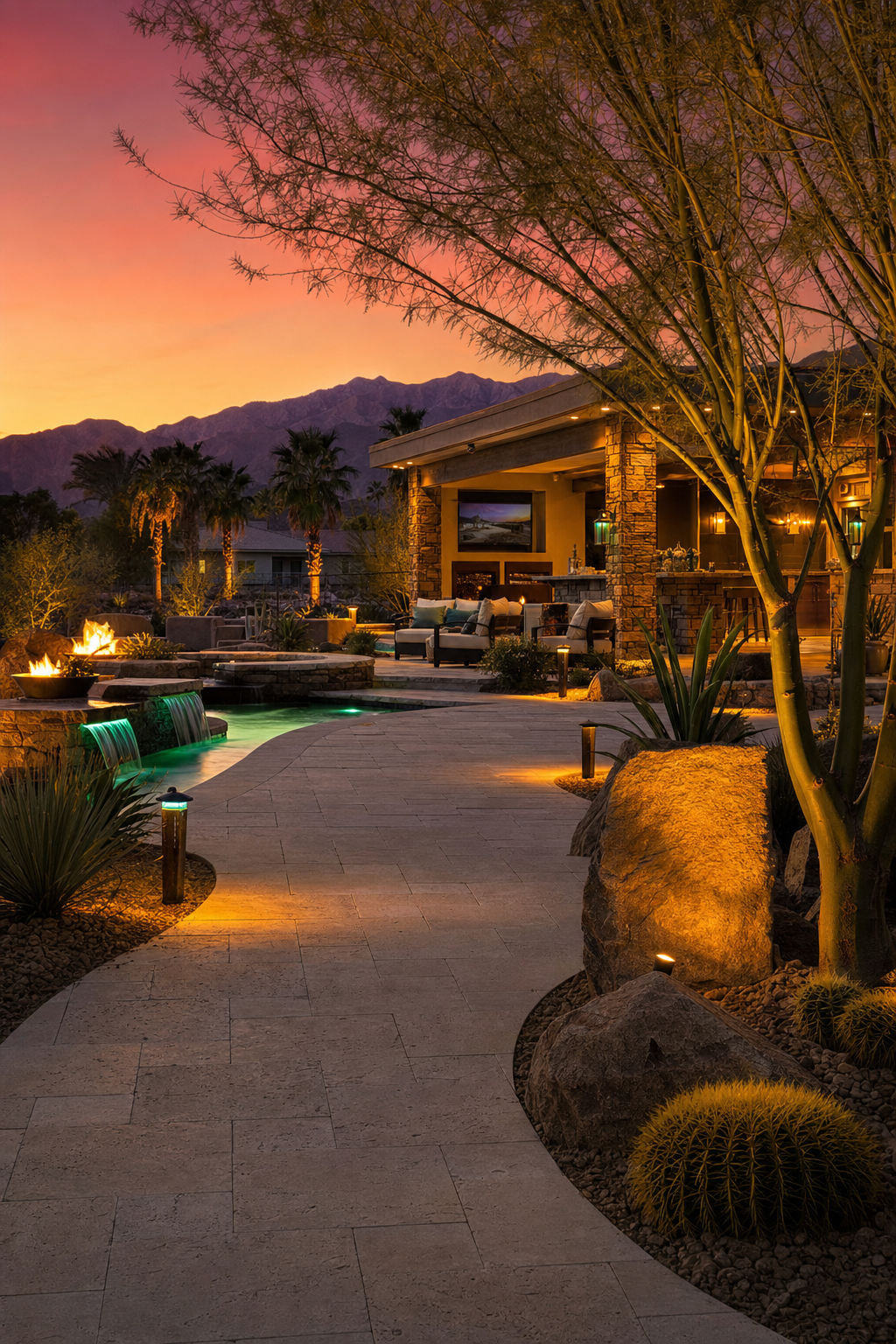
A comprehensive paver patio cost Palm Desert quote must account for the utilities hidden beneath the stone. Construction offers a unique window to reroute existing irrigation lines, a step that prevents future leaks from compromising the structural integrity of your new surface. Ignoring these subterranean systems is a common oversight in budget quotes, yet adjusting zones is vital for local desert flora.
This is also the most efficient moment to install professional landscape lighting. A standard setup, including path lights and architectural up-lighting for palms, typically ranges from $2,500 to $5,000. Integrating these systems during the sub-base preparation ensures that wires are safely sleeved and hidden, providing a seamless finish for both custom stone patios and high end paver driveways.
Integrated System | Primary Benefit | Estimated Budget |
|---|---|---|
Low Voltage Lighting | Safety and evening ambiance | $2,500 to $5,000 |
Irrigation Rerouting | Leak prevention and plant health | $800 to $2,500+ |
Protective Sleeving | Future-proofing for utilities | $300 to $700 |
Navigating the costs of a new patio in Palm Desert requires balancing your aesthetic goals with the practical realities of local installation. By understanding the 2026 pricing landscape, you can make informed decisions that add lasting value to your home. If you want expert help ensuring your project is built to withstand the unique Coachella Valley climate, feel free to visit our About page to learn more concerning our team and local experience. We are here to guide you through every step of the installation process.