Successful Palm Desert outdoor living fire pit design requires early planning for underground gas lines, electrical connections for automated ignition, and integrated drainage systems to manage heavy desert rainfall. These hidden utilities must be mapped and installed before hardscaping begins to ensure safety, functionality, and adherence to Coachella Valley building codes.
Nothing ruins a perfect Coachella Valley evening faster than realizing your new fire pit lacks the necessary gas flow for a robust flame, or worse, seeing your premium pavers lifted to repair a forgotten electrical conduit. Many Palm Desert homeowners focus solely on the aesthetic finish; however, the true luxury of an outdoor living space lies in the systems hidden beneath the surface. In our unique desert climate, proper infrastructure is the difference between a functional retreat and a costly renovation project. This guide examines the essential technical requirements you must address before the first stone is laid. We will explore gas line sizing for optimal heat, integrated lighting automation for evening ambiance, and the vital role of subsurface drainage. Understanding these hidden utilities ensures your fire pit installation remains a seamless, permanent upgrade to your desert estate.
Designing Your Desert Winter Oasis Beyond the Surface
As the sun sets behind the San Jacinto Mountains, outdoor life in the Coachella Valley undergoes a distinct shift. The cooling temperatures turn attention away from the pool and toward the warmth of a central gathering point. While many homeowners begin their journey by browsing catalogs of fire bowls or selecting the perfect texture for custom stone patios, the long term success of a Palm Desert outdoor living fire pit design relies almost entirely on the infrastructure buried beneath the finish grade.
Most design blogs focus on the visual allure of a flickering flame against the desert night. However, a high end installation is an engineering project as much as an aesthetic one. Before a single paver is laid or a stone is set, a precise network of gas lines, electrical conduits, and drainage systems must be integrated into the site. In the unique environment of Palm Desert, where sandy soil and extreme heat cycles affect material expansion and utility safety, these subsurface components are not optional extras. They are the backbone of the system. This guide moves beyond the surface to address the technical requirements of luxury desert outdoor living solutions, ensuring your fire feature operates safely and efficiently for years to come.
Gas Line Logistics: Sizing and Safety for Coachella Valley Fire Pits
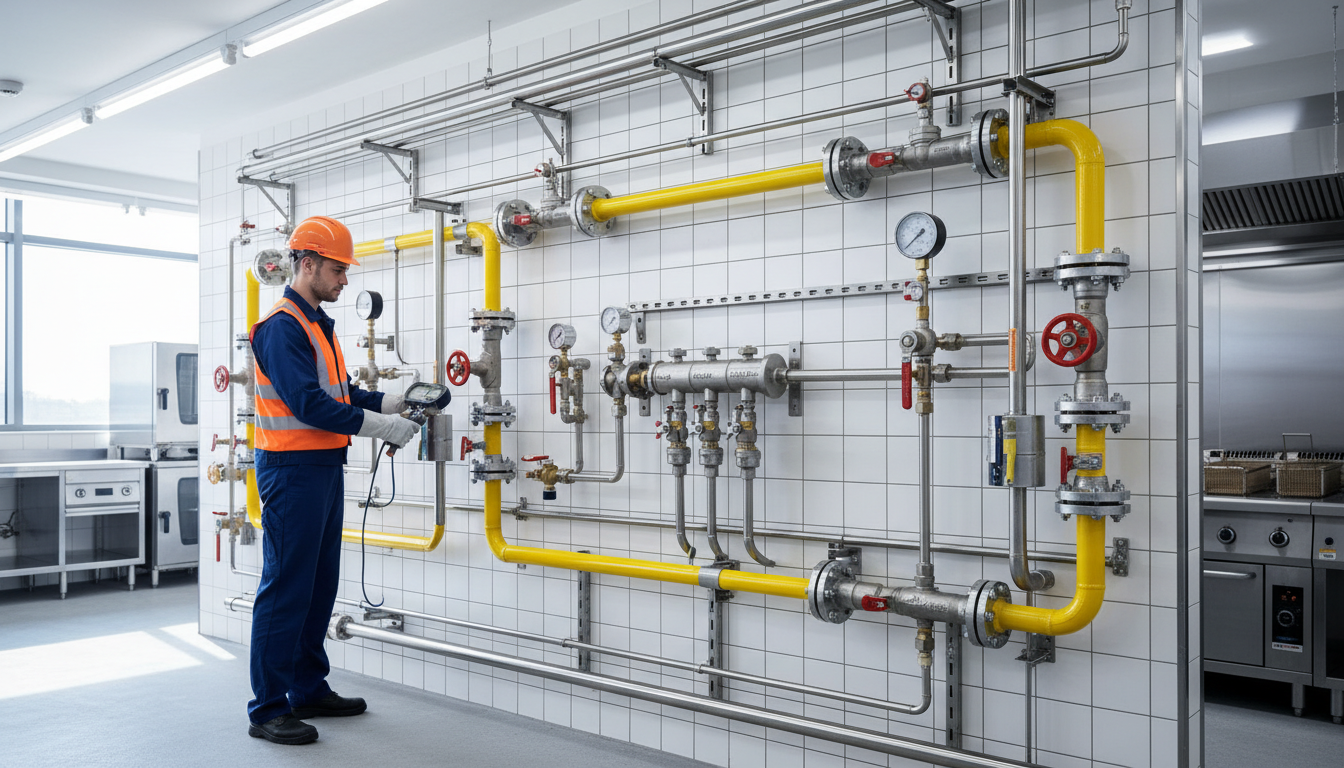
The primary technical hurdle in any Palm Desert outdoor living fire pit design is the gas delivery system. While aesthetics drive the initial conversation, the volume of fuel delivered to the burner determines if you get a robust, warm flame or a disappointing flicker. In the Coachella Valley, most residential properties utilize natural gas, though larger estates or remote properties may require liquid propane (LP) configurations. Natural gas requires a dedicated line from the main meter, whereas propane involves high pressure tanks that require specific regulator settings to ensure safety and consistent flow.
Determining the correct pipe diameter is a calculation of BTU (British Thermal Units) requirements against the linear distance from the fuel source. A standard fire pit burner often demands between 60,000 and 150,000 BTUs.
Distance from Meter | Burner BTU Output | Recommended Pipe Size |
|---|---|---|
Under 20 Feet | 65,000 - 90,000 | 3/4 Inch |
20 - 60 Feet | 90,000 - 150,000 | 1 Inch |
Over 60 Feet | 150,000+ | 1.25 Inch |
A 3/4 inch line is frequently the minimum for short runs; however, we often specify a 1 inch line for Palm Desert properties where the fire pit is situated at the perimeter of the lot. Using a pipe that is too small leads to significant pressure drops, resulting in a weak flame that cannot withstand local wind gusts.
Local environmental conditions demand specific installation techniques. The sandy soil of the Coachella Valley is prone to shifting, which requires trenching to a depth of at least 18 inches to protect the line from surface weight and temperature fluctuations. Before the landscape lighting and irrigation or pavers are installed, the gas line must undergo a rigorous pressure test. Holding a specific PSI for 24 hours ensures there are no leaks in the joints, a step that is non negotiable before burying the utilities under tons of stone and sand.
Electrical Conduits and Integrated Lighting Automation
While a manual match-lit system is functional, sophisticated Palm Desert outdoor living fire pit design now favors push-button convenience and automated sequences. In upscale neighborhoods like Indian Wells and Rancho Mirage, homeowners frequently request that their fire features synchronize with their overall landscape lighting and irrigation systems. Achieving this level of control requires running dedicated electrical conduits beneath the hardscape well before the first paver is set.
Electronic ignition systems, specifically those rated for the high-wind environments common in the valley, require a consistent power source to operate safely. We install Schedule 40 PVC conduit to protect low-voltage or line-voltage wiring from the weight of the patio and the periodic moisture from irrigation. These conduits facilitate the use of All Weather Electronic Ignition Systems (AWEIS), which allow for remote operation via smart home platforms such as Lutron, Crestron, or Control4. This allows the fire pit to be programmed as part of an "evening" scene, where the flames ignite as the perimeter lights dim.
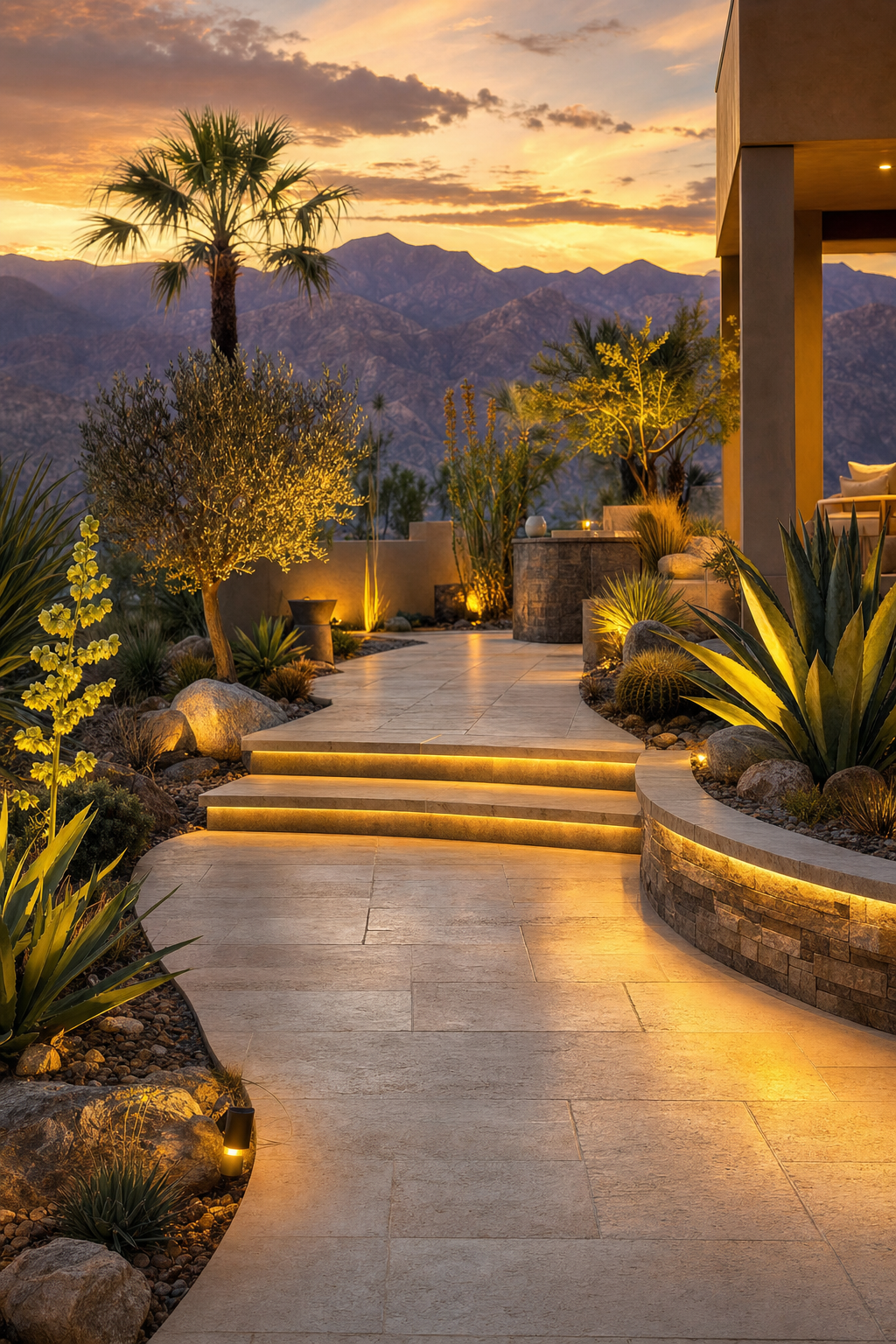
The hallmark of a professional installation is the total absence of visible hardware. By integrating the electrical infrastructure during the sub-grade phase, we can hide LED toe-kick lighting beneath the fire pit ledge or tuck accent lights into the surrounding masonry without unsightly exposed cables. This creates a clean, architectural finish where the technology provides utility without detracting from the natural stone textures. Proper coordination at this stage ensures the ignition transformer and control modules are housed in accessible yet concealed vaults, maintaining the high-end aesthetic expected in Coachella Valley estates.
The Critical Role of Sub Surface Drainage in Hardscape Design
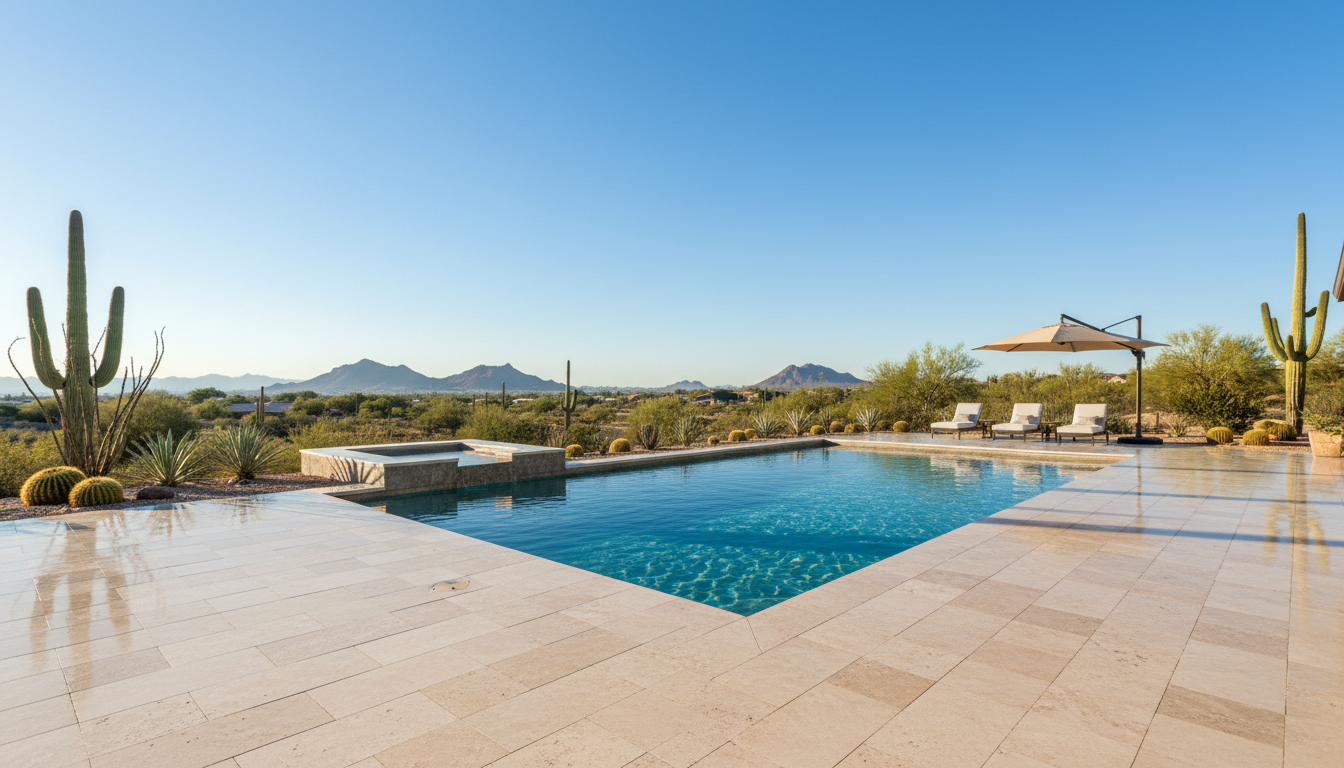
While gas and electricity provide function, water management provides longevity. The hidden enemy of desert hardscaping is not the sun; it is the infrequent but intense flash flooding and runoff characteristic of the Coachella Valley. Without a comprehensive drainage plan, a sophisticated Palm Desert outdoor living fire pit design can be compromised by a single heavy storm. Water that pools around the base of a fire feature or saturates the sub-grade materials causes the sand and gravel layers to shift, leading to uneven pavers and structural sinking.
To mitigate these risks, we integrate specific subsurface drainage systems before any aesthetic work begins. This involves precise grading, ensuring the entire patio surface slopes away from the fire pit at a minimum of one percent. In areas where the natural topography traps water, we install French drains. These systems consist of perforated pipes surrounded by gravel and wrapped in filter fabric, designed to redirect runoff safely toward the street or a dedicated dry well. By addressing these hydraulic pressures during the initial installation phase, Pavers Pavers Pavers ensures that your custom stone patios remain level and stable, preventing the costly repairs that occur when water is allowed to undermine the foundation of your outdoor space. This technical foresight is what separates a permanent landscape transformation from a temporary cosmetic fix.
Choosing Between Built in Fire Pits and Fire Tables for Local Patios
Deciding between a fixed feature and a portable unit is a fundamental choice in Palm Desert outdoor living fire pit design. While standalone patio heaters provide functional warmth for dining areas, they lack the architectural presence required to anchor a luxury outdoor space. Similarly, retail propane fire tables offer flexibility, yet they often require visible tanks or clumsy hoses that disrupt the visual flow of a high end patio. For homeowners seeking a true landscape transformation, a built in fire pit is the superior choice.
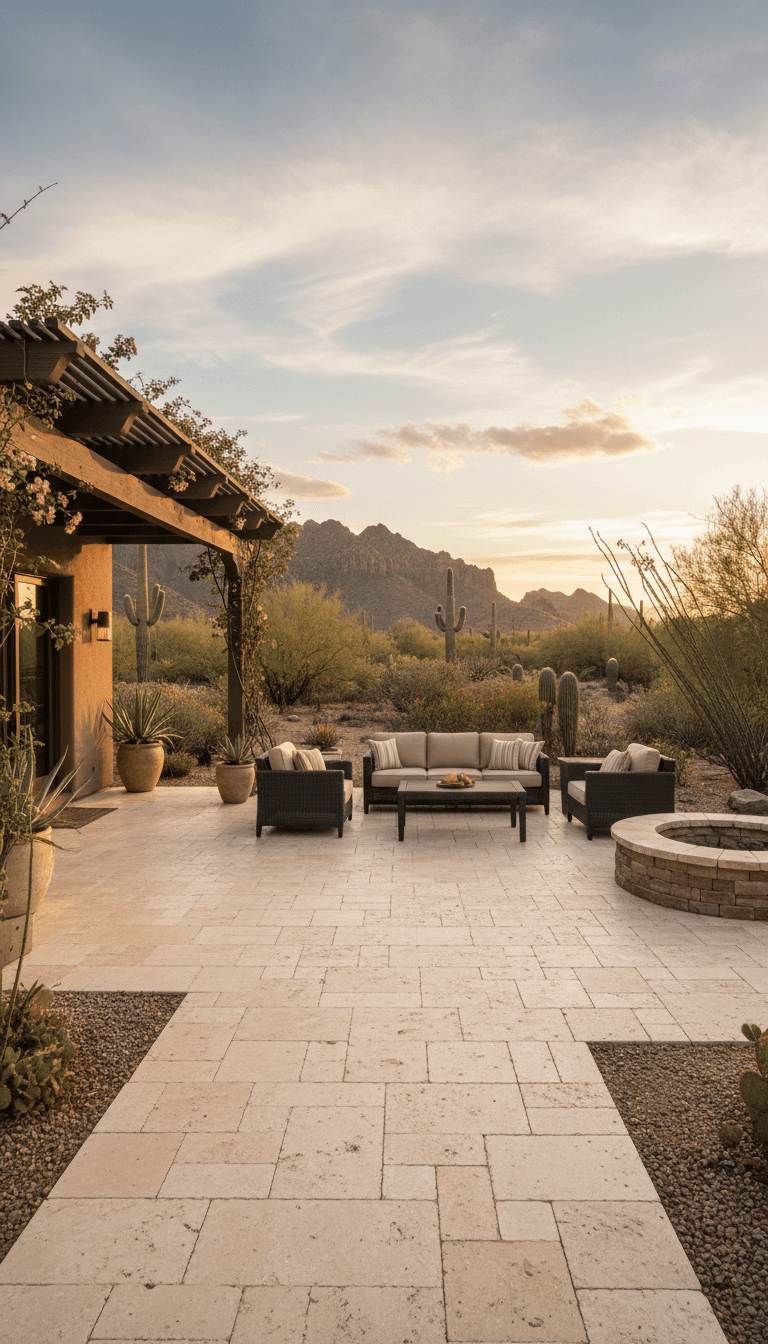
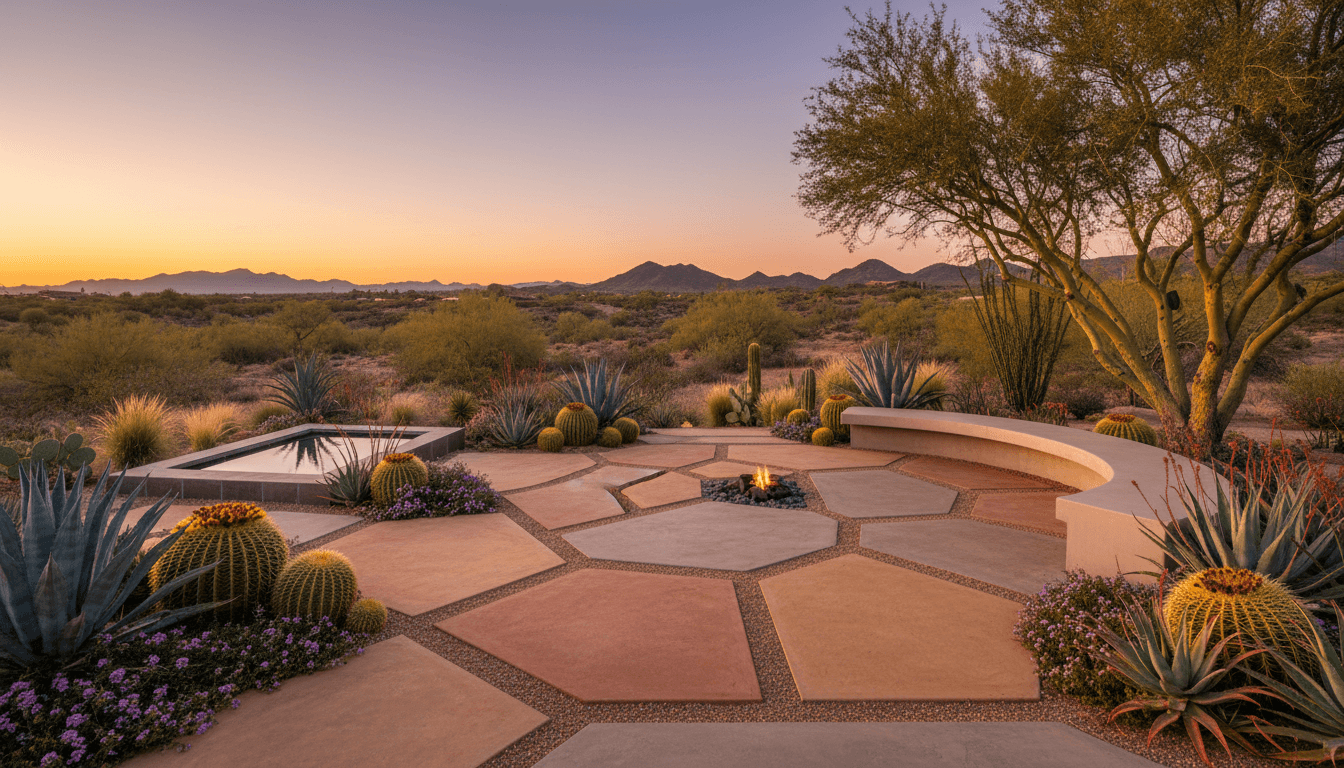
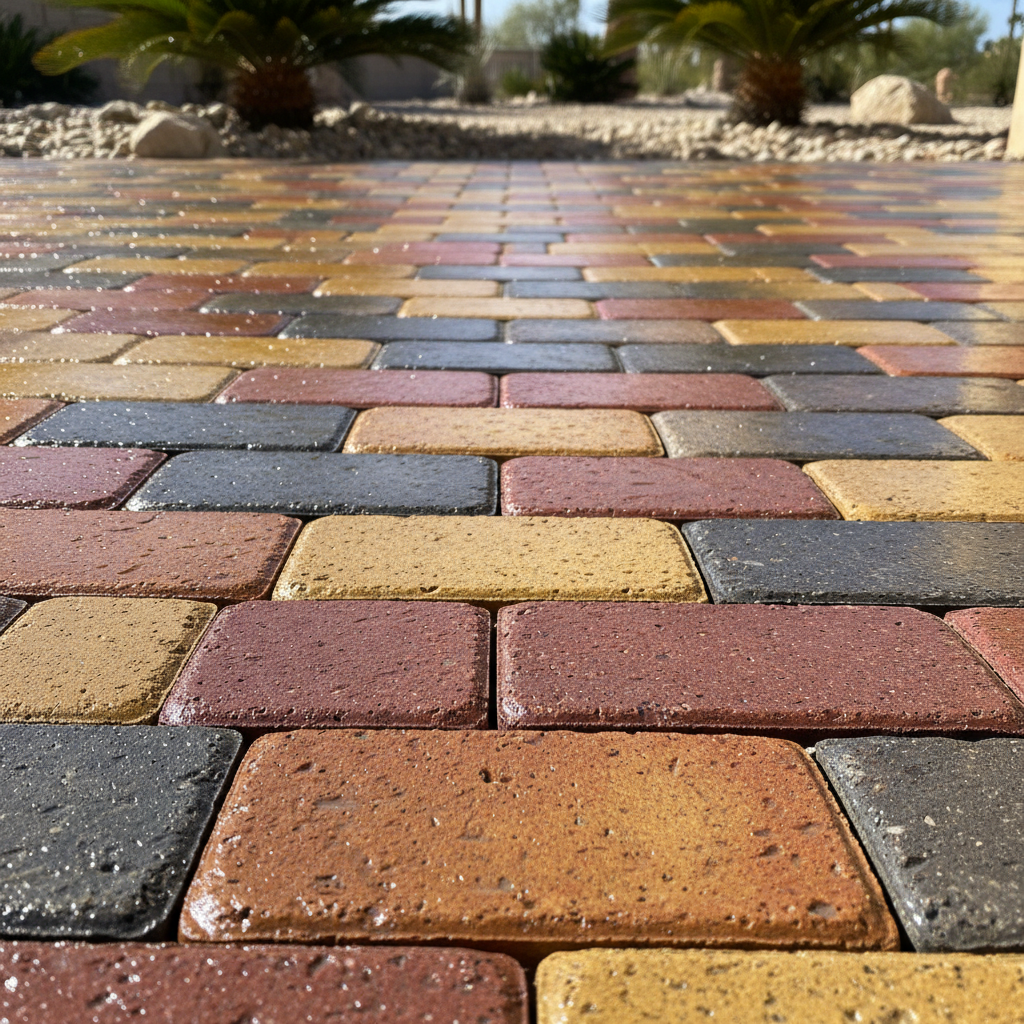
A built in feature allows for a permanent gas connection, eliminating the need to swap tanks during a social gathering. This permanence dictates the site preparation; the utilities must be hard piped through the sub grade before the stone is laid. When we design these features, we often utilize the same travertine or natural stone pavers used for the patio surface to clad the fire pit itself. This creates a cohesive, monolithic aesthetic where the fire feature appears to grow naturally out of the ground.
Feature Type | Utility Requirement | Flexibility | Aesthetic Integration |
|---|---|---|---|
Patio Heaters | None (Portable) | High | Low (Utility focused) |
Propane Fire Tables | Portable Tank | Moderate | Moderate (Standalone) |
Built-in Gas Fire Pits | Dedicated Gas/Electric | Low (Permanent) | High (Seamless Masonry) |
In the Coachella Valley, where wind can be a factor, a built in masonry pit provides a stable windbreak for the burner. Using natural stone ensures that the feature withstands the intense desert UV rays without fading or cracking, a common issue with the composite materials used in mass market fire tables. By committing to a built in solution, you elevate the fire pit from a mere appliance to a structural element of your desert outdoor living solutions. This approach ensures the fire feature is perfectly scaled to your custom stone patios, providing a balanced and intentional layout.
Why Utility Planning Must Precede Paver Installation
The most significant error a homeowner can make in Palm Desert outdoor living fire pit design is treating utilities as an afterthought. Retrofitting gas or electrical lines after a patio is completed is a logistical nightmare. It requires lifting dozens of pavers, trenching through compacted base material, and attempting to relay the stone without creating visible seams or settling issues. The labor cost to undo and redo high end hardscaping often exceeds the original installation price; it turns a simple utility run into a multi thousand dollar corrective project.
Proactive planning typically costs between $500 and $2,000 for utility runs situated close to the home's main meters. In contrast, failing to install a 1 inch gas line or a dedicated electrical conduit during the initial phase can easily triple these figures once the cost of stone removal and replacement is factored in. The risk of damaging the integrity of the sub-grade during a retrofit is high, often leading to drainage problems or shifting pavers in the future.
To ensure a seamless installation, we follow a strict pre-paver checklist: - Utility Marking: Identifying existing water and power lines to prevent service interruptions. - Trenching: Excavating to the required 18 inch depth to protect lines from the Coachella Valley's surface heat and sandy soil shifts. - Inspections and Pressure Testing: Verifying that gas lines hold pressure and electrical runs meet local building codes before they are buried. - Bedding and Shading: Surrounding pipes with fine sand to prevent rocky desert soil from puncturing the conduits.
Pavers Pavers Pavers manages this entire sequence, coordinating the technical requirements of landscape lighting and irrigation alongside the structural needs of custom stone patios. By integrating these systems from day one, we provide desert outdoor living solutions that are functional, durable, and free from the aesthetic compromises of retrofitted utility lines.
Successfully installing a fire pit in Palm Desert requires careful attention to the hidden systems that power your outdoor experience. Prioritizing utility planning early ensures your setup remains safe, efficient, and free from future complications. If you want expert help navigating these technical requirements, we are available to assist with your design. Our specialists can help you incorporate seamless utility lines into custom Stone Patios while maintaining a clean aesthetic. Let us handle the complexities so you can focus on enjoying your new backyard retreat.