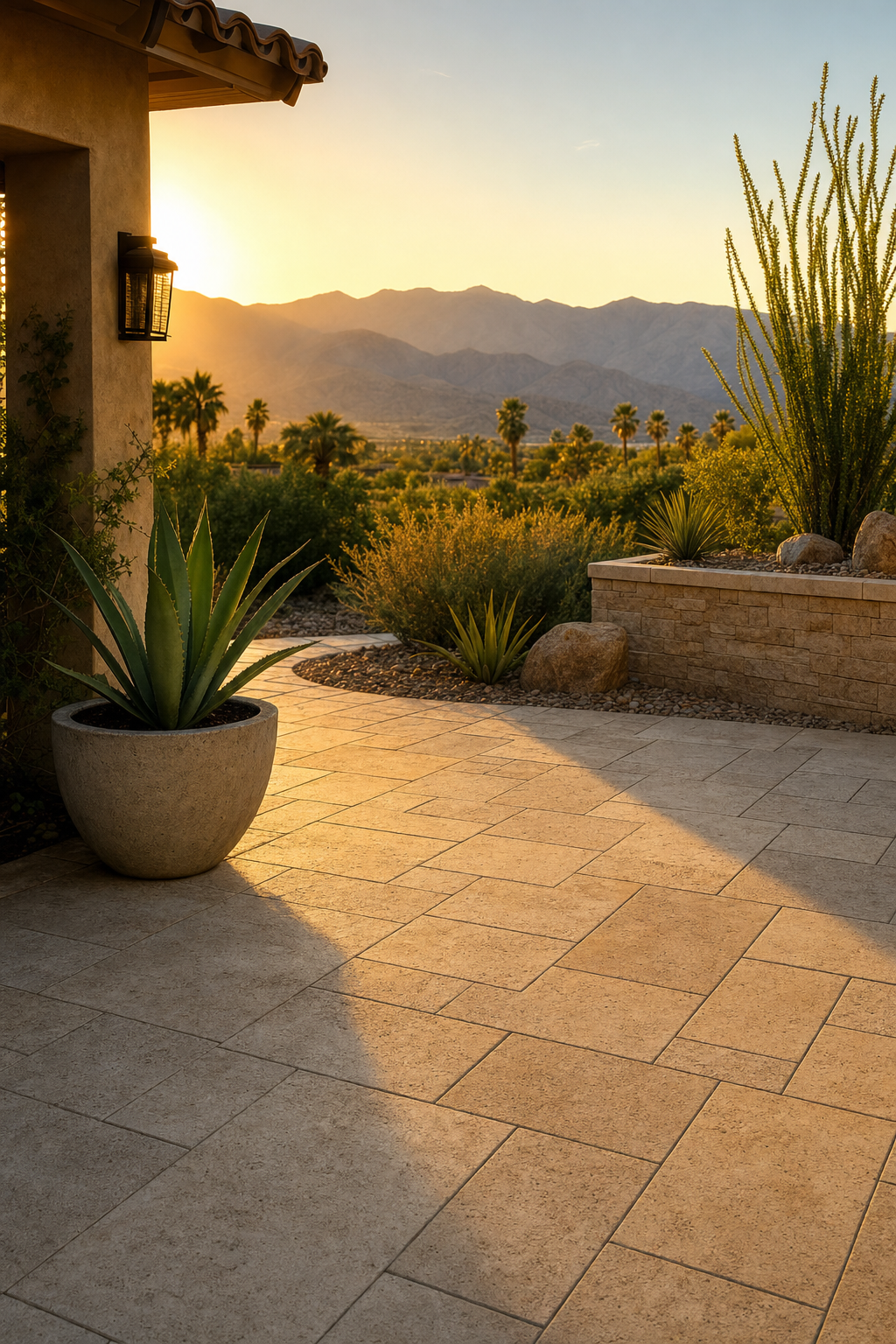
Effective Palm Desert winter yard care involves reducing irrigation frequency to approximately two days per week and adjusting schedules for seasonal rainfall. Homeowners should also apply mulch for frost protection and ensure deep watering for established trees every seven to ten days to maintain landscape health during the cooler months.
Homeowners in Palm Desert often struggle to balance the needs of their landscape when the daytime warmth fades into freezing winter nights. While the Coachella Valley is known for its sun, December frost can swiftly devastate a meticulously designed yard if you are not prepared. Maintaining your outdoor investment requires more than just a standard seasonal shift; it demands a sophisticated understanding of how water interacts with your hardscape and soil during the cooler months. In this guide, we provide expert insights into managing the December irrigation step down and protecting your delicate succulents from sudden temperature drops. You will also learn the critical importance of the 48 hour rain rule and how to monitor for signs of overwatering. By following these practical steps, you can ensure your desert landscape remains vibrant and your hardscape remains pristine throughout the winter season.
Understanding the December Irrigation Step Down in Palm Desert
As the Coachella Valley transitions from the intense heat of autumn into the cooler winter months, the biological requirements of your landscape change significantly. Successful Palm Desert winter yard care relies on understanding transpiration. This is the process where plants release water vapor into the atmosphere. During December, shorter days and lower solar intensity mean your plants lose far less moisture than they did just two months ago. Even though our desert air remains dry, the reduced heat allows the soil to retain moisture for much longer periods.
Following the Coachella Valley Water District (CVWD) guidelines is the most effective way to manage this transition. In October, a standard schedule often requires watering water-efficient shrubs and trees four days per week to combat the lingering heat. By December and January, this must be stepped down to just two days per week. For water-efficient shrubs, the target is roughly 0.7 gallons per day; for water-efficient trees, the volume is approximately 14 gallons per day. Non-desert trees may require more, but the frequency remains restricted to twice weekly.
Failing to adjust your landscape lighting and irrigation systems during this period creates a surplus of water that the desert soil cannot process. This excess moisture often sits stagnant, which is particularly problematic for properties featuring extensive stone patios or paved driveways. By adhering to a two-day schedule, you ensure that the root zones remain healthy without saturating the ground, preserving both the plant health and the structural integrity of your custom landscape design.
Managing Drip Irrigation Systems Beneath Your Hardscape
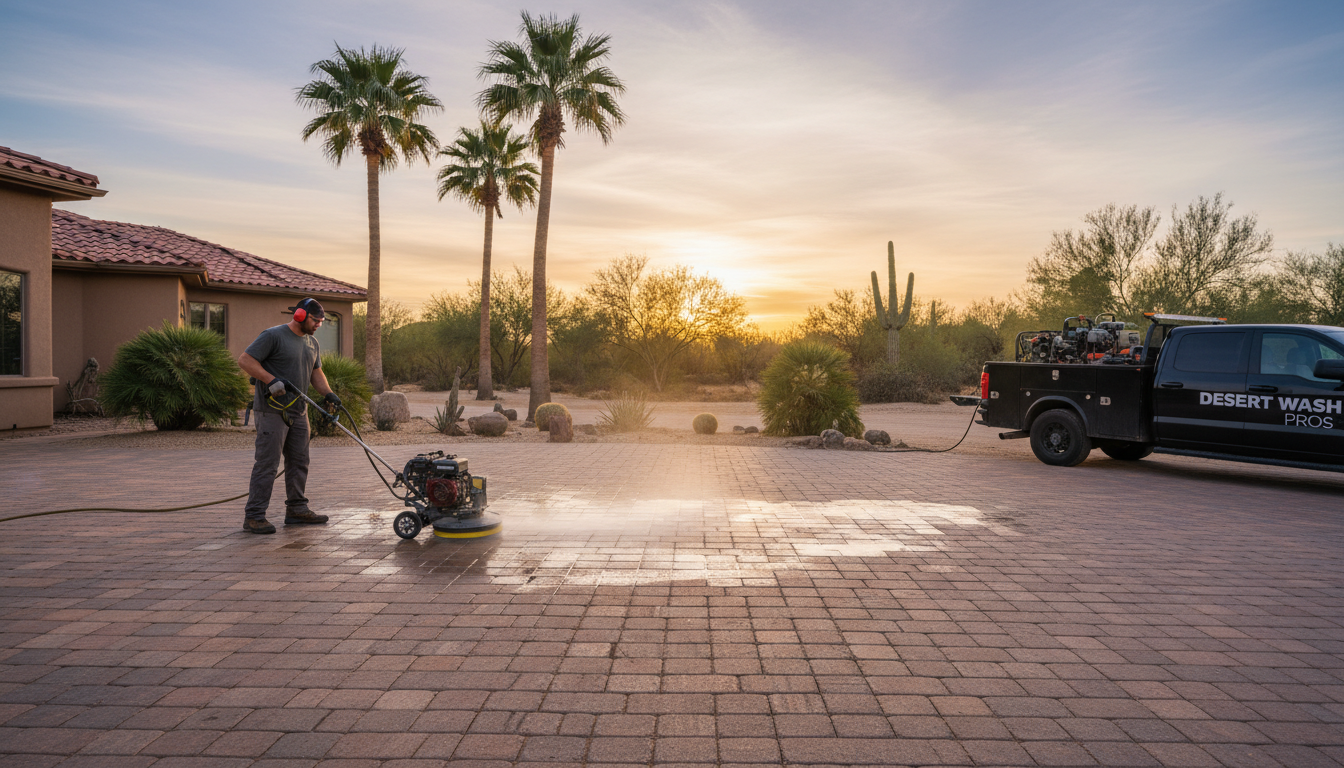
Managing water flow becomes a structural necessity when your irrigation lines run adjacent to or beneath high-end hardscaping. In a professional custom landscape design, drip lines are often strategically placed near the edges of stone patios and walkways to nourish border plantings. During the winter step-down, these lines require close monitoring. Because evaporation rates are lower in December, soil that stays saturated for too long poses a direct threat to the compacted base materials supporting your pavers.
When water pools beneath a hardscape foundation, it can compromise the structural integrity of the base prep. In Palm Desert winter yard care, we often see that failing to reduce irrigation frequency leads to subgrade softening. This instability causes individual pavers to shift or sink, creating uneven surfaces that require costly repairs. Furthermore, excess moisture facilitates the movement of salts through the concrete or stone, a process known as efflorescence. This manifests as a white, powdery residue on the surface of your driveway or patio, which detracts from the sophisticated aesthetic of the stone.
A professional inspection of your landscape lighting and irrigation systems is essential during the cooler months. We recommend checking drip emitters specifically for clogs or leaks that may be localized near a hardscape edge. A slow leak in a drip line buried next to a walkway can create a subterranean reservoir that stays hidden until the pavers begin to heave. By ensuring that emitters are functioning correctly and that the schedule is strictly limited to the CVWD recommended two days per week, you protect the investment you have made in your outdoor living space. Proper drainage and moisture management are just as important for the stone as they are for the soil.
Frost Protection for Sensitive Desert Succulents and Cacti
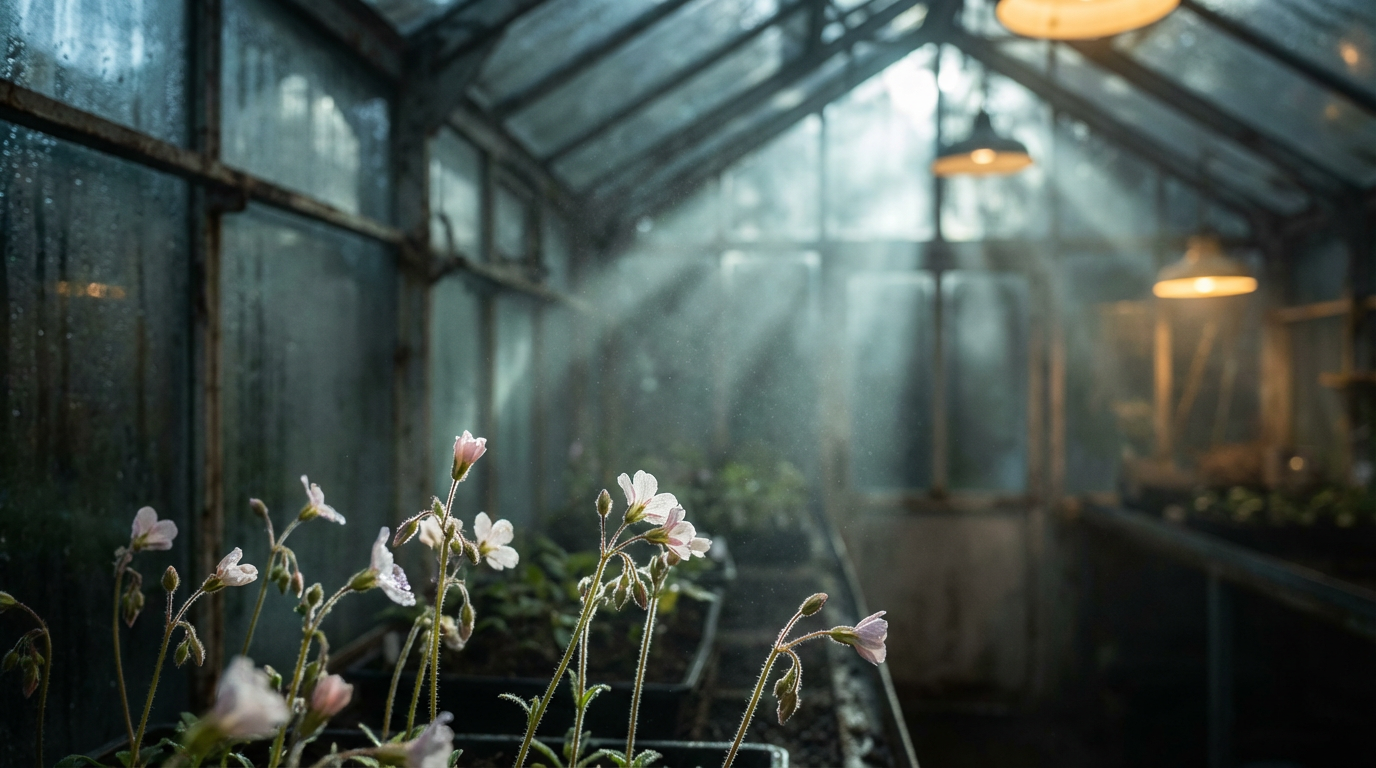
Palm Desert winter yard care involves more than just adjusting timers; it requires physical intervention when temperatures dip. While many desert species are resilient, several popular choices in a custom landscape design are vulnerable to frost damage. Agaves, Aloe Vera, and Kalanchoe are particularly sensitive when local forecasts predict temperatures falling below 32 degrees. When the mercury drops, the water stored within the fleshy leaves of these succulents can freeze, causing cellular collapse that leaves behind unsightly black spots or mushy, dead tissue.
To protect these specimens, always use professional frost cloth rather than plastic sheeting. Frost cloth is breathable, allowing for some air circulation and light penetration. Plastic, by contrast, traps moisture against the plant surface, which can lead to fungal rot or even intensify the cold if the plastic touches the foliage. For homeowners with tall, columnar cacti like the Mexican Fence Post or Organ Pipe, a simple and effective DIY solution is to place styrofoam cups over the growing tips. These tips are the most vulnerable part of the plant, and a cup provides just enough insulation to prevent the apical meristem from freezing.
Timing your watering is also a critical factor in frost survival. A fundamental rule of Palm Desert winter yard care is that a dry plant is significantly more cold-hardy than a saturated one. Excess water in the soil increases the humidity around the plant and makes the roots more susceptible to chilling injury. Ensure your landscape lighting and irrigation schedule allows for a drying period before a predicted cold snap. By maintaining a drier root zone and utilizing breathable covers, you protect the investment placed around your stone patios and walkways, ensuring your landscape remains vibrant until the spring warming begins.
The 48 Hour Rule: Managing Irrigation During Winter Rain Events
While December in the Coachella Valley is typically dry, the winter rain events that do occur require a specific management strategy to maintain landscape health. Effective Palm Desert winter yard care dictates that you must override your irrigation schedule whenever measurable rain falls. The Coachella Valley Water District (CVWD) recommends the 48 hour rule, which means keeping your landscape lighting and irrigation systems off during the storm and for at least two full days following the event.
For desert adapted species like Palo Verde or Mesquite trees, this pause is vital for survival. These trees have evolved to store moisture and can easily succumb to root rot if the soil remains saturated during the cooler, darker months. Overwatering during a rain cycle deprives the roots of necessary oxygen, creating a breeding ground for fungal pathogens that can compromise even the most established specimens in your custom landscape design.
Furthermore, excess runoff from rain combined with unnecessary irrigation can overwhelm the drainage channels integrated around your stone patios. Whether you use a manual override or a smart controller with weather sensing technology, ensuring the ground has time to breathe prevents the subterranean water accumulation that leads to structural shifting. Waiting for the soil to dry out naturally preserves the balance between plant hydration and hardscape stability.
Winter Mulching and Soil Insulation for Desert Landscapes
Maintaining stable soil temperatures is a critical component of effective Palm Desert winter yard care. While the air temperature fluctuates significantly between a sunny afternoon and a near-freezing night, the ground acts as a thermal battery. A 2 to 4 inch layer of organic mulch or decorative rock serves as vital insulation, slowing the rate at which heat escapes the soil. This barrier protects the delicate root systems of young trees and ornamental shrubs that have not yet established deep, frost-resistant foundations.
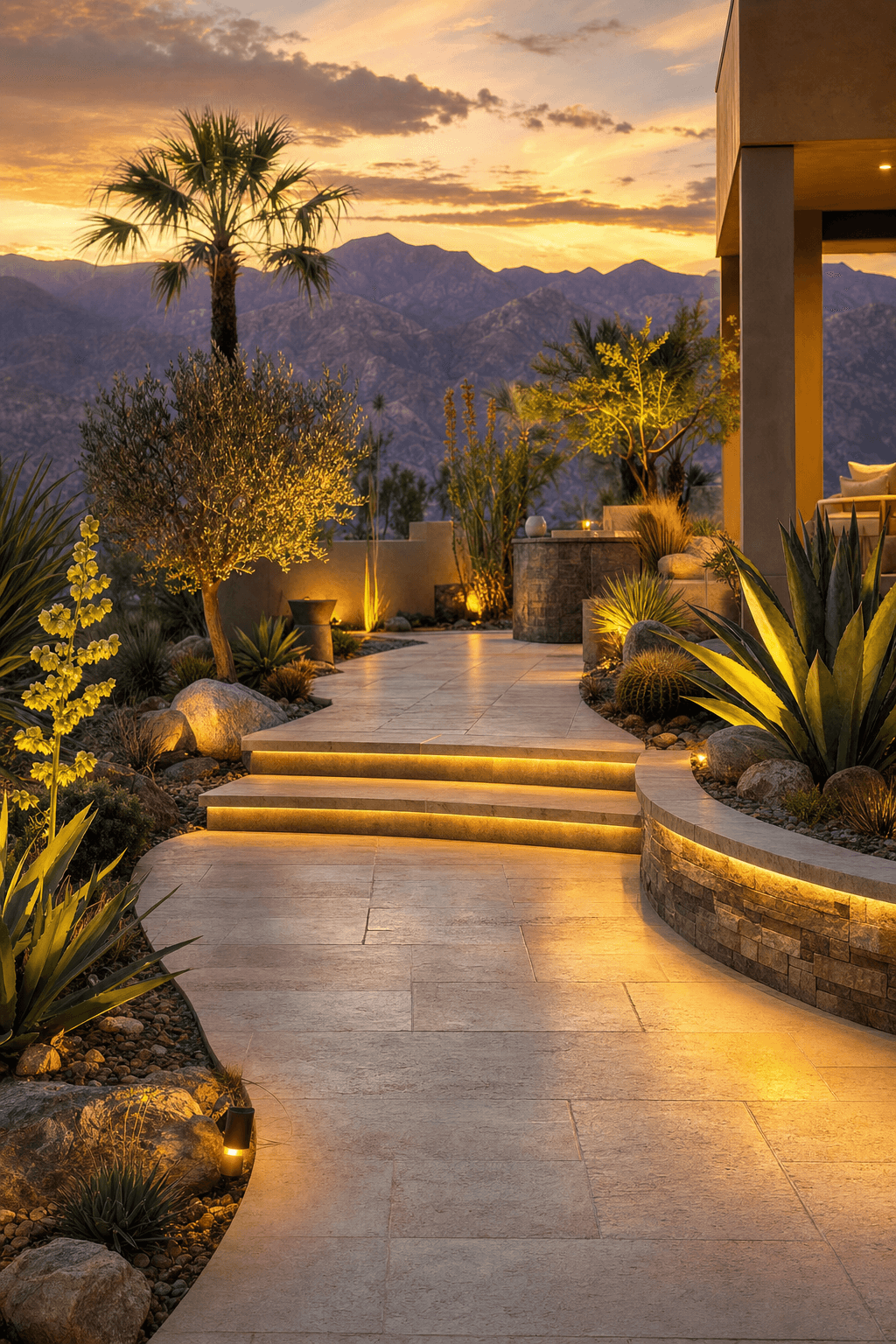
For properties featuring extensive stone patios and walkways, mulched islands and planters require specific attention. Hard surfaces can occasionally accelerate soil cooling at their edges by conducting heat away from the earth. By applying a thick layer of mulch in the planters immediately adjacent to your hardscaping, you create a thermal buffer that prevents the ground from freezing near the masonry. This layer also supports the efficiency of your landscape lighting and irrigation systems by reducing evaporation, ensuring that the minimal water applied during the winter remains available to the roots. Incorporating high-quality mulch or gravel into your custom landscape design provides a sophisticated, finished aesthetic while offering a functional defense against the Coachella Valley’s rare but impactful cold snaps.
Signs of Winter Overwatering in Your Palm Desert Yard
Identifying specific symptoms of excess moisture is a vital skill for maintaining a healthy custom landscape design during the cooler months. While you may have already adjusted your landscape lighting and irrigation to the CVWD recommended two days per week, individual microclimates or soil types may require even less. One of the most common indicators of overwatering is the yellowing of leaves on citrus trees, particularly the older leaves near the center of the canopy. This chlorosis often signals that the roots are oxygen-deprived due to waterlogged soil. Similarly, desert succulents like Agaves or Aloes will develop translucent, mushy spots or a softening at the base of the plant, which are clear warnings of impending root rot.
The condition of your hardscaping also provides critical clues for Palm Desert winter yard care. On stone patios and walkways, look closely at the sand or grout in the joints. The appearance of a green film, moss, or persistent dampness long after a watering cycle indicates that the area is not drying out sufficiently. This trapped moisture can eventually lead to structural shifting or aesthetic degradation. If you notice these signs, use the following checklist to troubleshoot your system:
Verify that your smart controller has transitioned to the December schedule of two days per week for water-efficient shrubs and trees.
Reduce the run time by one or two minutes per zone in shaded areas where evaporation is minimal.
Check for low head drainage where water pools at the lowest sprinkler head after the system shuts off.
Inspect the perimeter of your stone features to ensure no emitters are spraying directly onto the masonry or into the joints.
Navigating the specific needs of a Palm Desert winter ensures your outdoor space remains healthy and resilient against the occasional frost. By adjusting your irrigation habits and providing adequate cover for sensitive plants, you set the foundation for a vibrant spring landscape. If you prefer to have expert help managing these seasonal transitions, we invite you to browse our services for professional support. Our team is ready to help you maintain a beautiful, worry-free yard all year long.