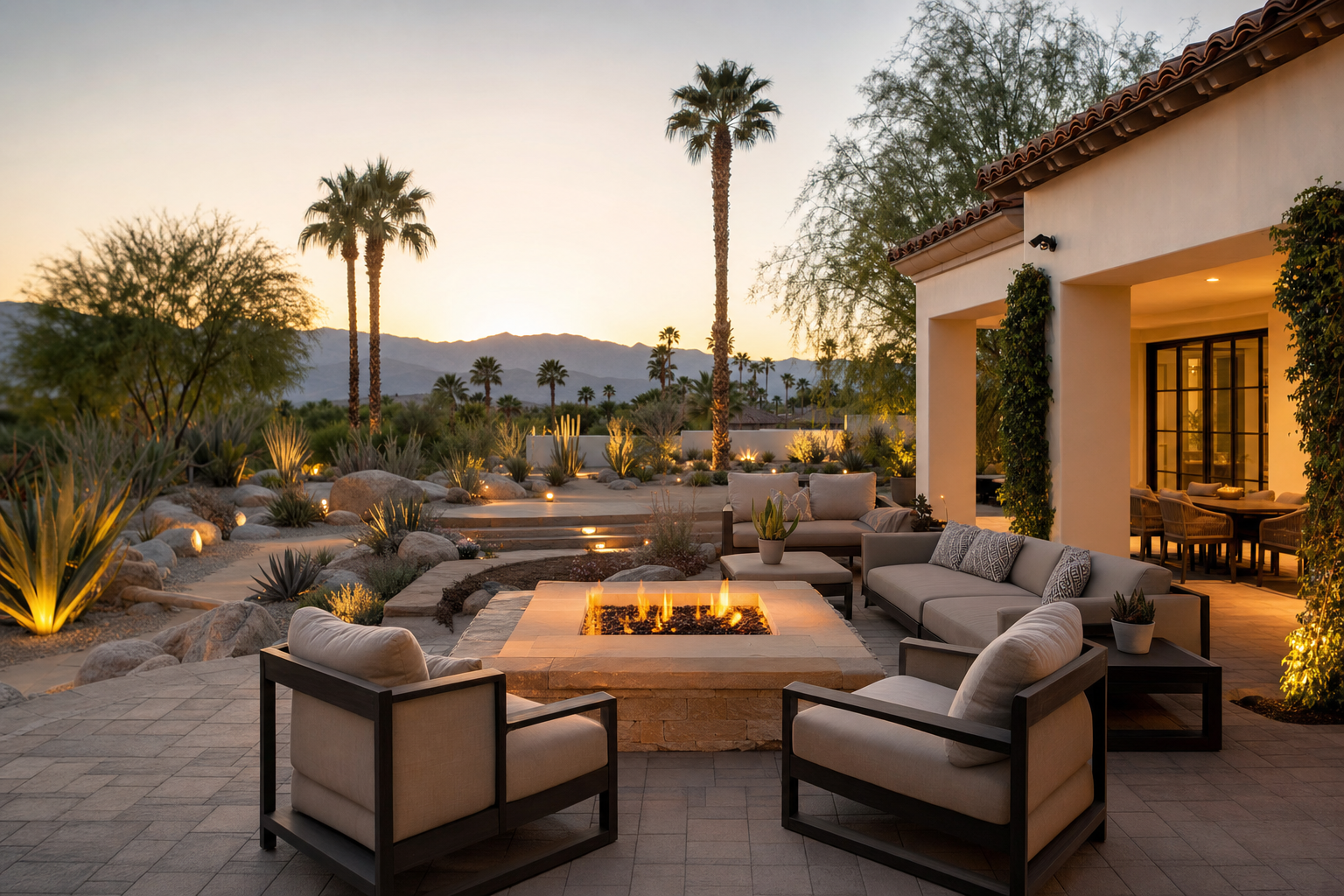
Pavers outperform traditional slabs when comparing a pavers vs concrete driveway desert heat Palm Desert because they naturally expand and contract without cracking. While solid concrete often fails under the intense Coachella Valley sun, interlocking pavers remain flexible and accommodate shifting desert soil; this durability reduces long term maintenance costs for local homeowners.
Living in Palm Desert means enduring summer afternoons where the mercury easily climbs past 120 degrees. For homeowners, this extreme heat is more than just a discomfort; it is a relentless force that eventually destroys traditional poured concrete. You have likely noticed those jagged, unsightly cracks snaking across your driveway after just a few seasons. These failures happen because rigid surfaces cannot accommodate the Coachella Valley's intense thermal expansion or its shifting desert floor. Choosing the right material is a necessity for preserving your property's curb appeal and structural integrity. In this guide, we will compare interlocking pavers against concrete to see how they handle heat retention, soil movement, and long term maintenance. You will learn why flexible hardscaping is the superior choice for high end desert properties and how the right investment pays dividends in durability and aesthetic value.
The Coachella Valley Climate Challenge: 120 Degrees and Shifting Soil
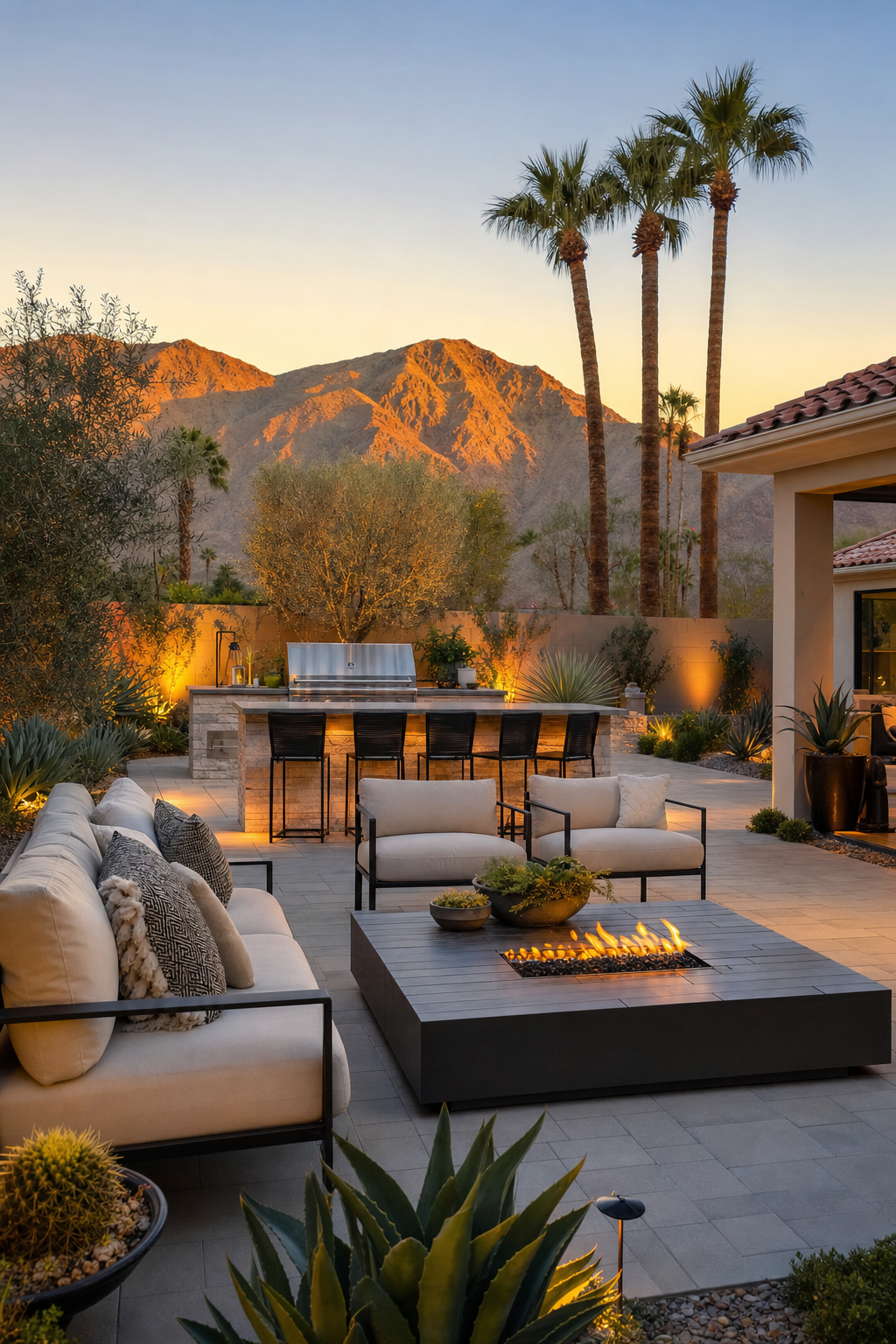
Palm Desert, La Quinta, and Indian Wells present one of the most punishing environments in the country for residential hardscaping. The Coachella Valley is defined by its extreme thermal cycling, a process where ground temperatures can soar to 120 degrees under the afternoon sun before plunging to 60 degrees at night. This sixty degree swing forces every building material on your property to physically expand and contract every twenty-four hours.
For homeowners considering the pavers vs concrete driveway desert heat Palm Desert debate, the primary challenge is how a material responds to this constant movement. Standard poured concrete is a rigid, monolithic slab. It attempts to resist these natural forces through sheer mass; however, in the high desert, resistance usually leads to failure.
The problem is compounded by the local geology. The Coachella Valley sits on deep layers of sandy, alluvial soil. This type of earth is naturally prone to minor shifts and settling, especially during rare heavy rains or seismic activity. When a rigid concrete slab is placed on top of shifting sand, the lack of flexibility is an invitation for structural stress. To ensure a long lasting entrance to your home, a custom driveway installation must account for both the vertical movement of the soil and the horizontal expansion caused by the heat.
This creates a fundamental conflict between rigid materials and flexible systems. While concrete remains a common choice due to lower upfront costs, its inability to breathe with the desert environment often leads to visible distress within just a few seasons. Professional hardscaping design services prioritize systems that move with the earth rather than fighting against it. If you are noticing signs of wear on your current surfaces, you can contact our Palm Desert team to evaluate how these environmental factors are impacting your property's value.
Why Poured Concrete Cracks in the Desert
Poured concrete functions as a monolithic, rigid mass. While it appears indestructible, its lack of internal flexibility is its primary weakness when addressing the pavers vs concrete driveway desert heat Palm Desert dilemma. As the material absorbs intense afternoon radiation, it physically expands; when the temperature drops after sunset, it contracts. Because a concrete slab has very little tensile strength, it cannot absorb these repeated structural stresses. Instead, the internal pressure builds until the slab relieves itself by fracturing.
In the Coachella Valley, these fractures often manifest as unsightly spiderweb cracking. While standard installations include expansion joints, these are merely pre-cut lines intended to guide where the concrete is likely to break. In our high-heat environment, the thermal movement frequently exceeds the capacity of these shallow joints, leading to jagged, uncontrolled cracks that compromise the property's aesthetic.
Furthermore, as the sandy alluvial soil shifts beneath the heavy weight of a slab, the rigid concrete has no ability to adjust. It cannot pivot or settle incrementally. Professional hardscaping design services recognize that a custom driveway installation must prioritize modularity. Unlike a single slab, a paver system utilizes sand-filled joints that act as a structural suspension system. This allows the surface to distribute pressure and movement across hundreds of individual units rather than resisting the desert's natural forces until the material inevitably fails.
Interlocking Pavers: Built for Thermal Expansion
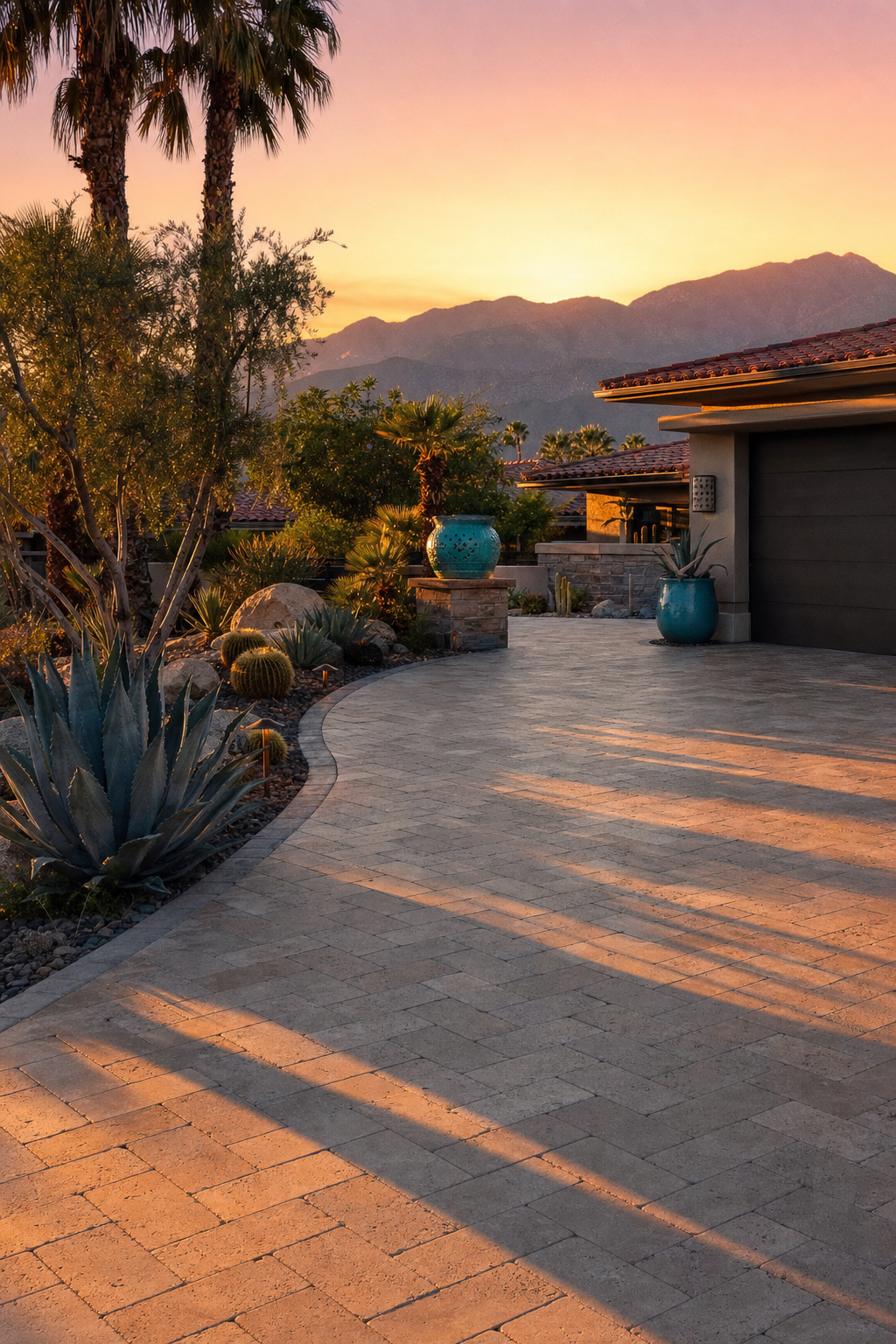
Interlocking pavers offer a structural solution to the thermal stresses that inevitably destroy concrete slabs. Unlike a single, monolithic mass, a paver surface is composed of hundreds of individual units separated by sand-filled joints. These joints act as a sophisticated suspension system for your property. When the afternoon sun pushes ground temperatures toward 120 degrees, the individual pavers expand into the joints. The sand absorbs the lateral pressure, preventing the force from building up and causing the jagged fractures seen in rigid materials.
Because the Coachella Valley sits on shifting alluvial soil, this flexibility is vital. Pavers move with the soil rather than fighting against it. If the ground settles slightly after a seasonal rain or minor seismic event, the individual blocks pivot and adjust their position incrementally. This modularity ensures that the structural integrity of a custom driveway installation remains intact even as the earth moves beneath it. This is why we prioritize high-performance units like Angelus Block, which are specifically engineered to withstand high UV exposure and the specific thermal cycles of the California desert.
By selecting a flexible system, homeowners address the core issue of the pavers vs concrete driveway desert heat Palm Desert debate: durability through adaptability. Our hardscaping design services focus on these engineered solutions to ensure your outdoor surfaces maintain their alignment and aesthetic for decades. Instead of a surface that resists the environment until it fails, you are installing a system designed to breathe and move in harmony with the desert landscape.
Heat Retention: Do Pavers Really Stay Cooler Underfoot?
A common concern for Coachella Valley residents is whether any outdoor surface can remain walkable when temperatures soar. While no masonry is cold to the touch in 115 degree sun, pavers offer distinct thermodynamic advantages over a standard concrete slab. A monolithic concrete driveway acts as a massive heat sink, absorbing radiation throughout the day and radiating it back well into the evening. In contrast, the modular nature of a custom driveway installation breaks up this thermal mass. The sand-filled joints between individual units allow for better heat dissipation and subtle airflow that a solid slab simply cannot provide.
Color selection plays a critical role in heat management. The pavers vs concrete driveway desert heat Palm Desert debate often favors pavers because they offer a wider range of lighter, heat-reflective tones that naturally absorb less energy. For those seeking the highest level of performance, particularly for pool surrounds where bare feet are common, porcelain pavers are an excellent upgrade. Porcelain is exceptionally dense and engineered to stay significantly cooler than traditional concrete or natural stone. Our hardscaping design services often recommend these high-end materials to maximize comfort in exposed areas. If you are interested in seeing how different textures and colors perform in direct sun, you can contact our Palm Desert team to review material specifications for your property.
The Maintenance Myth: Weeds and Sand in the Coachella Valley
Many homeowners hesitate to choose pavers because they fear weeds will sprout between the blocks or joint sand will blow away during a Coachella Valley windstorm. This concern is largely based on outdated installation methods. Modern custom driveway installation relies on polymeric sand, a specialized material containing binders that activate when misted with water. Once cured, this sand creates a durable, semi-rigid seal that stays locked in the joints, resisting even the strongest desert gusts while maintaining the flexibility required for thermal expansion.
In the pavers vs concrete driveway desert heat Palm Desert comparison, pavers often prove easier to maintain over a decade. While weeds can occasionally settle in surface dust, they do not grow through the structural base. Research shows that managing these stray seeds takes significantly less time than homeowners spend on concrete. A quick application of a vinegar, salt, and soap solution once or twice a year is often all that is required.
This minimal effort stands in stark contrast to the labor required for concrete. When a slab cracks due to heat or soil movement, the repair is technically difficult and usually leaves a permanent, visible scar. Our hardscaping design services prioritize systems where maintenance is preventative rather than restorative. If you are curious about how these materials age in our specific climate, contact our Palm Desert team to discuss the long-term performance of your project.
Cost Analysis: Upfront Investment vs Long Term Value
Evaluating the pavers vs concrete driveway desert heat Palm Desert financial tradeoff requires looking past the initial bid. In the Coachella Valley, standard broom finish or stamped concrete typically costs between $11 and $15 per square foot. In comparison, a professional custom driveway installation using interlocking pavers ranges from $18 to $24 or more per square foot. While this upfront premium is significant, the 10-year cost analysis often favors the modular system.
Concrete acts as a depreciating asset in 120 degree heat. Because it is prone to structural cracking from thermal cycling, a single failure often necessitates a complete tear out and pour to maintain a high end appearance. Furthermore, concrete in Palm Desert requires resealing every two to three years to combat UV degradation. Over a decade, these cumulative maintenance costs and the eventual risk of total replacement bridge the price gap.
Feature | Poured Concrete | Interlocking Pavers |
|---|---|---|
Upfront Cost (sq. ft.) | $11 – $15 | $18 – $24+ |
Repair Method | Patching or Full Redo | Individual Unit Replacement |
Lifespan in Heat | 10–15 Years (before cracking) | 30+ Years |
Maintenance | Regular Resealing | Occasional Polymeric Sand Top-off |
If a specific area of a paver driveway is damaged by a vehicle fluid leak or a localized root shift, our hardscaping design services can simply lift the affected units, address the sub-base, and reinstall them. This surgical repair is impossible with a slab, where a patch always remains visible. To receive a detailed projection for your specific site, contact our Palm Desert team for a professional consultation.
Aesthetics and HOA Compliance in Palm Desert Communities
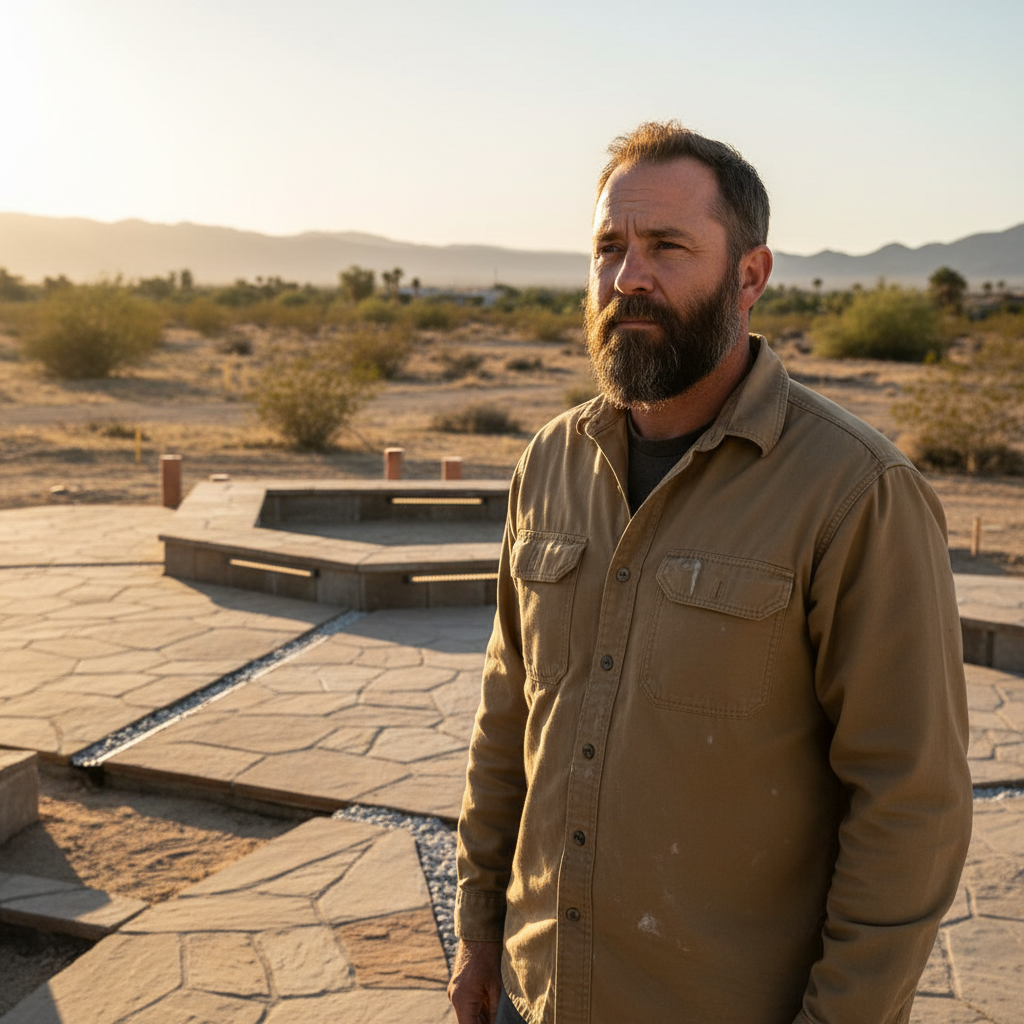
Maintaining a high-end aesthetic is often a requirement for properties within gated communities across Palm Desert and Indian Wells. Most local Homeowners Associations (HOAs) maintain strict Architectural Review Committees that prioritize materials reflecting the desert’s natural palette and the property's overall value. When evaluating the pavers vs concrete driveway desert heat Palm Desert debate through a design lens, pavers consistently offer a more sophisticated finish that aligns with luxury residential standards.
Standard broom-finish concrete often feels industrial, while stamped concrete is prone to visible UV degradation. In the Coachella Valley, the intense solar radiation rapidly fades the topical sealers and pigments used on stamped surfaces, leaving the driveway looking dated and dull within just a few seasons. Conversely, high-quality pavers utilize through-body pigments that maintain their richness despite constant sun exposure.
Our hardscaping design services focus on creating cohesive looks that satisfy HOA guidelines while maximizing curb appeal. A custom driveway installation using natural stone textures or modern geometric patterns provides a permanent upgrade that significantly enhances property valuation. If your current driveway is showing its age or failing to meet community standards, you can contact our Palm Desert team to discuss a design that balances technical durability with the high-end look your neighborhood demands.
Choosing between pavers and concrete in the intense desert heat often comes down to long term durability and thermal expansion. While concrete frequently cracks under pressure, pavers offer the flexibility needed to withstand shifting sands and high temperatures. If you want expert help designing a driveway that lasts for decades, our team is ready to guide you through the process. You can learn more about our experience with Palm Desert landscapes to see how we prioritize quality in every installation.