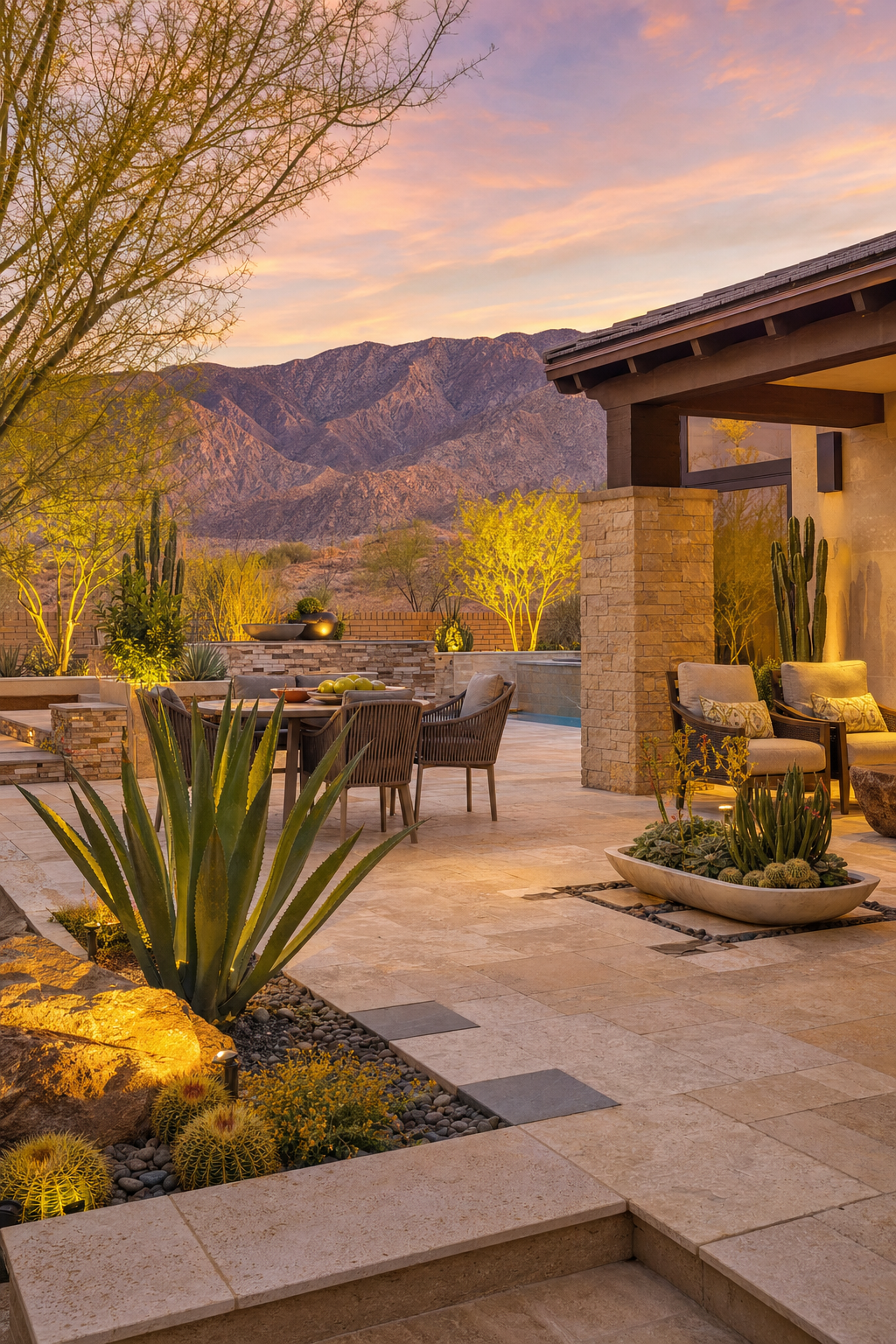
The best time to install pavers Palm Desert homeowners should choose is between October and April, when temperatures stay below 85°F for ideal curing and installation. September serves as the most critical month for booking these projects; scheduling during this time ensures you beat the seasonal rush for high-demand landscaping services.
Living in the Coachella Valley means navigating a unique climate where timing dictates the success of every outdoor renovation. Many homeowners wait for the first cool breeze to call a contractor, only to find that the premier crews are already booked through the spring. If you want your patio ready for the social season, you cannot afford to delay. September serves as the ultimate strategic deadline for securing your place on the calendar before the October rush begins. In this guide, we analyze the specific build window that defines Palm Desert hardscaping. You will learn why early booking is essential, how to choose between travertine and concrete for extreme heat, and how to navigate the impact of winter rains. We will also explore how to integrate lighting and irrigation to ensure your landscape is functional before the festivities begin.
The Coachella Valley Build Window: Understanding the October to April Peak
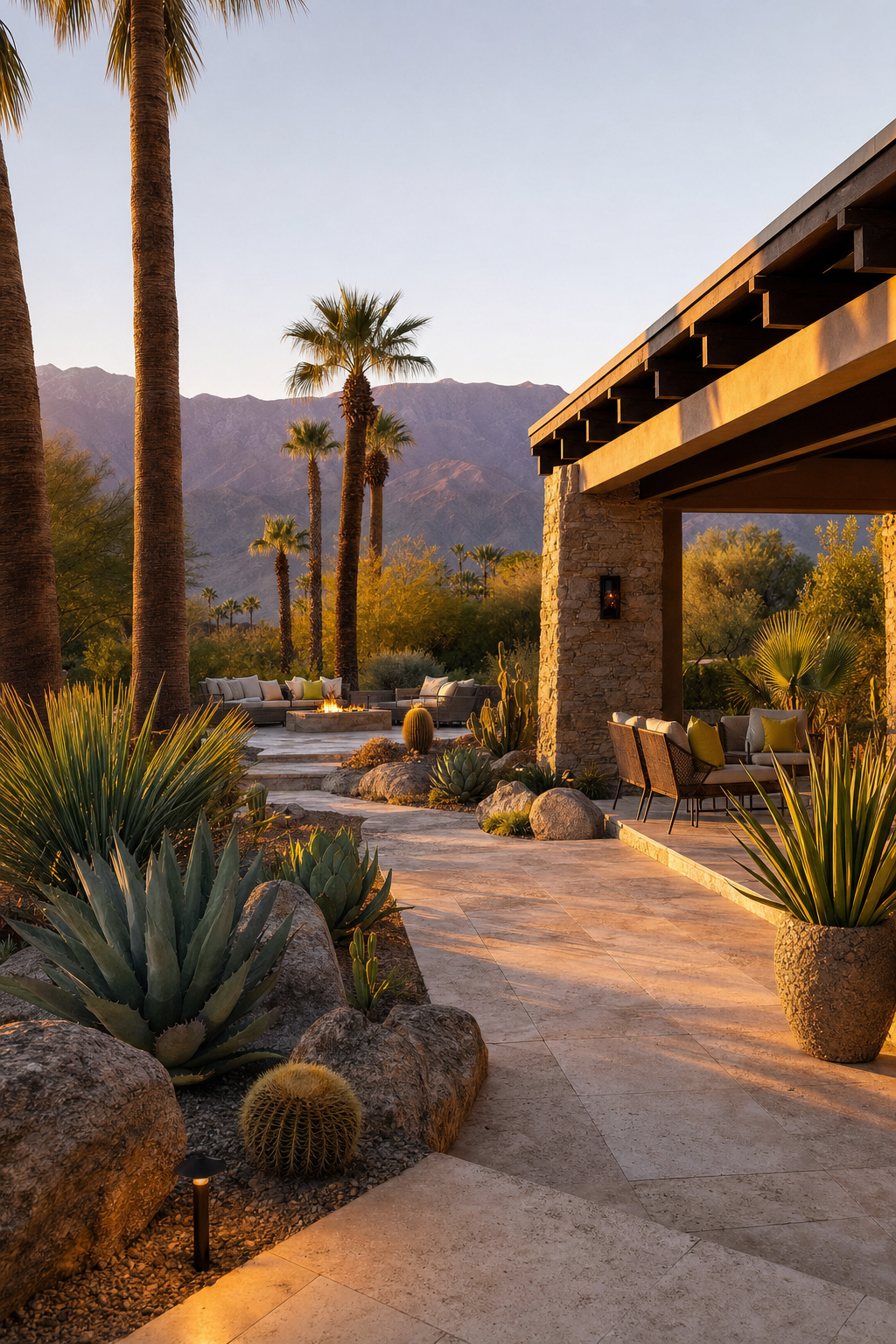
In the Coachella Valley, the standard construction calendar differs significantly from the rest of the country. While national landscaping guides often point to the spring thaw as the ideal starting point, local expertise dictates that the best time to install pavers Palm Desert offers is strictly between October and April. This six-month window provides the precise atmospheric conditions required for high-end hardscaping, specifically when daytime temperatures remain consistently below 85 degrees.
This temperature threshold is the sweet spot for structural integrity. During the installation of stone patios, the sub-base must be compacted at an optimal moisture level to prevent future shifting. Extreme summer heat draws moisture out of the ground too rapidly, leading to uneven settling. Furthermore, the performance of polymeric sand, which binds the pavers together, depends on a controlled drying process. In 100-degree heat, the polymers can flash-dry before they fully cure, resulting in brittle joints that are prone to erosion.
Professional crew productivity also peaks during these cooler months. A focused, efficient team can execute complex designs for custom driveways or integrated landscape lighting and irrigation systems more precisely when they are not battling the physical strain of desert heat. Choosing the October to April window is a scientific decision that directly impacts the longevity of the installation, ensuring that materials bond correctly and the foundation remains stable for decades.
Why September is the Strategic Deadline to Book Your Project
Securing a project slot in September is a logistical requirement for any homeowner targeting a late autumn completion. While the physical work benefits from the cooler weather previously mentioned, the administrative and procurement phases for stone patios and custom driveways demand a six to eight week lead time. If you intend to host for the November holidays or prepare for the return of seasonal residents to Indian Wells and Rancho Mirage, a signed contract in September ensures your site is prioritized before the peak season backlog.
Once October begins, the most experienced crews in the valley are typically booked through February. This influx of demand makes September the best time to install pavers Palm Desert professionals recommend for securing a winter reveal. This buffer allows for meticulous planning of landscape lighting and irrigation without the pressure of a compressed schedule. By acting before the seasonal rush, you bypass the common delays associated with material shortages and overextended installation calendars; it ensures that your outdoor transformation is a controlled, professional process rather than a rushed attempt to meet a holiday deadline.
Travertine vs Concrete Pavers: Selecting Desert-Ready Materials
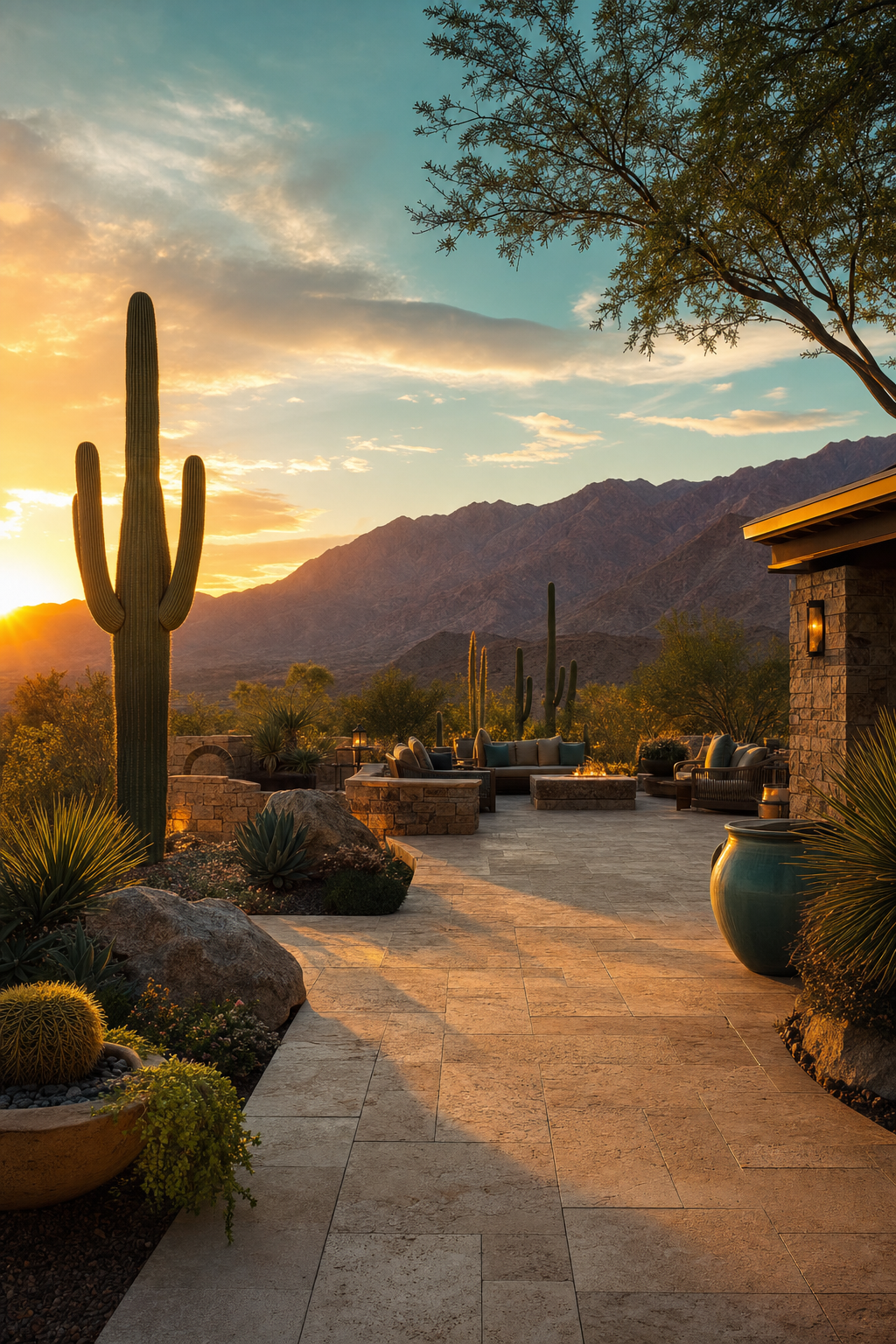
Selecting the correct material for a desert landscape requires a balance between aesthetic appeal and thermal performance. In the Coachella Valley, surface temperatures on a standard outdoor surface can easily exceed 150 degrees during the summer months. Consequently, the choice between travertine and concrete pavers is often dictated by the specific function of the space and its exposure to the sun.
Material | Heat Retention | Primary Application | Key Benefit |
|---|---|---|---|
Travertine | Low | Pool Decks, stone patios | Stays cool to the touch |
Concrete Pavers | Moderate to High | custom driveways, Walkways | Exceptional structural durability |
Flagstone/Natural Stone | High | Decorative Accents, Paths | Unique, rustic aesthetics |
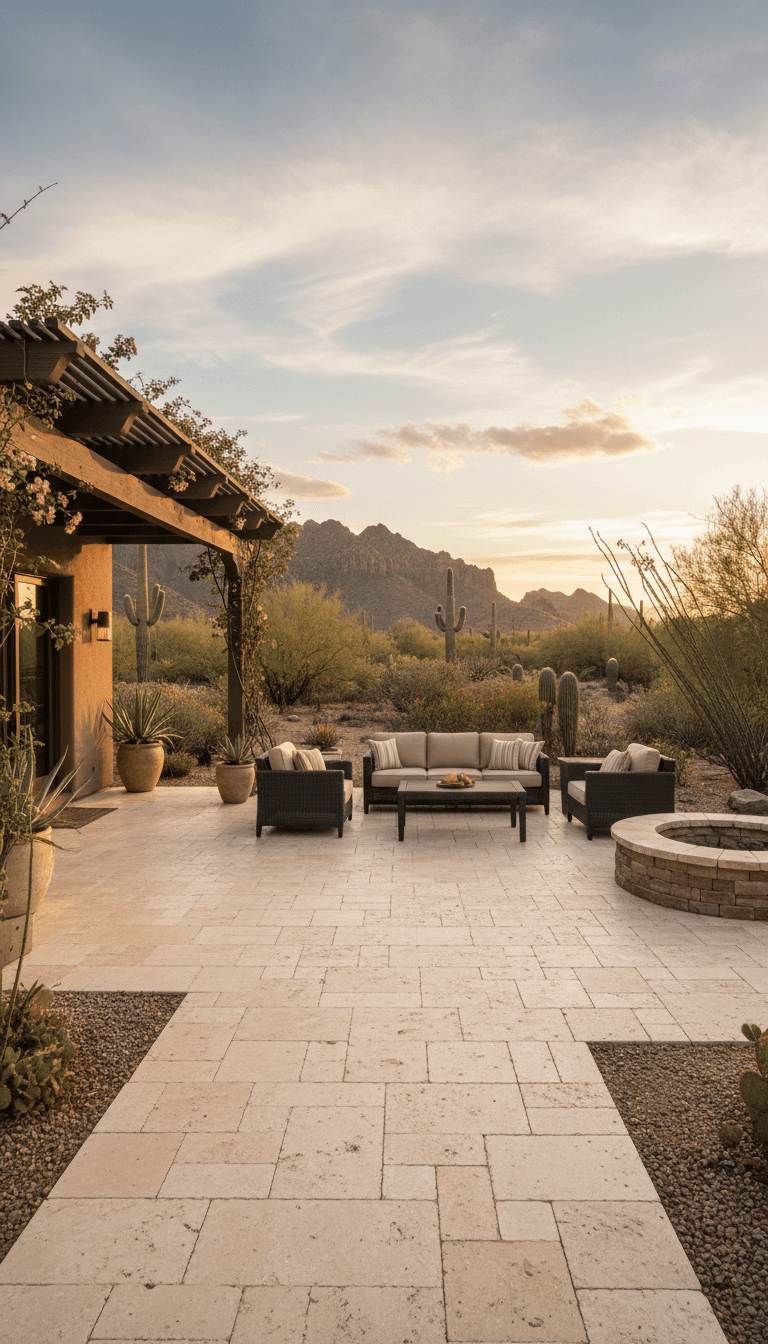
Travertine is the industry standard for poolside installations. As a porous, sedimentary stone, it possesses low thermal conductivity, meaning it does not absorb and store heat like denser materials. This characteristic makes it the most practical option for barefoot areas. When we design stone patios in Palm Desert, we prioritize travertine for its ability to remain comfortable underfoot even in triple-digit heat.
For areas subjected to heavy vehicle traffic, such as custom driveways, concrete pavers are the preferred choice. While they retain more heat than travertine, their high compressive strength allows them to withstand the weight and torque of vehicles without shifting or cracking. The manufacturing process for modern pavers includes UV-resistant pigments that help the color remain vibrant despite the intense radiation that follows the winter build season.
Timing your selection is critical; the best time to install pavers Palm Desert residents should aim for is during the cooler months to ensure sealants and joint sands cure before the UV index reaches its peak. This transition period also allows for the seamless integration of landscape lighting and irrigation systems, protecting the delicate components from extreme temperature fluctuations immediately after installation.
The Impact of Local Events: Preparing for the Coachella Valley Social Season
The social calendar in the Coachella Valley dictates the pace of luxury hardscaping. Between the BNP Paribas Open in Indian Wells and the dual weekends of Coachella and Stagecoach, the region experiences a massive surge in guest traffic and hosting requirements. Homeowners aiming to debut new stone patios or revamped entertainment areas must work backward from these spring milestones. A September booking is strategically vital because it allows the project to be completed and fully stabilized well before the peak social season begins in January.
High traffic events place significant physical stress on new installations. For custom driveways, the curing process is not just about the pavers themselves; it is about the entire system, including the joint sand and sub-base, reaching maximum compaction. By scheduling early, you ensure the surface is ready for the weight of guest vehicles and heavy pedestrian flow. This foresight is why professionals consider early fall the best time to install pavers Palm Desert homeowners should target. Completing the work by late autumn also provides a window to fine tune landscape lighting and irrigation systems, ensuring every detail is operational before the first round of seasonal entertaining commences.
Will Winter Rain Affect Your Paver Installation?
While the Coachella Valley is famous for its arid climate, the rare winter rain events that occur between December and February require careful navigation during construction. The most climate-sensitive stage for stone patios or custom driveways is the application of polymeric sand. This specialized jointing material is designed to harden and lock the pavers in place, but it is highly susceptible to moisture before it fully activates.
Professional installers must coordinate with local weather patterns to ensure a clear window of at least 24 to 48 hours for the curing process. If precipitation hits the site before the polymers have set, the sand can wash out of the joints or, worse, leave a permanent haze or white clouding on the paver surface. This clouding is caused by the binder in the sand reacting prematurely with water, potentially marring the aesthetic of a high-end installation.
This precise timing is another reason why the window starting in October is the best time to install pavers Palm Desert residents should target. By monitoring local forecasts and avoiding the sporadic heavy downpours of mid-winter, we ensure the structural integrity of the project remains intact. Proper moisture management during this phase prevents long-term maintenance issues and ensures the finish remains crisp and professional.
Hardscape Planning: Integrating Lighting and Irrigation Before the Pour
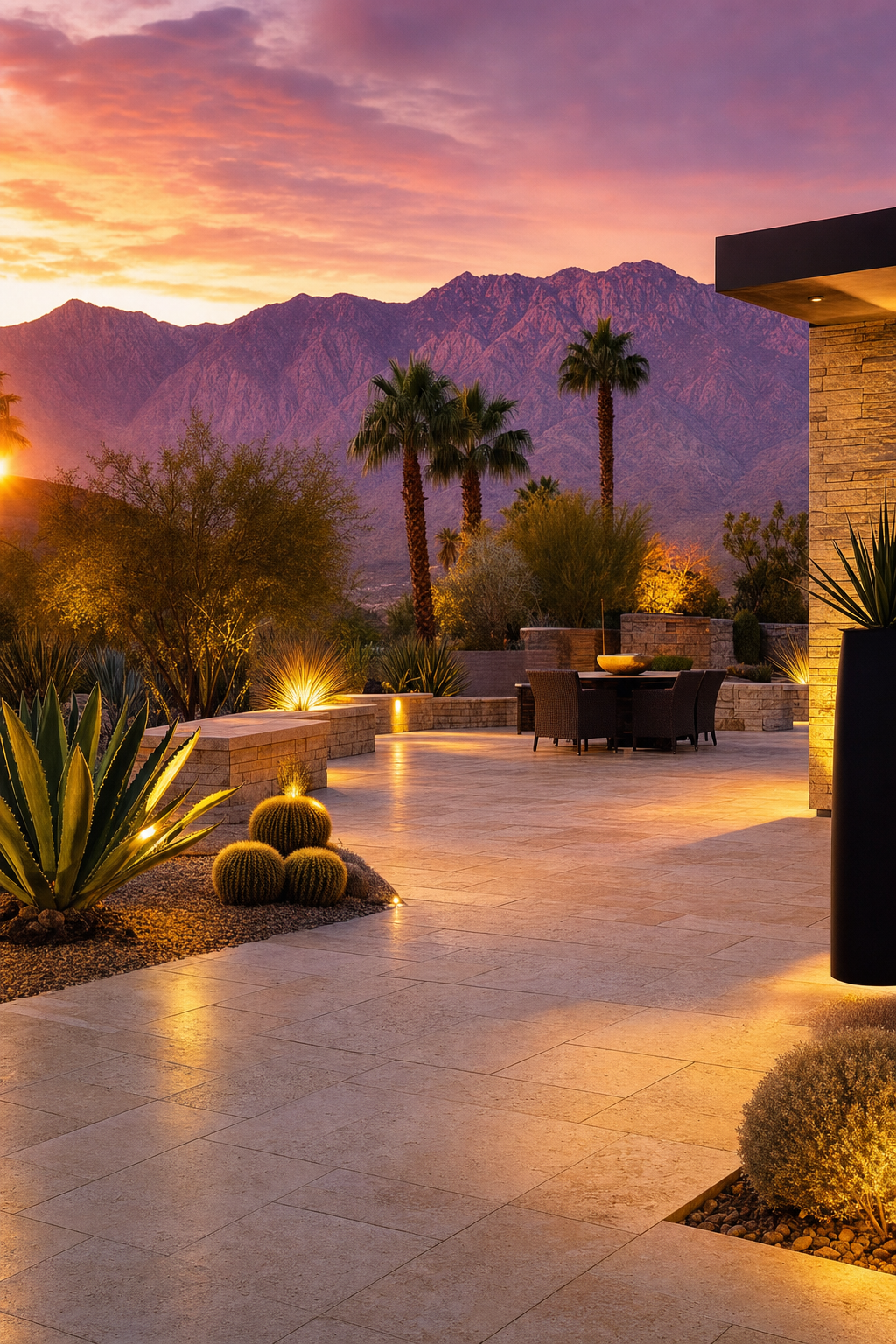
A successful hardscape installation involves more than what is visible on the surface. Coordinating the sub-surface infrastructure during the fall build window is essential for a functional, long-term landscape. The cooler months are objectively the best time to install pavers Palm Desert professionals recommend; not just for the stones themselves, but because this period aligns perfectly with the Palm Desert Fall Irrigation Schedule. As homeowners transition their watering cycles for the cooler season, it provides a natural opportunity to audit and overhaul aging lines that may be nearing the end of their lifespan.
System Component | Integration Priority | Long-Term Benefit |
|---|---|---|
PVC Sleeving | High | Future-proofs the patio against drilling or lifting |
Low-Voltage Wiring | High | Seamlessly connects landscape lighting and irrigation controllers |
Drip Line Manifolds | Medium | Optimizes water delivery for desert-adapted plantings |
Excavating for custom driveways or stone patios offers a one-time window to install PVC sleeves beneath the hardscape. These sleeves act as protected conduits for future utility needs. If you decide to add accent lighting to a palm tree or extend a drip line to a new planter bed later, these pre-installed sleeves allow for additions without ever disturbing your new pavers. Properly integrated planning ensures that your irrigation system is pressurized and tested before the final sub-base compaction occurs. This sequence prevents subterranean leaks from compromising the structural integrity of the driveway or patio foundation, ensuring the entire outdoor ecosystem is synchronized for the peak growth season.
September represents the ideal window to secure your spot before the busy season arrives in Palm Desert. By booking now, you ensure your patio or driveway is complete before the holiday gatherings begin. While managing a project yourself is possible, the right guidance makes a significant difference. If you want expert help bringing your vision to life, we are happy to share our experience. You can read more about us to see how our team handles the details; we aim to make your outdoor transformation seamless and stress-free.