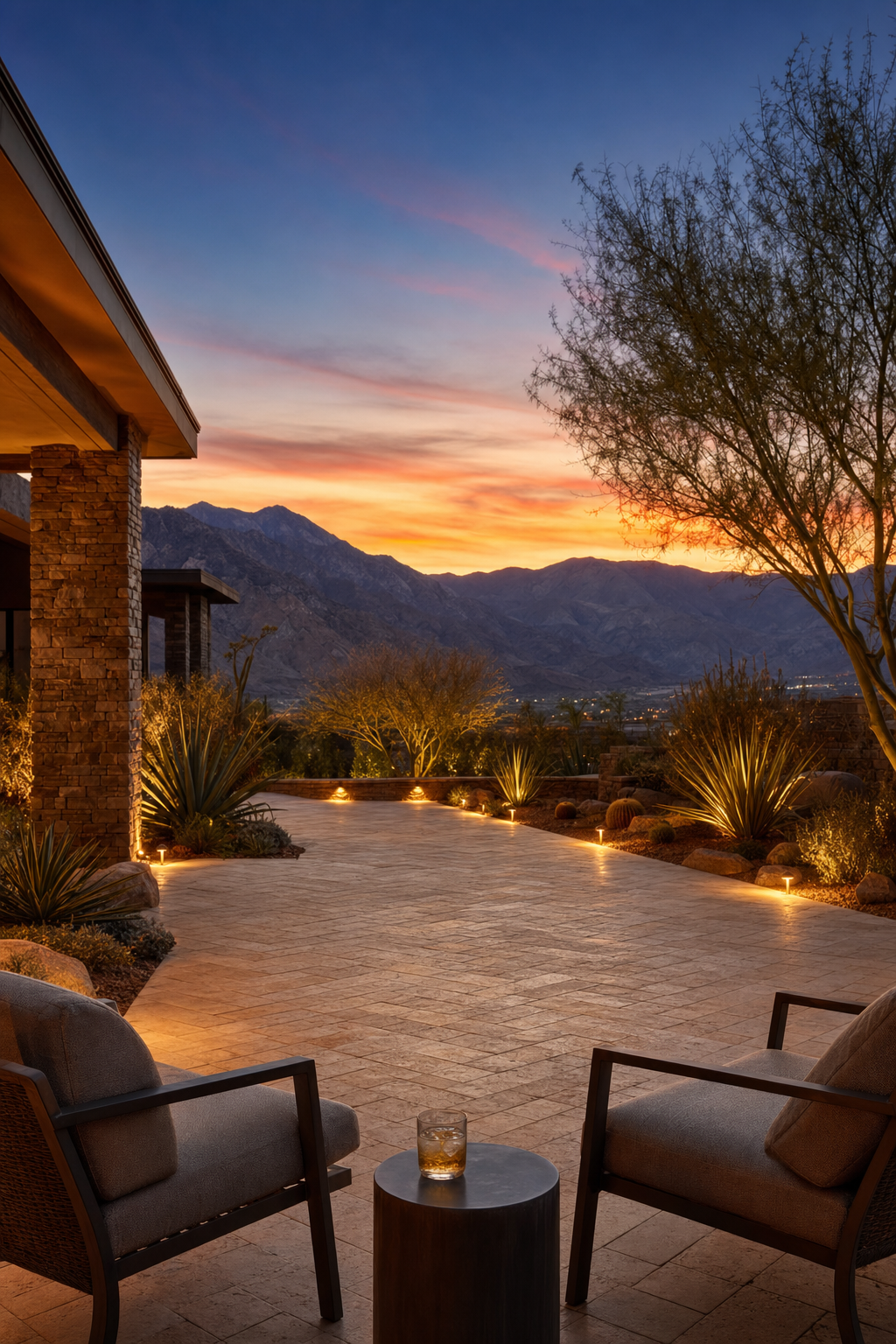
Effective Palm Desert summer yard care hardscape protection involves watering plants in the early morning to minimize evaporation and applying UV-resistant sealers to stone surfaces. Homeowners should also maintain joint integrity by reapplying polymeric sand and regularly sweeping away abrasive desert dust; these steps prevent heat damage and surface wear. Following a strict maintenance schedule ensures both landscaping and structural elements survive the intense Coachella Valley summer.
The triple-digit heat of a Palm Desert summer is more than just uncomfortable for you; it is a relentless assault on your outdoor living space. From scorching UV rays that fade vibrant pavers to the expansion stress caused by extreme thermal fluctuations, the Coachella Valley environment can quickly turn a luxury hardscape into a costly maintenance headache. Neglecting these elements during the peak of the season does not just affect your curb appeal; it compromises the long-term structural integrity of your investment. In this survival guide, we provide expert strategies for managing surface temperatures, mastering desert-specific irrigation, and preparing for the unique challenges of monsoon season. You will learn how to shield your hardscape from sun damage and dust while ensuring your entire landscape remains resilient against the record-breaking heat.
Surviving the Coachella Valley Heat: Why Summer Yard Care is Different
Summer in the Coachella Valley presents environmental stressors that go far beyond standard seasonal maintenance. When temperatures consistently exceed 110 degrees Fahrenheit, the focus of Palm Desert summer yard care hardscape protection must shift toward mitigating the effects of extreme UV intensity and the local heat island effect. Unlike generic California gardening advice that emphasizes coastal moisture, our desert climate demands a strategy for both biological survival and structural preservation.
The relentless sun does more than wilt foliage; it targets the integrity of your outdoor investment. High temperatures cause thermal expansion in stone and can rapidly degrade protective sealants on driveways and patios. Furthermore, residential properties often suffer from the heat island effect, where hardscapes absorb thermal energy throughout the day and radiate it back into the landscape overnight. Professional hardscaping and landscape design in this region requires an understanding of how these forces interact. Success during these months depends on specific, localized techniques designed to shield pavers from fading and protect root zones from subterranean heat spikes.
TL,DR: The Palm Desert Summer Yard Maintenance Cheat Sheet
Effective Palm Desert summer yard care hardscape protection relies on consistent, small actions that prevent thermal stress and structural wear. For a streamlined approach to managing your property during the peak of the heat, follow this professional maintenance cheat sheet:
Optimize Irrigation Timing: Schedule watering between 6 AM and 10 AM. This window allows water to soak deep into the soil before the sun triggers rapid evaporation, while avoiding the fungal risks associated with overnight watering.
Insulate Root Zones: Maintain a consistent 3 inch layer of mulch or decorative rock. This organic or mineral barrier shields root systems from extreme subterranean heat spikes.
Dry Clean Hardscapes: Sweep or blow pavers rather than hosing them down. Avoiding unnecessary water contact prevents mineral staining and preserves the aesthetics of your hardscaping and landscape design.
Audit Emitters Weekly: Manually check irrigation heads for mineral clogs or dirt blockages. In our region, a single failed emitter can lead to plant loss within 48 hours during a heatwave.
Adjust for Monsoon Humidity: Decrease watering frequency when humidity levels rise in late summer. High humidity slows plant transpiration; continuing a peak heat schedule during these periods often leads to fatal root rot.
Protecting Hardscape Integrity from UV Exposure and Desert Dust
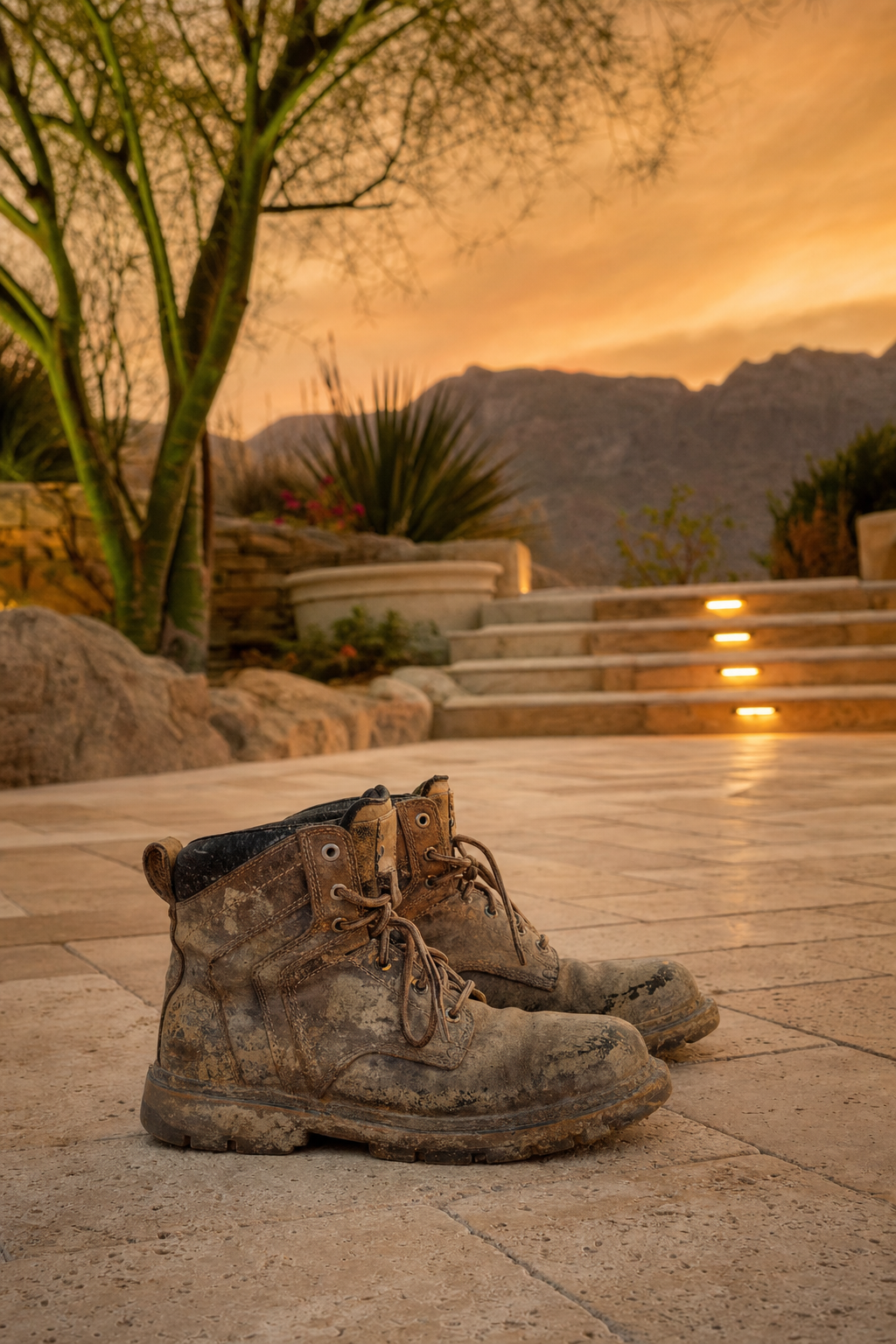
Beyond simple cooling techniques, long-term Palm Desert summer yard care hardscape protection requires a strategic focus on UV resistance. In the Coachella Valley, the solar index is high enough to bleach the pigments from concrete pavers and rapidly oxidize standard sealants. Once a sealant degrades, the porous surface of the stone is exposed to the elements, making it vulnerable to deep-set stains. We recommend high-performance, breathable sealants specifically engineered for the Southwest. These products contain UV inhibitors that reflect radiation rather than absorbing it, preventing the yellowing and cracking common with inferior acrylics used in milder climates.
Managing the inevitable accumulation of desert dust is equally critical for maintaining the finish of your hardscaping and landscape design. While hosing down a dusty driveway feels like a quick fix, it often introduces new aesthetic issues. Our local water contains high mineral content; when this water hits a hot paver and evaporates instantly, it leaves behind white mineral staining, or efflorescence, which can be difficult to remove. Utilizing a high-powered leaf blower or a stiff-bristled broom preserves the finish without the risk of water spotting or wasting a precious resource.
Finally, monitor the polymeric sand within your paver joints. Intense summer winds and heat can cause sand to settle or blow out, creating voids where wind-blown weed seeds can take root. Maintaining these joints is essential to the structural interlock of your professional paver installation. If you notice significant sand loss or cracked joints, it may be time to contact our team to discuss re-stabilization before the autumn winds arrive.
How to Keep Pavers Cool: Managing Surface Temperatures
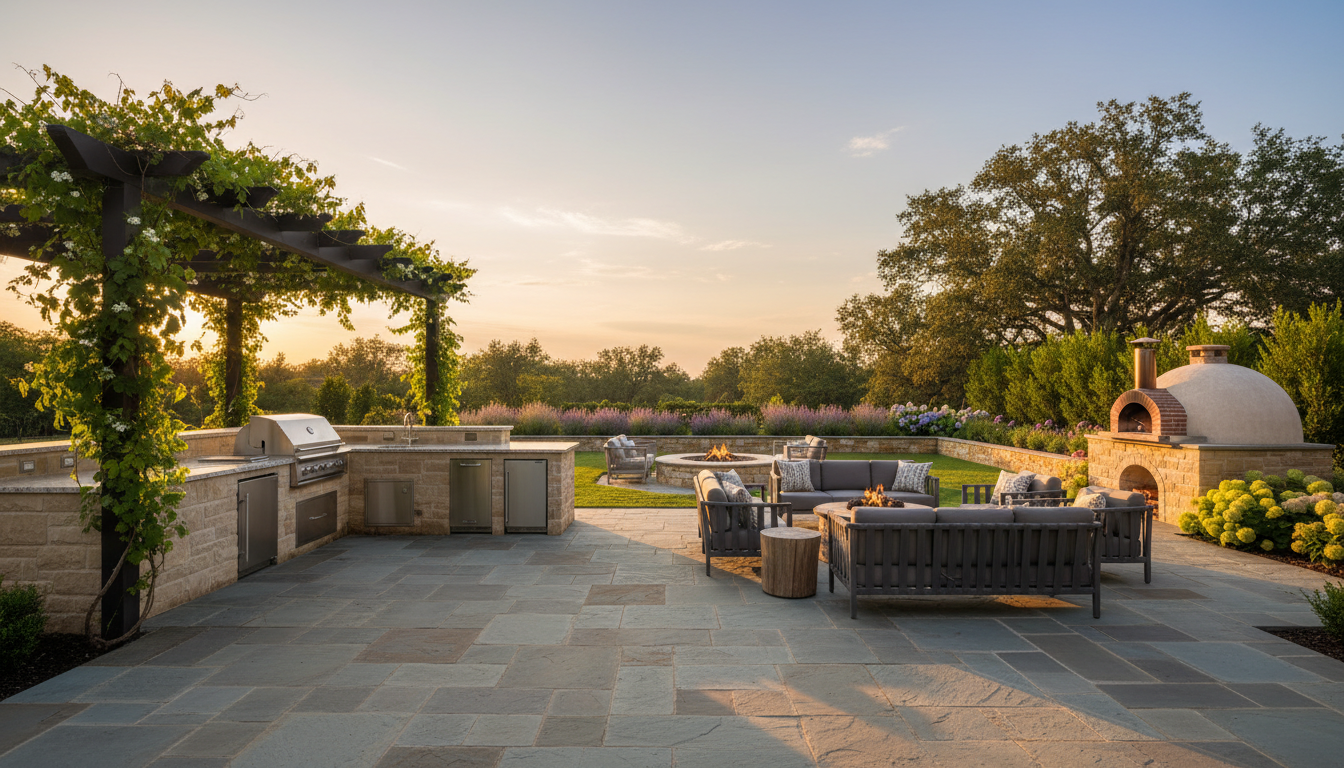
Barefoot comfort becomes a primary concern when Coachella Valley ground temperatures reach levels that feel like walking on an open fire. Managing surface temperatures is a critical component of Palm Desert summer yard care hardscape protection, as excessive heat retention not only impacts physical comfort but also radiates thermal energy back into your home’s structure long after sunset.
The material choice is your first line of defense against the heat island effect. Standard dark concrete pavers act as thermal batteries, absorbing solar radiation and holding it deep within their mass. In contrast, light-colored materials like travertine or high-grade porcelain reflect a significant portion of the sun’s energy rather than storing it.
Material Type | Heat Retention Level | Solar Reflectance |
|---|---|---|
Standard Dark Concrete | High | Low |
Light Sandstone/Travertine | Moderate | High |
Light Porcelain Pavers | Low | Very High |
For existing patios, installing a pergola or shade sail provides immediate relief by preventing direct UV contact with the stone. Airflow is also essential; avoid enclosing patio perimeters with high solid walls that trap stagnant, hot air. When maintaining your hardscaping and landscape design, avoid high-gloss or wet-look sealers. These glossy finishes create a lens effect that traps heat within the paver and increases surface temperatures significantly compared to matte, breathable alternatives. If your current surface remains unusable during the day, contact our team to discuss how a professional paver installation using modern, heat-reflective materials can transform your outdoor living space.
Mastering the Coachella Valley Watering Schedule
Precision irrigation is the cornerstone of Palm Desert summer yard care hardscape protection. While the Coachella Valley Water District (CVWD) provides essential baseline recommendations, professional landscape management requires a deeper understanding of soil physics and plant physiology to maintain a high-end property.
The optimal window for irrigation falls strictly between 6 AM and 10 AM. During these hours, wind speeds are typically low and the sun has not yet reached its peak intensity, which minimizes evaporation losses. More importantly, morning watering allows plant surfaces to dry quickly. We advise against nighttime watering; while it seems efficient to avoid the sun, leaving water on foliage and soil surfaces for eight to ten hours creates an ideal breeding ground for fungal pathogens that thrive in the valley's summer heat.
For established desert-adapted species, the strategy must shift toward deep and infrequent watering. This method encourages roots to travel deeper into the cooler soil profile, making the plant significantly more resilient to surface heat spikes. You must also adjust your system run times based on the specific delivery method to achieve proper saturation without causing runoff that can undermine your hardscaping and landscape design.
Equipment Type | Estimated Run Time | Delivery Characteristic |
|---|---|---|
Pop-up Spray Heads | ~13 Minutes | High-volume, rapid delivery |
Rotary Sprinklers | ~30 Minutes | Low-volume, slow saturation |
Drip Emitters | 2-4 Hours | Targeted, deep root penetration |
Coachella Valley soil is predominantly sandy, meaning water moves through it quickly. If you notice pooling near your pavers, consider a cycle and soak approach rather than one long burst. If your irrigation needs a professional calibration to protect your investment, contact our team for an expert assessment.
Shielding Plants from Sunscald and Heat Stress
Maintaining the canopy is just as vital as managing the water line. One of the most common errors in Palm Desert summer yard care hardscape protection is over-pruning during the peak of the heat. Think of a plant’s foliage as a natural umbrella. It shades the sensitive inner wood and the root zone below. Stripping away too much growth from citrus, oleanders, or bougainvillea exposes the bark to intense UV radiation; this often leads to sunscald. This damage can permanently scar the plant or even cause entire limbs to die back.
Protecting the root system is equally critical. Applying a 2 to 3 inch layer of organic mulch or decorative river rock provides a necessary thermal barrier. This layer prevents the ground from baking under the direct sun, keeping the roots significantly cooler and reducing the rate of water evaporation.
Stress Symptom | Likely Cause | Recommended Action |
|---|---|---|
Yellowing leaves with green veins | Chlorosis (Heat-induced) | Apply chelated iron |
Brittle, brown leaf margins | Scorch | Increase deep watering frequency |
Cracked, peeling bark | Sunscald | Stop pruning; provide temporary shade |
If you notice trees like eucalyptus or mesquite showing signs of chlorosis, which presents as yellowing leaves with green veins, they are likely struggling to take up nutrients due to extreme heat stress. Treating these specimens with chelated iron can help restore their health and vigor. If your landscape appears to be failing despite your best efforts, contact our team to evaluate how your hardscaping and landscape design can be optimized for better plant resilience.
Monsoon Season Readiness: Drainage and Erosion Control
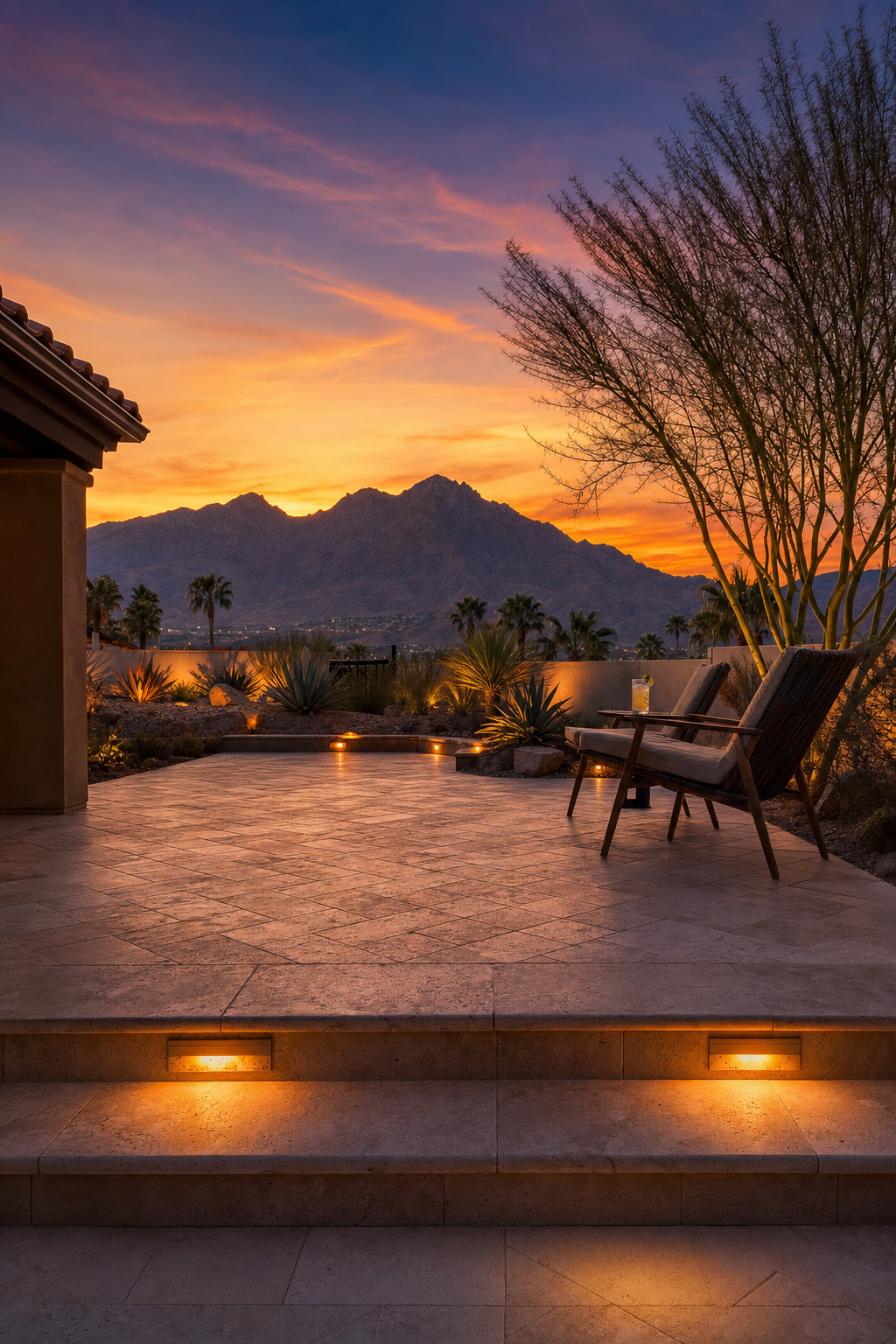
As the humidity of late summer builds, the Coachella Valley frequently experiences sudden, violent monsoon storms. These downpours deliver a volume of water that parched desert soil cannot absorb quickly, leading to rapid runoff and potential flooding. Ensuring proper drainage is a fundamental pillar of Palm Desert summer yard care hardscape protection. Without a managed path for runoff, flash flooding can undermine the base material of your professional paver installation or cause water to pool against your home’s foundation.
Effective grading is the first line of defense. Surfaces must be engineered to slope away from structures, directing water toward catch basins or natural landscape outlets. In areas with significant elevation changes, we utilize rip rap, which consists of large, angular pieces of durable rock, to line drainage swales and stabilize discharge points. This heavy stone breaks the hydraulic velocity of rushing water, preventing it from carving out gullies or washing away expensive decorative rock layers.
Drainage Solution | Primary Function | Best Application |
|---|---|---|
Surface Grading | Gravity-fed diversion | Driveways and large patios |
Rip Rap Channels | Erosion control and velocity reduction | Natural swales and slopes |
Catch Basins | Subsurface water collection | Low points and enclosed courtyards |
A professional drainage assessment is an essential part of high-end hardscaping and landscape design. In our region, neglecting the impact of a monsoon can lead to thousands of dollars in property damage and structural erosion. If you are concerned about how your property handles heavy runoff, contact our team to evaluate your yard's grading before the next storm system arrives.
Common Palm Desert Summer Yard Mistakes to Avoid
While managing monsoons is about structural preparation, daily maintenance requires avoiding reflexive habits that do more harm than good. One of the costliest errors in Palm Desert summer yard care hardscape protection is hosing down a driveway or patio during the peak of the day. Introducing cold water to stone that has reached surface temperatures of 150 degrees Fahrenheit can cause thermal shock; this leads to micro-fractures, surface spalling, and the rapid degradation of sealants. Furthermore, our local mineral-heavy water evaporates instantly on hot surfaces, leaving behind stubborn white efflorescence that mars your hardscaping and landscape design.
Mistake | Immediate Consequence | Long-Term Impact |
|---|---|---|
Hosing Hot Stone | Thermal Shock | Structural Cracking |
Summer Fertilizing | Salt Burn | Plant Death |
Ignoring Beetle Holes | Root Damage | Tree Failure |
Additional high-impact mistakes include over-fertilizing during dormant heat periods. Forcing tender new growth when a plant is in survival mode leads to salt burn and dehydration. You must also monitor for Palo Verde beetle holes, which are typically the size of a quarter. Ignoring these openings allows larvae to devastate the root system from below. If you notice these holes or see signs of stress on your professional paver installation, contact our team to discuss a localized restoration plan before the damage becomes irreversible.
Protecting your Palm Desert yard from the intense summer heat is all about proactive maintenance and using the right protective measures for your hardscape. While these steps help your outdoor surfaces last longer, staying on top of seasonal care in the desert can be quite demanding. If you want expert help keeping your property in pristine condition, we are happy to assist. You can learn more about our professional approach and how we help local homeowners maintain beautiful, durable landscapes throughout the hottest months.