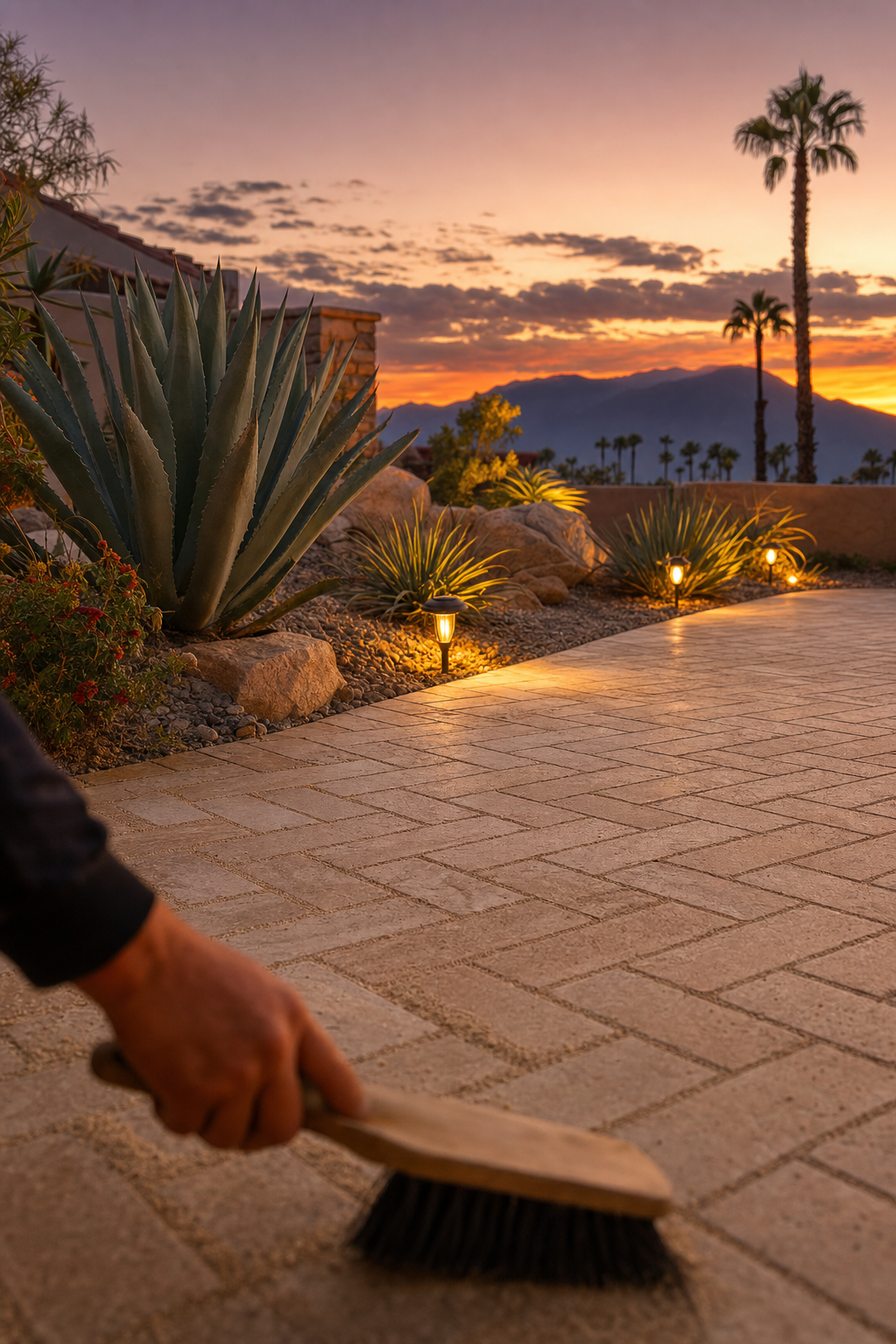
Effective desert patio design ideas Coachella Valley outdoor living projects prioritize durable shade structures and drought-tolerant landscaping to provide essential relief from the intense heat. Integrating warm earth tones with efficient LED lighting and water-wise irrigation systems ensures a functional, sustainable space that remains beautiful year-round.
Living in the Coachella Valley means dealing with relentless sun and shifting sands that can quickly turn a promising patio into a washed-out, unusable space. Many homeowners struggle to balance aesthetic beauty with the practical demands of the desert environment; this often results in cracked surfaces or a complete lack of relief from the afternoon heat. At Pavers Pavers Pavers, we understand that a sophisticated outdoor living area requires more than just high-end furniture. It demands a strategic foundation built for extreme climate longevity. In this guide, we provide expert insights into designing a functional desert oasis. You will learn why hardscaping is your most critical investment, how to integrate smart shade structures, and the importance of professional lighting. We also cover efficient irrigation techniques and the seventy thirty planting rule to ensure your Palm Desert retreat remains both lush and sustainable.
The Foundation of Coachella Valley Outdoor Living: Why Hardscape Comes First
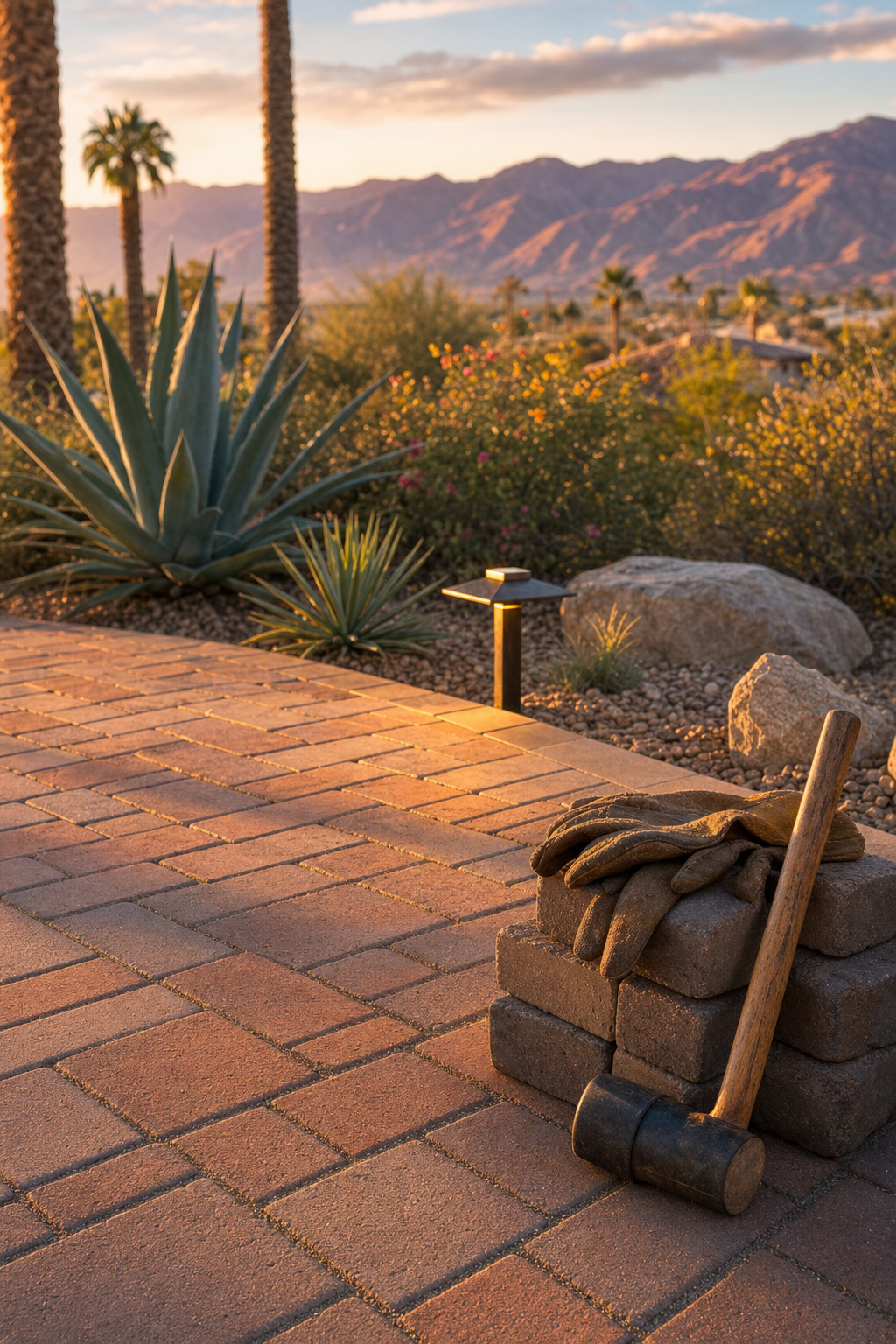
The floor of your outdoor space is more than just a surface; it is the structural backbone of any successful desert landscape. In Palm Desert, where the environment presents unique challenges, choosing the right material for your patio is the first and most vital step. While many homeowners initially consider poured concrete, the extreme conditions of the Coachella Valley often make it an impractical choice for long-term durability.
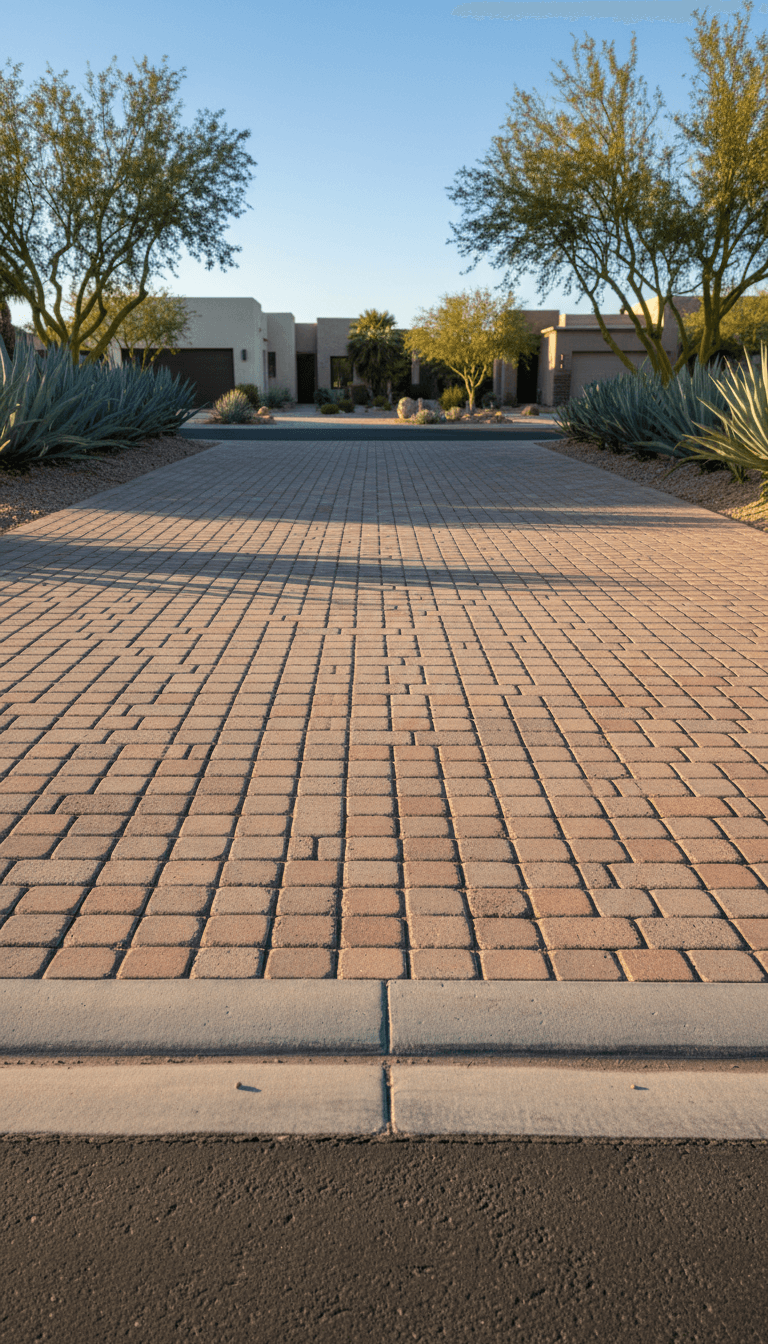
Concrete is a monolithic slab, meaning it is one solid piece of material. In the peak of 120 degree summers, the intense thermal expansion causes concrete to expand and contract significantly. Because the Coachella Valley sits on shifting, sandy soil, this movement almost inevitably leads to unsightly surface cracks. In contrast, a flexible paver system consists of individual units fitted together. This design allows the surface to breathe and move with the earth, preventing the fractures common in local driveways and patios. Utilizing flexible paver driveways and patios ensures that your investment remains intact despite the thermal swings and seismic activity inherent to our region.
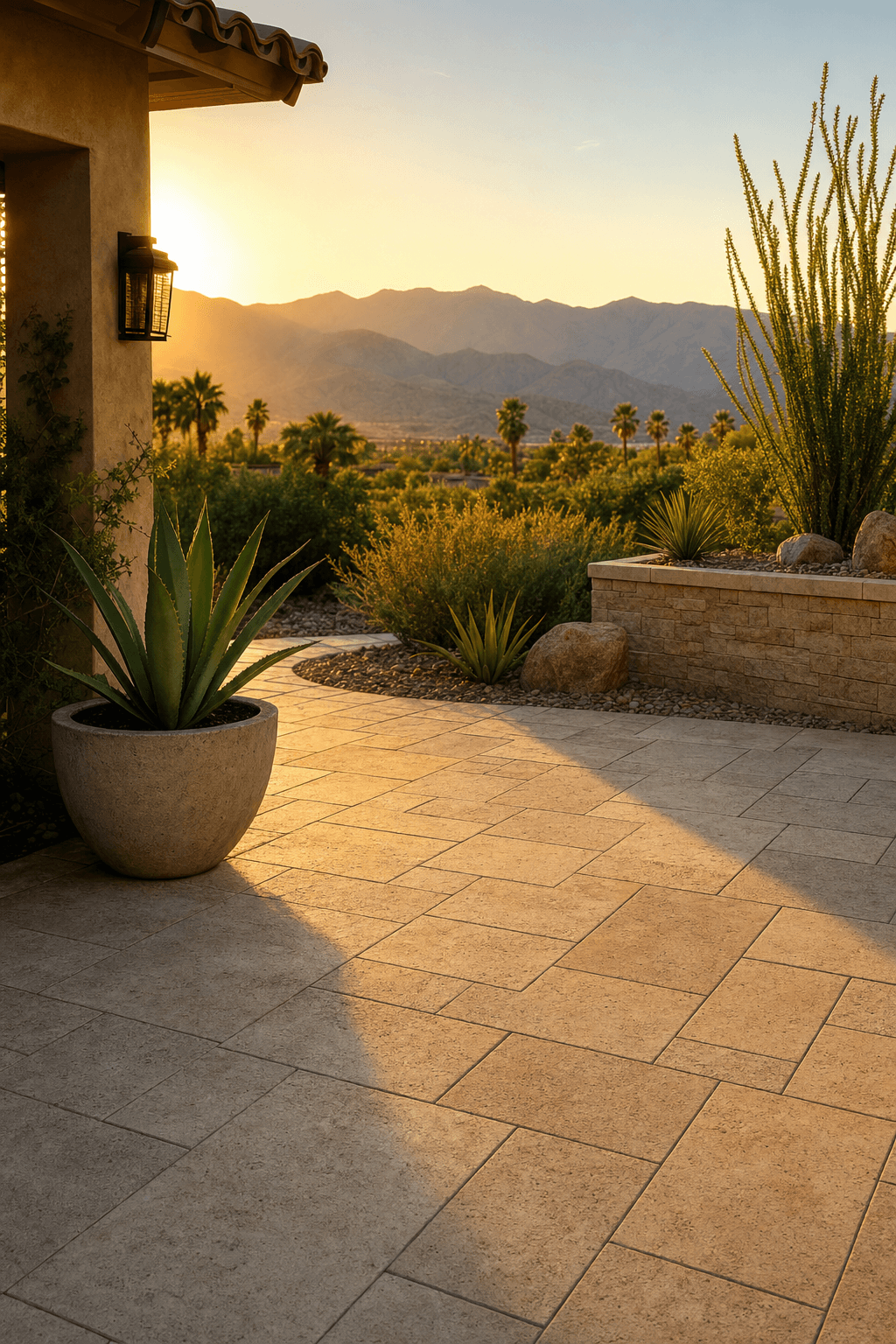
When researching desert patio design ideas Coachella Valley outdoor living specialists recommend selecting colors based on heat reflectance. Dark stones and slate absorb immense amounts of solar energy, becoming too hot to walk on by mid-morning. An expert Coachella Valley landscape firm typically utilizes an earthy palette of terracotta, sand, and beige. These lighter shades reflect sunlight rather than absorbing it, keeping the surface noticeably cooler underfoot during the hottest months.
Beyond heat management, the installation process for pavers provides superior drainage. Sandy soil drains quickly, but a paver system with a properly prepared base allows water to percolate through the joints during our heavy seasonal monsoons. This structural integrity is why professional hardscaping and design services prioritize the patio foundation before adding vertical elements like shade structures or custom lighting. Ensuring the ground plane is stable and thermally appropriate sets the stage for every other design choice in the garden.
Smart Shade Structures for Palm Desert Heat
Once the foundation is set, vertical structures become the primary defense against the intense overhead sun. In our region, a generic pergola design is rarely sufficient. Effective shade requires strategic orientation; for most Palm Desert homes, structures must be positioned specifically to intercept the harsh western sun during the late afternoon. This prevents solar heat gain from reaching the patio surface and protects the home's interior from rising temperatures.
Material selection is equally critical for comfort. While metal structures offer a sleek look, untreated iron or steel can radiate heat downward and become dangerously hot to the touch in 110 degree weather. Alumawood is a staple for an expert Coachella Valley landscape firm because it provides the visual warmth of wood without the susceptibility to termites or dry rot. It also stays significantly cooler than raw metal. For those desiring a contemporary Palm Springs aesthetic, high-density polyethylene (HDPE) shade sails offer a light, architectural feel that complements modern desert patio design ideas Coachella Valley outdoor living enthusiasts often prefer.
Shade Structure Material | Heat Resistance | Maintenance Level | Best For |
|---|---|---|---|
Alumawood | High | Low | Long-term durability and cooling |
High-Quality Timber | Moderate | High | Natural aesthetics and insulation |
HDPE Shade Sails | High | Moderate | Modern design and flexible coverage |
Coated Steel | Low | Low | Structural minimalist designs |
Because the valley is prone to high-wind events, especially near the mountain passes, these structures require specialized anchoring. Professional hardscaping and design services ensure that shade sails and pavilions are secured with deep-set concrete footings and reinforced steel hardware. This structural integrity prevents damage during seasonal wind gusts, ensuring your outdoor space remains both safe and comfortable throughout the year. Utilizing high-quality materials and engineering ensures that your shade solution is a permanent upgrade rather than a seasonal fixture.
Integrated Lighting: Extending Your Patio Use into the Desert Night
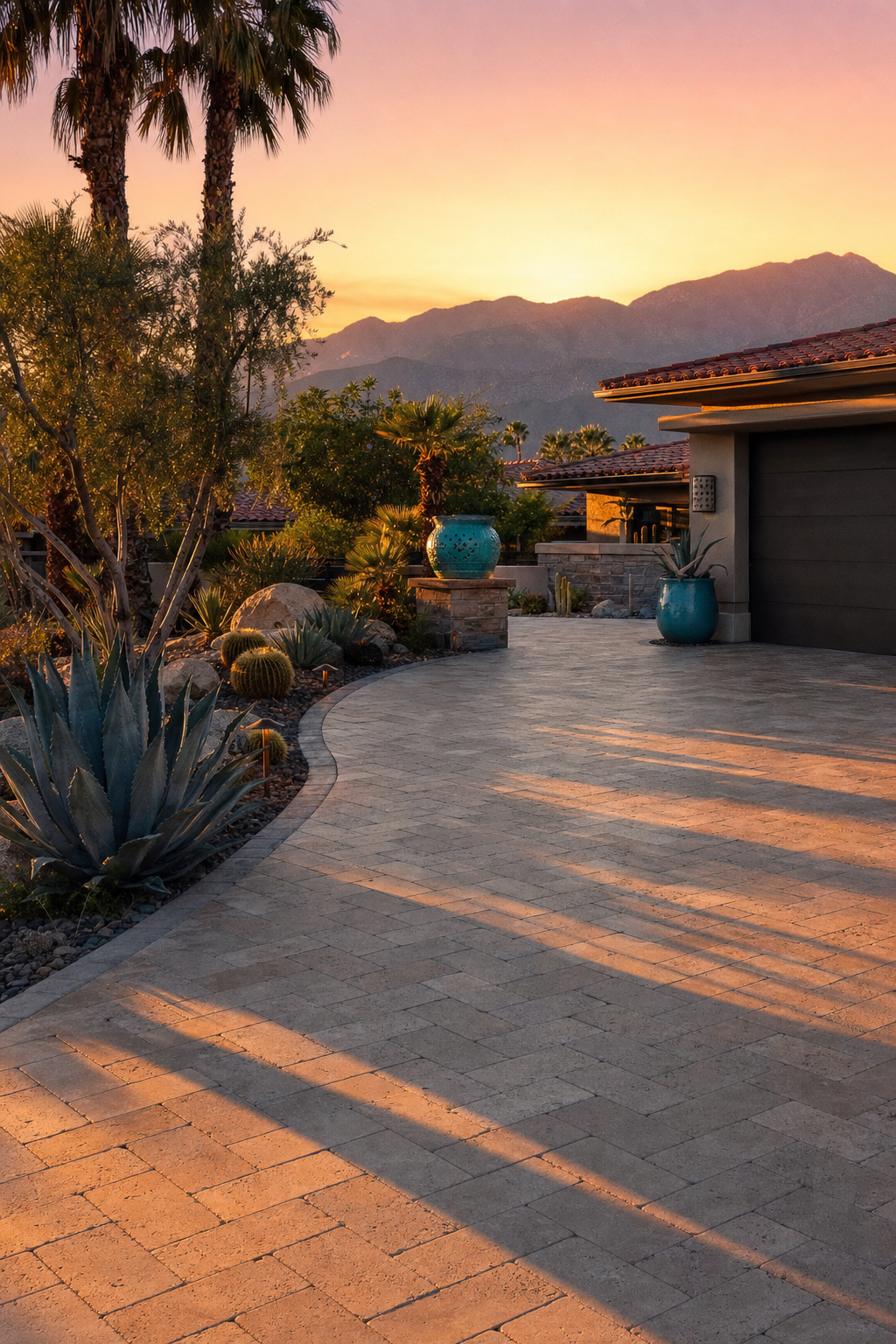
While shade structures manage the day, the setting sun transforms the landscape. In the Coachella Valley, the transition from blistering heat to cool evenings is a hallmark of desert living. Professional lighting is one of the most transformative desert patio design ideas Coachella Valley outdoor living spaces can incorporate to maximize evening enjoyment. However, the environment demands specific hardware. Standard plastic fixtures often used in milder climates will crack, fade, and eventually melt under the intense ultraviolet radiation and triple digit heat of Palm Desert. An expert Coachella Valley landscape firm prioritizes professional grade, low voltage LED systems housed in UV resistant, IP65 rated fixtures. These ratings ensure the equipment is dust tight and protected against the occasional high pressure water of seasonal storms, providing longevity that hardware store alternatives cannot match.
Design requires a restrained hand. Overlighting creates glare and obscures the starry desert sky that defines our region. Instead, focus on architectural depth. Moonlighting, where fixtures are placed high within the canopy of a Palo Verde tree, casts dappled shadows across the patio that mimic natural moonlight. Uplighting should be reserved for structural specimens such as Agave or Yucca, highlighting their silhouettes against the dark. For safety, low profile path lighting along decomposed granite walkways provides enough visibility for movement without washing out the ambiance.
Lighting Component | Recommended Specification | Benefit for Desert Environments |
|---|---|---|
Fixture Material | Solid Brass or Copper | Resists corrosion and heat deformation |
Protection Rating | IP65 or higher | Prevents dust and water ingress |
Light Temperature | 2700K to 3000K (Warm) | Complements earthy desert palettes |
Power Source | Low-Voltage Transformer | Safer and more energy efficient |
Integrating these specific techniques into your hardscaping and design services ensures the layout remains functional at midnight. Smart controllers with astronomical timers are also essential, as they automatically adjust for the shifting sunset times of the valley. This ensures your flexible paver driveways and patios are always safely illuminated without manual intervention, maintaining a sophisticated atmosphere that respects the natural desert environment.
Modern Desert Landscape Plants: The 70 30 Rule
The transition from evening illumination to the botanical frame of your property requires a strategic approach to plant selection. Achieving the high end desert patio design ideas Coachella Valley outdoor living enthusiasts appreciate often comes down to the 70/30 rule. This design principle dictates that 70 percent of your landscape should consist of structural elements; this includes the hardscape itself, boulders, and evergreen architectural plants. The remaining 30 percent is reserved for seasonal color, accents, and softer textures that provide visual interest without overwhelming the space or the water budget.
For the structural foundation, an expert Coachella Valley landscape firm will often select sculptural specimens like the Ocotillo or Golden Barrel Cactus. These plants provide year round geometry and require minimal intervention. The Desert Willow is another local favorite, offering a delicate canopy that provides light shade without the heavy water requirements of non native species. By prioritizing these structural plants, you create a permanent skeleton for the garden that looks intentional even during the peak of summer dormancy.
Plant Type | Role in 70/30 Rule | Coachella Valley Favorites |
|---|---|---|
Structural | 70% (Base & Geometry) | Ocotillo, Barrel Cactus, Agave Victoria-reginae |
Accent | 30% (Color & Texture) | Desert Marigold, Penstemon, Lantana |
Canopy | Structural | Desert Willow, Palo Verde, Ironwood |
Unlike the lush tropical landscapes that struggle in the Palm Desert heat, the modern desert look relies on the interplay between plants and hardscaping and design services. Using varied sizes of gravel mulch and strategically placed boulders creates depth and shadow. This method replaces the need for high maintenance groundcovers with inorganic materials that reflect the natural beauty of the surrounding mountains. This balance ensures your flexible paver driveways and patios are framed by a landscape that is both environmentally responsible and visually striking.
Efficient Irrigation for Sandy Coachella Valley Soils
Maintaining the 70/30 botanical balance requires more than just plant selection; it necessitates a sophisticated approach to water delivery. The Coachella Valley is defined by highly porous, sandy soil that allows moisture to drain almost instantly. In this environment, traditional spray heads are largely ineffective. High temperatures cause immediate evaporation, and desert winds often carry the mist away from the target root zones. For any high end hardscaping and design services, drip irrigation is considered non-negotiable. This system delivers water directly to the root zone, significantly reducing waste and ensuring the long term health of your investment.
When implementing the best desert patio design ideas Coachella Valley outdoor living projects require, precision is achieved through smart controllers. These systems synchronize with local weather stations in Palm Springs or Thermal to adjust watering schedules in real time based on current evapotranspiration rates. An expert Coachella Valley landscape firm uses these tools to provide enough moisture to sustain growth without creating the stagnant humidity that can damage sensitive desert species.
Irrigation Zone | Watering Frequency | Typical Plant Species |
|---|---|---|
Structural Desert | Deep and Infrequent | Ocotillo, Barrel Cactus, Joshua Tree |
Patio Containers | Short and Daily | Bougainvillea, Lantana, Succulent Mixes |
Accent Borders | Moderate | Desert Marigold, Penstemon |
Watering requirements vary significantly across the property. Established cacti thrive on deep, infrequent cycles that encourage root depth and stability. Conversely, patio container gardens integrated into flexible paver driveways and patios require more frequent hydration. Because containers are exposed to heat on all sides, the soil within them dries out much faster than the ground. A professional irrigation plan separates these needs into distinct zones, protecting your landscape from the relentless summer heat.
Common Patio Design Mistakes to Avoid in the Desert
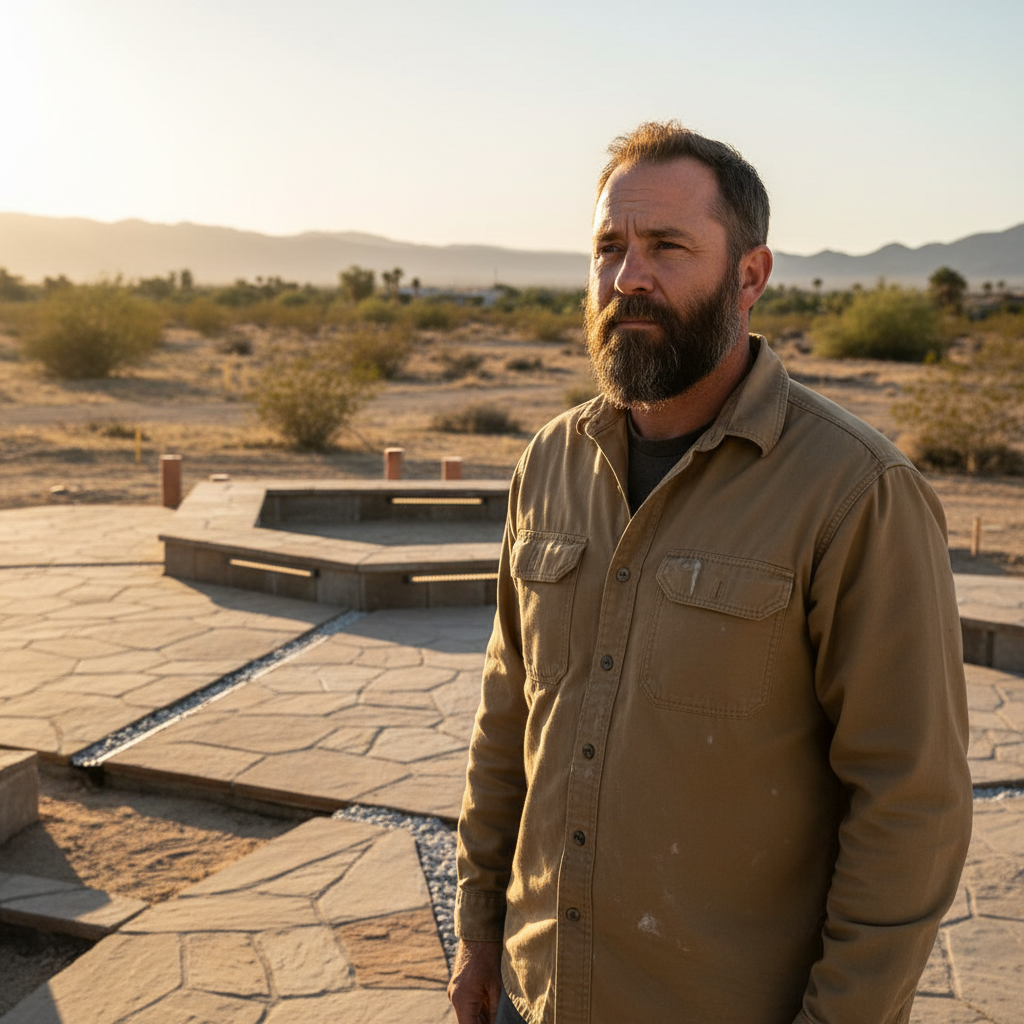
Even the most ambitious desert patio design ideas Coachella Valley outdoor living enthusiasts envision can be derailed by a few common, costly oversights. The most frequent error involves material selection based on aesthetics alone without considering thermal physics. Using plastic lighting fixtures or thin resin furniture is a primary mistake, as these materials become brittle and crumble under the intense UV radiation of a Palm Desert summer. Similarly, choosing dark charcoal or deep blue pavers creates a heat sink that can reach temperatures exceeding 150 degrees, making it impossible to walk comfortably even with footwear.
Design Mistake | Long-Term Consequence | Recommended Alternative |
|---|---|---|
Dark Paver Surfaces | Severe heat retention; burns feet | Light sand, beige, or terracotta tones |
Plastic Fixtures | Cracking and UV degradation | Solid brass or copper LED housing |
High-Water Tropicals | High utility bills; plant death | Xeriscaped structural succulents |
Lack of Drainage | Foundation damage during monsoons | Integrated French drains or swales |
Poor drainage planning is another critical oversight. While the valley is arid, our seasonal monsoons deliver high volumes of water in very short windows. Without professional hardscaping and design services, this runoff can pool against home foundations or cause significant erosion in decorative gravel areas. Proper grading ensures that water is diverted away from structures and toward deep-rooting structural plants. Furthermore, avoid the temptation to over-plant water-heavy species. Forcing a tropical aesthetic often leads to a "tacky" look that feels out of place in our rugged environment. An expert Coachella Valley landscape firm will prioritize native or desert-adapted species that maintain their beauty without exorbitant water costs. Finally, remember that flexible paver driveways and patios are far superior to poured concrete for avoiding the unsightly expansion cracks that plague many local properties after a few seasons of extreme heat.
Designing a stunning desert patio in the Coachella Valley is all about balancing beauty with durability. By choosing the right materials and layouts, you can create an outdoor oasis that stands up to the heat while looking spectacular. If you find yourself needing some expert guidance to bring these ideas to life, our team is here to support your vision. You can learn more about our approach to quality craftsmanship and see how we help homeowners transform their spaces into personal retreats.