Effective desert irrigation zone design Palm Desert involves grouping plants with similar water needs into hydrozones to ensure deep root saturation without overwatering. Utilizing drip irrigation around new pavers allows for precise moisture delivery at appropriate soil depths, protecting the hardscape foundation from runoff and erosion. This method accounts for soil permeability and specific watering depths to maintain a healthy, sustainable landscape in the Coachella Valley.
Palm Desert homeowners often face a frustrating cycle of soaring water bills and wilting greenery, especially after investing in high-end hardscaping. When irrigation zones are poorly planned around new paver installations, you risk either drowning your stone foundation or starving the desert flora that frames your property. Precision in hydrozoning is the only way to protect your investment while adhering to strict local water regulations. At PAVERS PAVERS PAVERS, we understand that true landscape sophistication requires a seamless marriage of engineering and horticulture. This guide examines the technical nuances of desert irrigation zone design, including the strategic placement of lines beneath driveways and the application of the 30/30 rule. We will detail how to calculate specific emitter counts for your shrubs and trees, ensuring your outdoor living space remains lush, efficient, and compliant for years to come.
The Importance of Hydrozoning in Palm Desert Landscapes

In the Coachella Valley, effective desert irrigation zone design Palm Desert starts with the fundamental principle of hydrozoning. This practice involves grouping plants based on their specific water requirements, sun exposure, and soil drainage characteristics rather than treating the entire yard as a single unit. After a professional paver driveway installation or patio project, many homeowners transition from thirsty turf to a more sophisticated custom landscape design. This shift requires a precise approach to outdoor lighting and irrigation systems to ensure the new aesthetic remains sustainable.
Irrigation is never one size fits all. If you place a desert-adapted Agave on the same valve as a high-production citrus tree, one will inevitably suffer. The Agave will likely develop "wet feet," a condition where moisture trapped around the roots leads to fungal rot and plant death. Conversely, the citrus will be chronically under-watered, leading to poor fruit production and leaf drop. By separating these into distinct zones, you ensure that succulents receive infrequent, deep soakings while fruit trees get the consistent volume they require. This structured design manages the extreme evaporation rates of the Palm Desert climate while protecting the investment made in your landscape and hardscaping.
Designing Irrigation Zones for Palm Desert Regulatory Compliance
Navigating the regulatory landscape in the Coachella Valley is as critical as selecting the right stone for your patio. The Coachella Valley Water District (CVWD) Landscape Ordinance provides strict guidelines for custom landscape design that every homeowner must follow to ensure code compliance. One of the primary mandates involves the use of separate valves for different plant categories. For instance, code requires trees and shrubs to be on independent zones because their root systems and water volume requirements differ significantly. Mixing these on a single valve can lead to water waste and non-compliance during city inspections in Rancho Mirage or La Quinta.
Another vital regulation is the prohibition of spray irrigation near non-permeable hardscapes. Overhead sprinklers create immediate runoff, but more importantly for your investment, the high mineral content in desert water causes salt staining and efflorescence on a new paver driveway installation. A compliant outdoor lighting and irrigation plan utilizes drip emitters, which apply water directly to the soil at a controlled 20 PSI. This pressure regulation, typically managed by a dedicated regulator and filter at the valve manifold, is a key component of the backflow prevention assembly required by local ordinances.
Professional desert irrigation zone design Palm Desert accounts for these mandates from the initial planning phase. By ensuring each zone is hydraulically balanced and that emitters are placed strategically away from hardscape edges, the design satisfies both the water district's conservation goals and the long term durability of your stone surfaces. This level of technical oversight prevents the common pitfalls that lead to red-tagged projects or expensive retrofits after the pavers are already set.
Integrating Irrigation Paths Under Paver Driveways and Patios
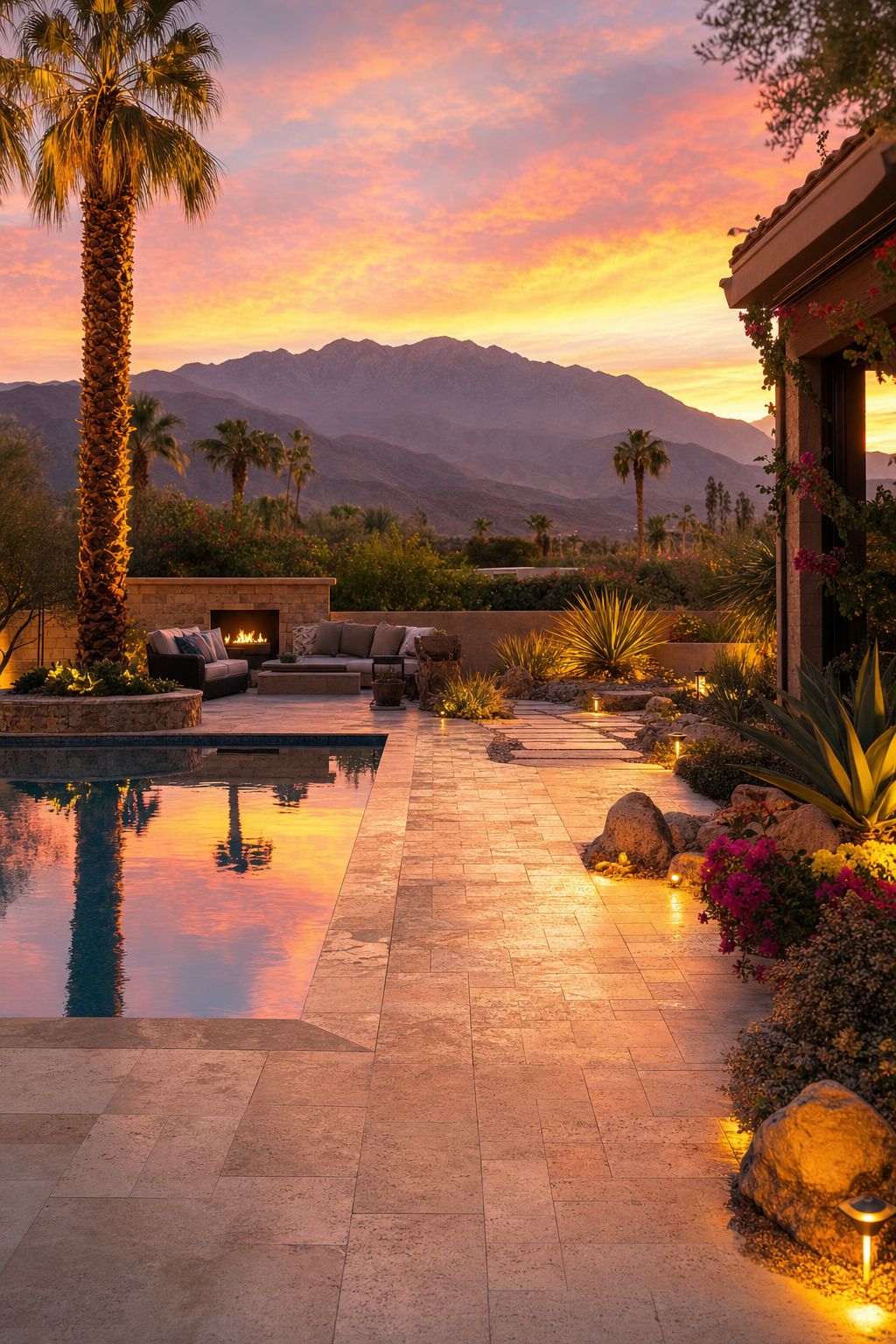
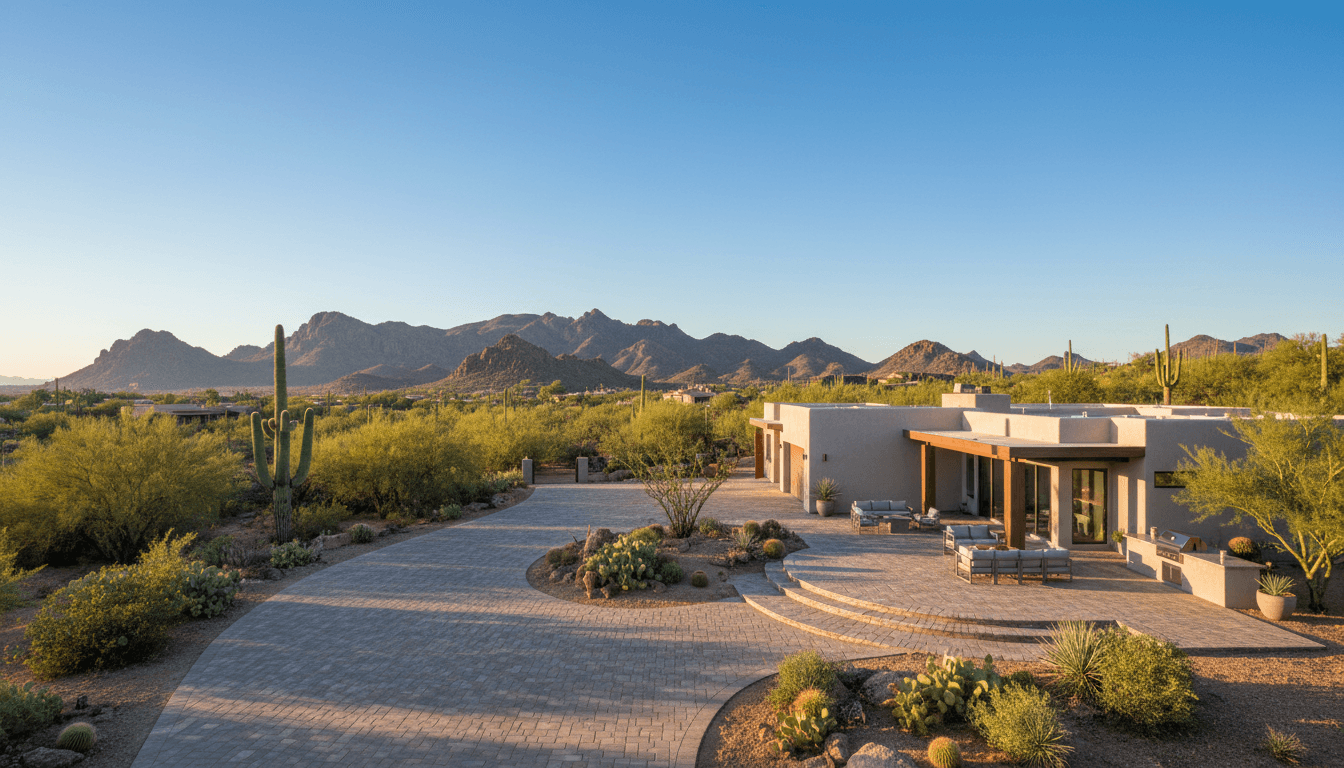
Integrating a custom landscape design with expansive hardscaping requires technical foresight into how water moves beneath the surface. The most critical step in this process is "sleeving." Before the base material for a paver driveway installation is compacted, we install Schedule 40 PVC pipes, typically 2 to 4 inches in diameter, beneath the planned footprint. These sleeves act as permanent conduits, allowing irrigation lines and wiring for outdoor lighting and irrigation to pass from one planter bed to another. Without these dedicated paths, a future line break or a change in plant layout would require lifting and relaying the stone, which is an avoidable and costly complication.
Once the sleeves are in place, the primary 1/2 inch polyethylene distribution tubing should follow the perimeter of the new stone patio rather than cutting directly underneath it. Routing lines around the edge ensures that if a leak occurs, it can be diagnosed and repaired in the soil rather than under a structural hardscape. Effective desert irrigation zone design Palm Desert also accounts for the "saturation zone" around the stone. Placing emitters too close to the paver edge creates a risk of water migrating into the bedding sand and road base via capillary action. This moisture intrusion can cause the sub-grade to shift or settle, leading to uneven stones and compromised joint sand.
To prevent these structural issues, we recommend keeping emitters at least 12 inches away from the physical edge of the pavers. By using 1/4 inch micro-tubing to bridge the gap from the main 1/2 inch line to the plant's root ball, you maintain a dry buffer zone directly beneath the hardscape edge. This layout preserves the compaction of the base while ensuring that every palm, shrub, and succulent receives its required volume. These technical considerations are essential for bridging the gap between a visually stunning patio and a long lasting, functional outdoor environment.
Applying the 30/30 Rule to Drip Irrigation Design
To maintain the hydraulic integrity of a custom landscape design, you must adhere to the 30/30 rule for micro-tubing. This technical standard dictates that a single run of 1/4 inch polyethylene tubing should never exceed 30 feet in total length, nor should it exceed a total flow of 30 gallons per hour (GPH). While these small diameter tubes are essential for delivering water from the main lateral line to individual root balls, they are highly susceptible to friction loss due to their narrow interior volume.
In the expansive residential lots common in Desert Hot Springs or Indio, it is tempting to extend micro-tubing over long distances to reach remote plantings. However, when you exceed these limits, the internal water pressure, typically regulated to 20 PSI, drops significantly as the water travels. This results in "emitter starvation," a condition where the plants closest to the main line receive the full GPH rating while those at the end of the run receive only a fraction of the required water.
Professional desert irrigation zone design Palm Desert avoids this by utilizing 1/2 inch or 3/4 inch distribution tubing for the bulk of the distance, only branching off with micro-tubing pigtails for the final few feet. This configuration ensures uniform pressure across the entire outdoor lighting and irrigation system. By respecting these flow limits, you prevent localized droughts within your garden beds and protect the aesthetics achieved during your paver driveway installation.
Calculating Emitter Counts for Desert Trees and Shrubs
Precise emitter selection is the final step in ensuring your outdoor lighting and irrigation system translates hydraulic pressure into long term plant health. For a standard desert shrub, a single 1 GPH (gallon per hour) emitter is typically sufficient to penetrate the root zone. However, trees require a more distributed approach to encourage a broad, stable root system that can withstand high desert winds. A 5 to 10 foot tree, such as a Sweet Acacia or Texas Olive, generally requires two to three 2 GPH emitters spaced evenly around the canopy to ensure even soil saturation.
As plants mature, their water needs do not just increase in volume; they shift in location. The most active feeder roots are located at the dripline, which is the outer edge of the plant’s foliage where rainwater naturally sheds. A common mistake in desert irrigation zone design Palm Desert is leaving emitters at the base of the trunk for several years. This localized moisture can lead to trunk rot and a narrow root ball that fails to support the tree's weight. Professional installers periodically move emitters outward to follow the growing canopy, ensuring the root system expands proportionally.
The contrast between hydrozones is most apparent when comparing a poolside tropical corner to a xeriscaped front yard. A high-water zone featuring Hibiscus or lush palms may require daily cycles with multiple high-flow emitters to combat the heat reflecting off a new paver driveway installation. In contrast, a low-water zone with Palo Verde trees and Agave should be designed for deep, infrequent soakings that mimic desert rain patterns. By tailoring the GPH output and emitter count to the specific species in your custom landscape design, you prevent the over-saturation of desert-adapted soil while providing enough moisture for thirsty, tropical accents.
Special Considerations for Shady Patio Covers and Artificial Turf
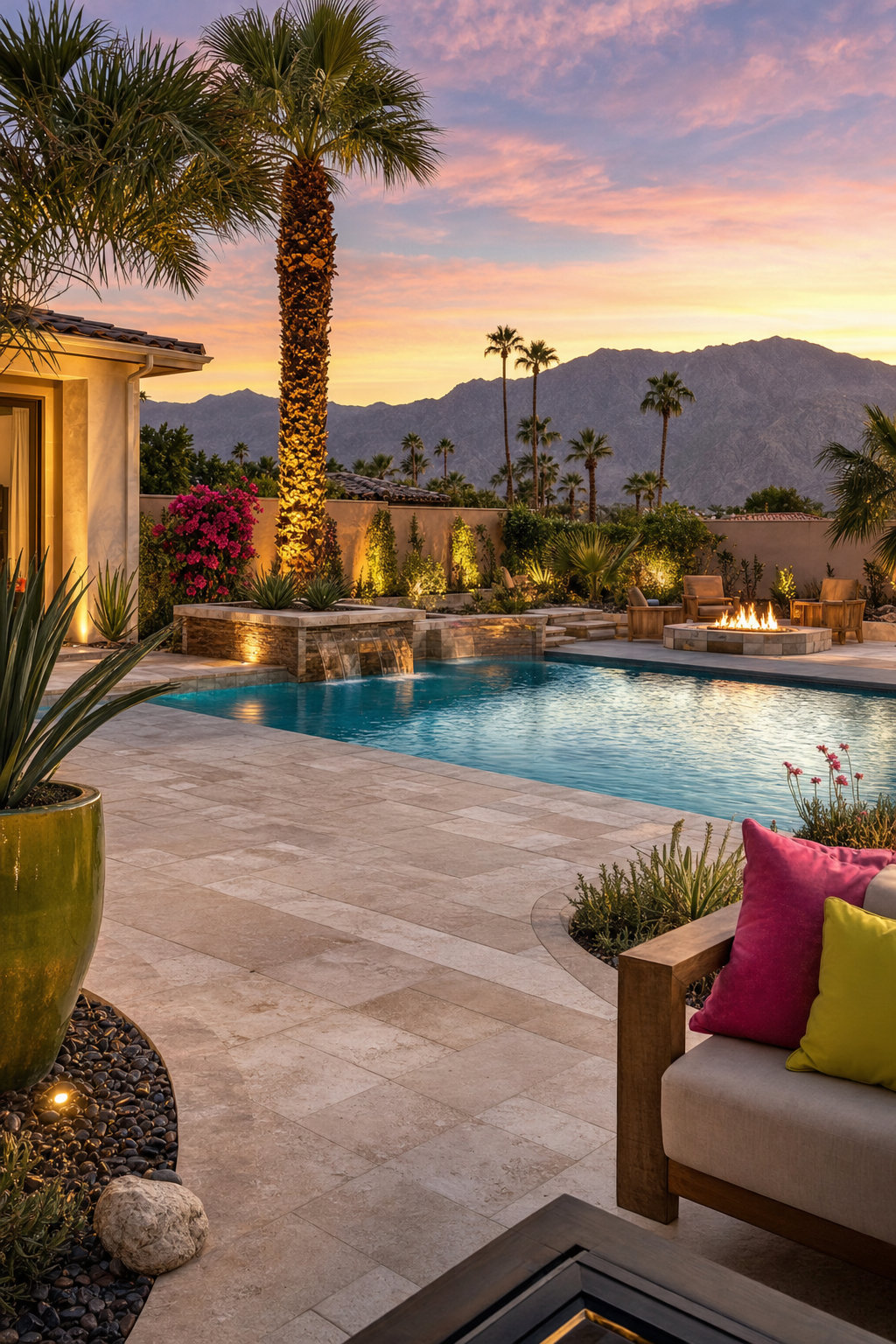
Micro-climates created by architectural elements require a specialized approach to desert irrigation zone design Palm Desert. In communities like Indian Wells, where expansive patio covers are common, the plants beneath these structures inhabit a much cooler environment. Because shade significantly reduces the rate of transpiration and soil evaporation, these zones typically require 50 to 70 percent less water than their sun-drenched counterparts. Failing to adjust for this can lead to stagnant soil conditions that jeopardize both plant health and the integrity of your hardscape sub-base.
When your custom landscape design includes artificial turf, the focus shifts from hydration to drainage. While the turf itself is waterless, the surrounding outdoor lighting and irrigation must be designed so that oversaturation does not migrate under the turf's compacted base. Proper drainage is essential to prevent the sub-grade from softening over time. Furthermore, avoid placing emitters directly against the perimeter of the turf or a paver driveway installation. The Coachella Valley’s hard water causes mineral and salt deposits to accumulate at the emitter head. If placed too close to the transition edge, these white calcifications will bleed onto the stone or synthetic fibers, resulting in permanent staining and a compromised aesthetic.
Long Term Maintenance of Your Palm Desert Irrigation Zones
Maintaining the efficiency of your desert irrigation zone design Palm Desert requires a proactive seasonal "step down" approach. As temperatures drop from the triple digits of August into the cooler winter months, the water demand for your custom landscape design decreases by as much as 70 percent. Adjusting your controller monthly ensures you are not over-saturating the soil, which can lead to root rot and wasted resources.
Extreme weather events, common in the Coachella Valley, necessitate immediate system audits. Following a heavy windstorm or a monsoon, sand and organic debris often clog micro-emitters, leading to localized plant stress. Check each zone for uniform flow and clear any obstructions from the emitter heads. Additionally, monitor the perimeter of your paver driveway installation. If you notice standing water or persistent dampness along the stone edge, it may indicate a cracked lateral line or a failed sleeve beneath the hardscape. Identifying these issues early prevents sub-base erosion and preserves the structural integrity of your outdoor lighting and irrigation investment. Periodic pressure tests at the valve manifold will confirm that your system continues to operate at the specified 20 PSI, ensuring every plant receives its intended volume year-round.
Organizing your outdoor space into smart hydrozones ensures your desert plants thrive without wasting water or damaging your new stone pathways. While planning these zones requires careful thought, you do not have to tackle the technical layout alone. If you want expert help perfecting your property, consider how professional Landscape Lighting and integrated watering systems can elevate your home. Our team is available to help you balance aesthetics with functionality, creating a sustainable oasis that remains beautiful throughout the seasons.