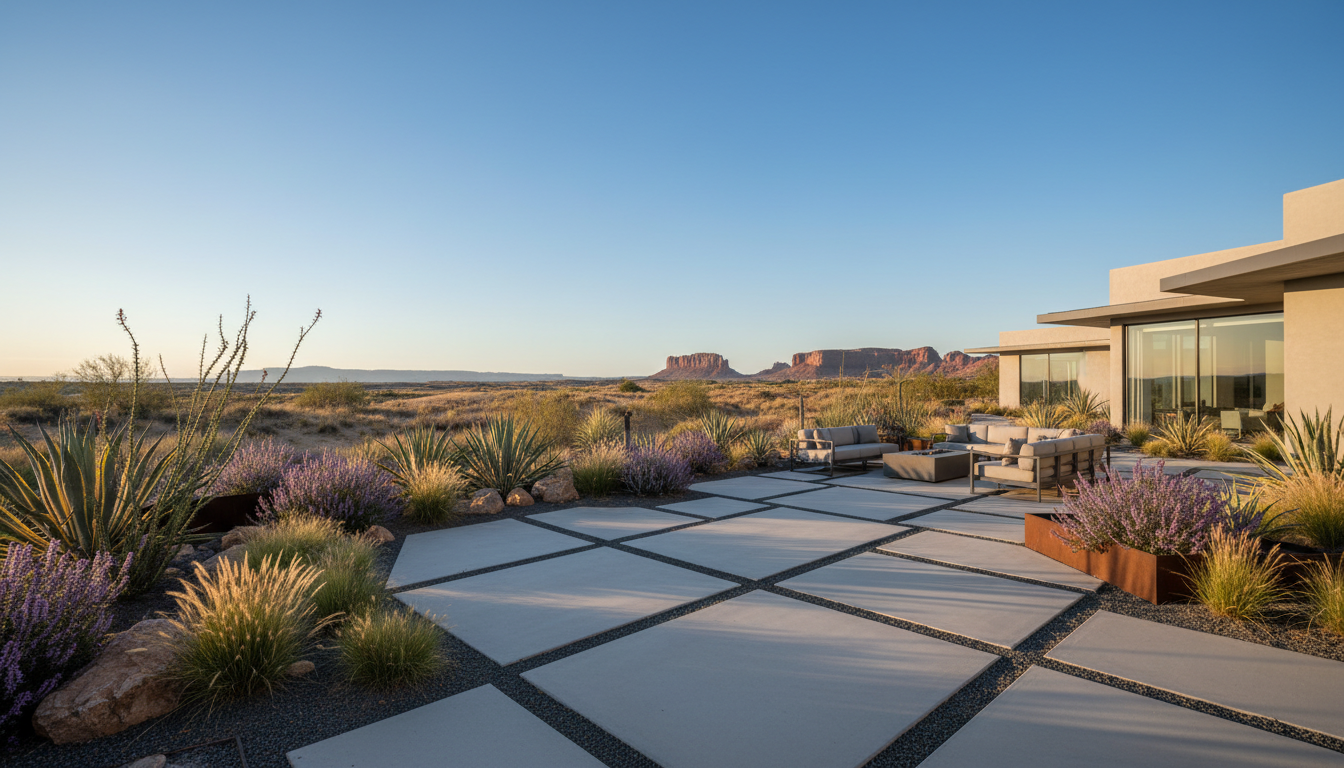
Travertine and light-colored porcelain are the best pavers for hot climate bare feet because they reflect solar energy and resist heat retention. Selecting natural stones or dense materials in shades like cream, sand, or white ensures that surfaces stay significantly cooler; this allows for comfortable outdoor living even in extreme desert heat.
Stepping onto your patio in the peak of a Palm Desert afternoon should feel like a luxury, yet for many homeowners, the experience quickly turns into a frantic sprint across blistering stone. When the Coachella Valley sun reaches its full intensity, selecting a surface that remains gentle on bare feet becomes a functional necessity rather than a secondary design choice. The wrong material can effectively render your outdoor living space unusable for half the year. In this guide, we evaluate the thermal performance of premium materials like natural travertine and high grade porcelain. We also examine the critical influence of color palettes and the latest advancements in cool touch technology for concrete surfaces. By the end of this analysis, you will understand how to design a sophisticated terrace that resists the heat and invites you to linger comfortably all summer long.
The Challenge of Palm Desert Heat and Barefoot Comfort
In the Coachella Valley, summer temperatures frequently reach 115 degrees Fahrenheit, but the ground beneath your feet often tells a much harsher story. Standard grey concrete and dark asphalt surfaces in Palm Desert can easily exceed 150 degrees, a temperature high enough to cause second-degree burns in seconds. For homeowners, this thermal reality often renders pool decks and patios off-limits during daylight hours. However, finding the best pavers for hot climate bare feet is not a matter of luck; it is a matter of physics.
The difference between a searing surface and a comfortable one lies in two scientific principles: Solar Reflectance Index (SRI) and thermal mass. SRI measures how well a material reflects solar energy rather than absorbing it. A high SRI indicates the material stays cooler under direct sunlight. Thermal mass describes a material's capacity to store heat. Dense materials with high thermal mass, such as dark basalt or standard poured concrete, act as heat sinks that radiate warmth long into the evening. By exploring natural stone patio options and specialized hardscape design services, you can mitigate these effects. Through professional installation in Palm Desert, we utilize materials engineered to stay touchable, ensuring your outdoor space remains functional throughout the peak of July.
Why Travertine is the Gold Standard for Heat Resistance
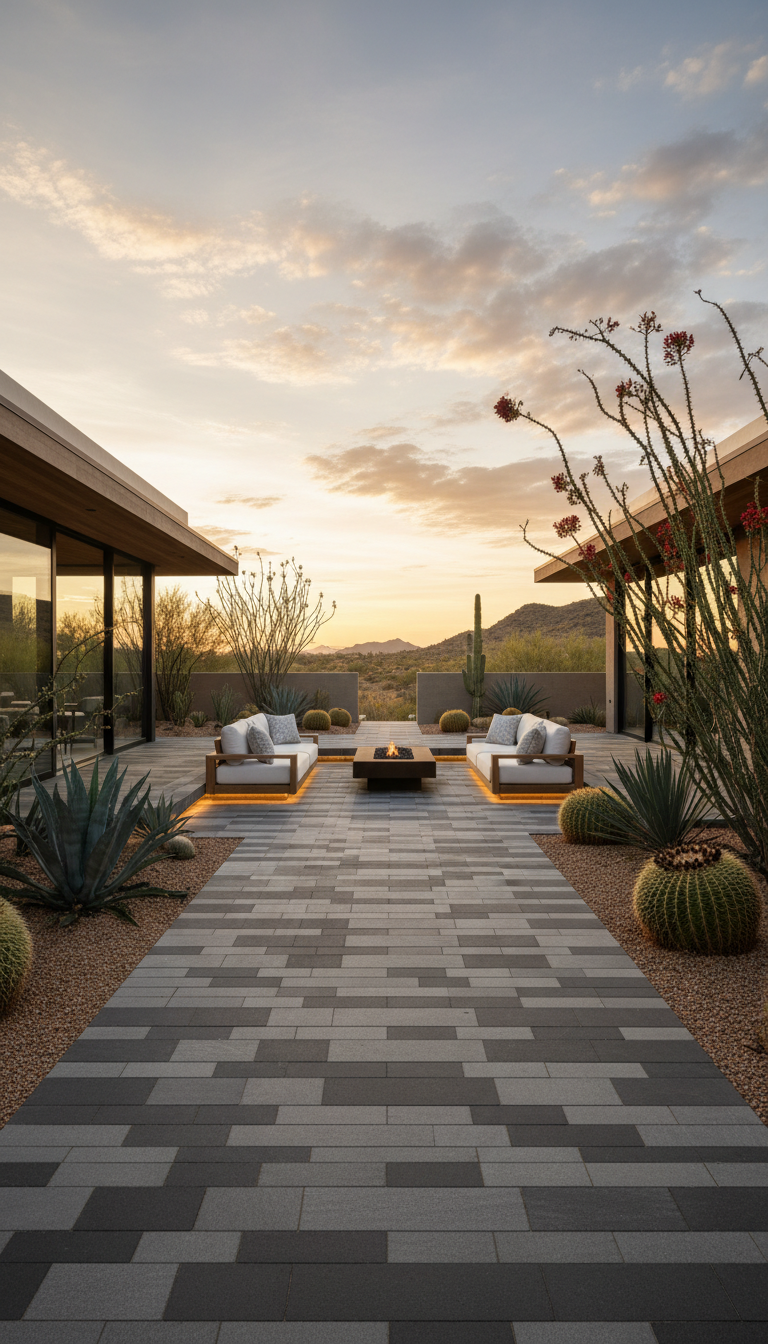
Travertine stands as the premier choice for Coachella Valley hardscaping because it fundamentally defies the typical thermal behavior of stone. As a sedimentary rock formed by mineral springs, its internal structure is naturally porous. These microscopic voids act as tiny insulators, interrupting the flow of thermal energy and preventing heat from penetrating the full depth of the material. While volcanic stones like basalt or dense man-made concrete act as heat sinks, travertine remains breathable.
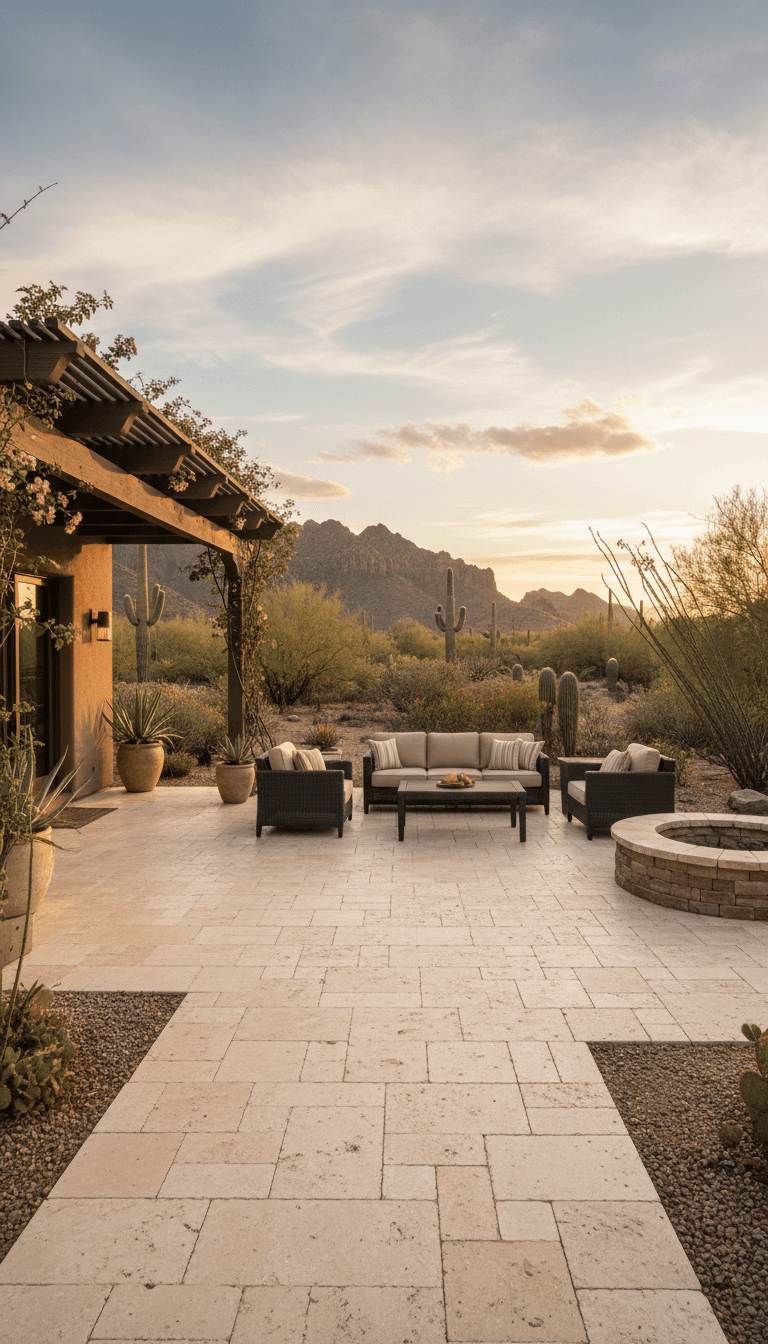
On a typical July afternoon in the desert, travertine surfaces can measure 20 to 30 degrees Fahrenheit cooler than standard poured concrete or dark pavers. This significant temperature delta is the primary reason travertine is considered among the best pavers for hot climate bare feet. For homeowners integrating these materials into hardscape design services, the choice often comes down to the specific finish:
Finish Type | Texture | Barefoot Feel | Best Use Case |
|---|---|---|---|
Tumbled | Distressed/Pitted | High grip, very soft, stays coolest | Pool decks and high-traffic paths |
Honed | Smooth/Matte | Silky, sophisticated, moderately cool | Covered patios and transitional spaces |
Polished | Glossy/Reflective | Not recommended for outdoor heat | Indoor-to-outdoor transitions only |
Tumbled travertine is particularly effective for Palm Desert pool decks. The textured edges and open pores provide natural slip resistance without the abrasive feel of broom-finished concrete. Because the stone does not contain the high density of metal oxides found in many other rocks, it does not store energy. Instead, it reflects a high percentage of solar radiation, ensuring that even in the direct afternoon sun, the walk from the lounge chair to the water remains comfortable.
For those exploring natural stone patio options, this material provides a level of thermal safety that simply cannot be replicated by denser, non-porous alternatives. When planning a professional installation in Palm Desert, we prioritize the selection of light-toned travertine, such as Ivory or Silver, which further enhances these natural cooling properties. Unlike concrete, which can feel like a radiator long after the sun goes down, travertine cools rapidly as soon as it enters the shade, making your outdoor living space usable throughout the day and into the evening.
Can Porcelain Pavers Handle the Coachella Valley Sun?
While travertine holds the title for the absolute lowest surface temperature, porcelain pavers are often unfairly dismissed as being too hot for the Coachella Valley. The misconception typically stems from indoor ceramic tiles, which can feel scorching under direct light. However, professional grade outdoor porcelain is a specialized class of material. Its performance in high heat depends almost entirely on its Solar Reflective qualities. By selecting light shades such as cream, silver, or sand, homeowners can achieve a surface that remains safe for barefoot traffic, even during a Palm Desert afternoon.
High end porcelain is exceptionally dense, contributing to a low moisture absorption rate of less than 0.5 percent. This density, combined with light pigmentation, prevents the material from storing vast amounts of thermal energy compared to darker natural stones. In many hardscape design services projects, porcelain is chosen because it resists the deep heat soak that makes other materials unbearable. While it does not possess the natural microscopic voids of travertine, its reflective glaze acts as a barrier against UV absorption.
Performance Metric | Light Porcelain | Tumbled Travertine |
|---|---|---|
Thermal Retention | Low (in light colors) | Lowest |
Maintenance Needs | Minimal | Periodic Sealing |
Density | High | Porous |
Barefoot Comfort | High (Warm) | Superior (Cool) |
For clients seeking a durable alternative to natural stone patio options, light colored porcelain provides a sophisticated look that requires very little upkeep. It resists staining and fading under intense UV exposure, making it a practical choice for modern outdoor kitchens and dining areas. While travertine remains the best pavers for hot climate bare feet in terms of absolute temperature, porcelain is a high performance contender if you strictly adhere to a light color palette to manage solar gain.
The Role of Color in Surface Temperature
Color selection dictates the thermal performance of a patio more than almost any other variable in Palm Desert. In the physics of hardscaping, dark pigments act as heat sinks, aggressively absorbing ultraviolet rays and converting them into stored thermal energy. Conversely, lighter tones reflect the majority of solar radiation, preventing the material from reaching dangerous temperatures. When assessing the best pavers for hot climate bare feet, the visual aesthetic must align with these thermal realities to ensure the space remains functional during peak hours.
The temperature delta between colors is stark. On a day when the ambient air is 105 degrees, a charcoal gray or deep chocolate paver can easily reach 160 degrees, which is sufficient to cause immediate discomfort. In contrast, a light tan or sand colored surface under the same conditions typically plateaus around 115 to 120 degrees.
Paver Color | Typical Surface Temp (Peak Sun) | Barefoot Safety |
|---|---|---|
Off-White / Cream | 110°F - 118°F | High |
Light Tan / Beige | 115°F - 125°F | Moderate-High |
Silver / Light Gray | 118°F - 128°F | Moderate |
Charcoal / Dark Brown | 150°F+ | Low (Dangerous) |
Homeowners should prioritize a cool palette for any hardscape design services involving pool decks or walkways. By sticking to off-whites, beiges, and light grays, you maximize the solar reflectance of the area. For those considering natural stone patio options, lighter stones like ivory travertine or white limestone offer a built-in safety margin. Our professional installation in Palm Desert focuses on these specific tones to ensure that your outdoor living area serves as a retreat rather than a heat hazard.
Concrete Pavers and Cool Touch Technology
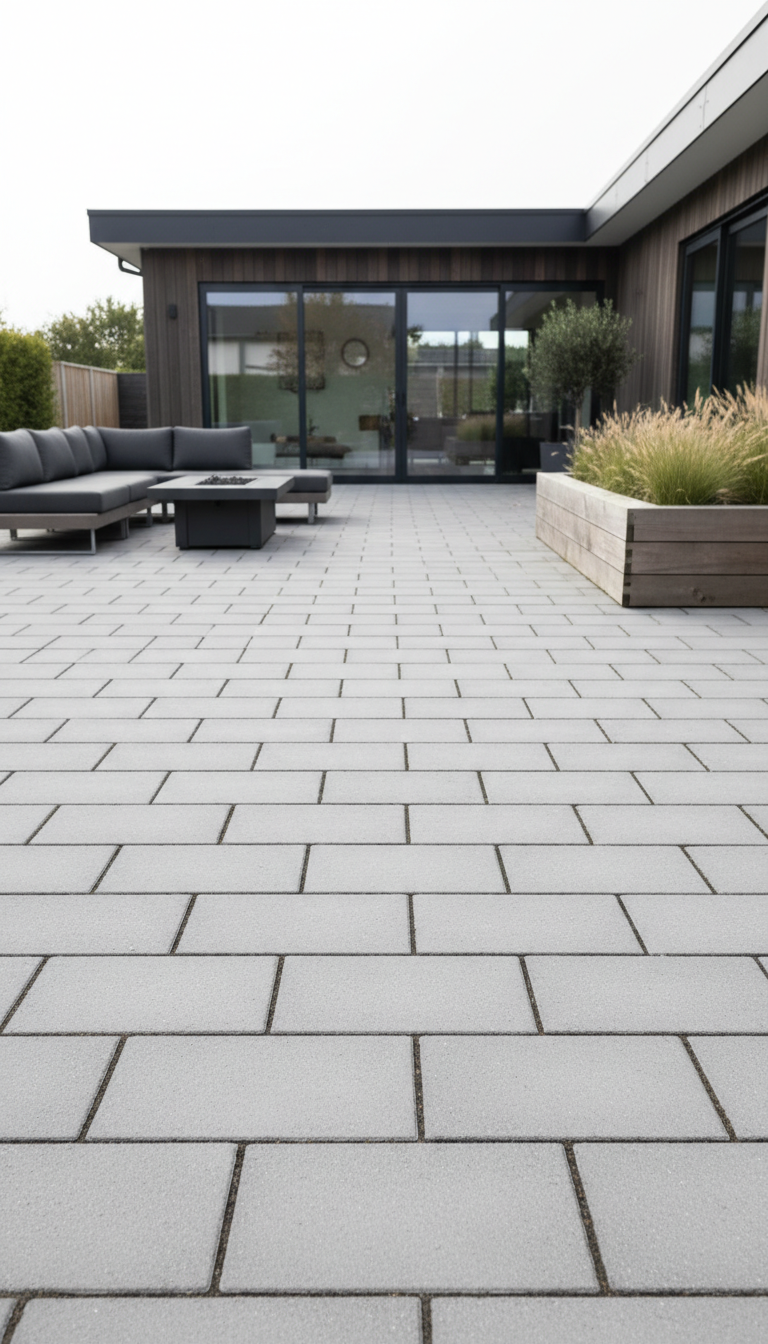
Standard concrete pavers remain a staple for Coachella Valley residents seeking a balance between aesthetics and budget. While basic grey concrete often reaches temperatures that preclude barefoot use, advancements in manufacturing have introduced "cool touch" options. These specialized pavers utilize high Solar Reflectance Index (SRI) pigments and lighter aggregates designed to reflect infrared radiation, similar to high-performance roofing materials. By selecting these technologically enhanced blocks, homeowners can achieve a surface that is significantly more tolerable than traditional poured slabs.
Thermal performance is also influenced by the physical dimensions and installation method of the product. Thicker pavers, typically 60mm or 80mm, possess greater thermal mass; this means they take longer to reach peak temperatures in the morning, though they may hold warmth longer after sunset. For professional installation in Palm Desert, we often recommend sand-set applications over mortar beds. A sand sub-base provides a small degree of thermal dissipation, whereas a solid mortar bed can act as a continuous heat bridge that traps energy within the patio structure.
Concrete Paver Feature | Heat Impact | Barefoot Strategy |
|---|---|---|
Cool-Touch Pigments | Lowers UV absorption | Choose SRI-rated collections |
Lighter Aggregates | Reduces heat retention | Select white or tan base mixes |
Sand-Set Base | Improves dissipation | Preferable for pool surrounds |
Selecting concrete requires a disciplined approach to hardscape design services. While it is a versatile alternative to natural stone patio options, it is not naturally porous like travertine. Therefore, color selection remains the most critical factor. Even with advanced cooling technology, a dark grey concrete paver will still outperform a light one in heat absorption. To ensure these are the best pavers for hot climate bare feet on your property, we prioritize off-white and light sand tones that work in tandem with the material's reflective properties.
Landscaping and Hardscape Design Strategies for Cooling
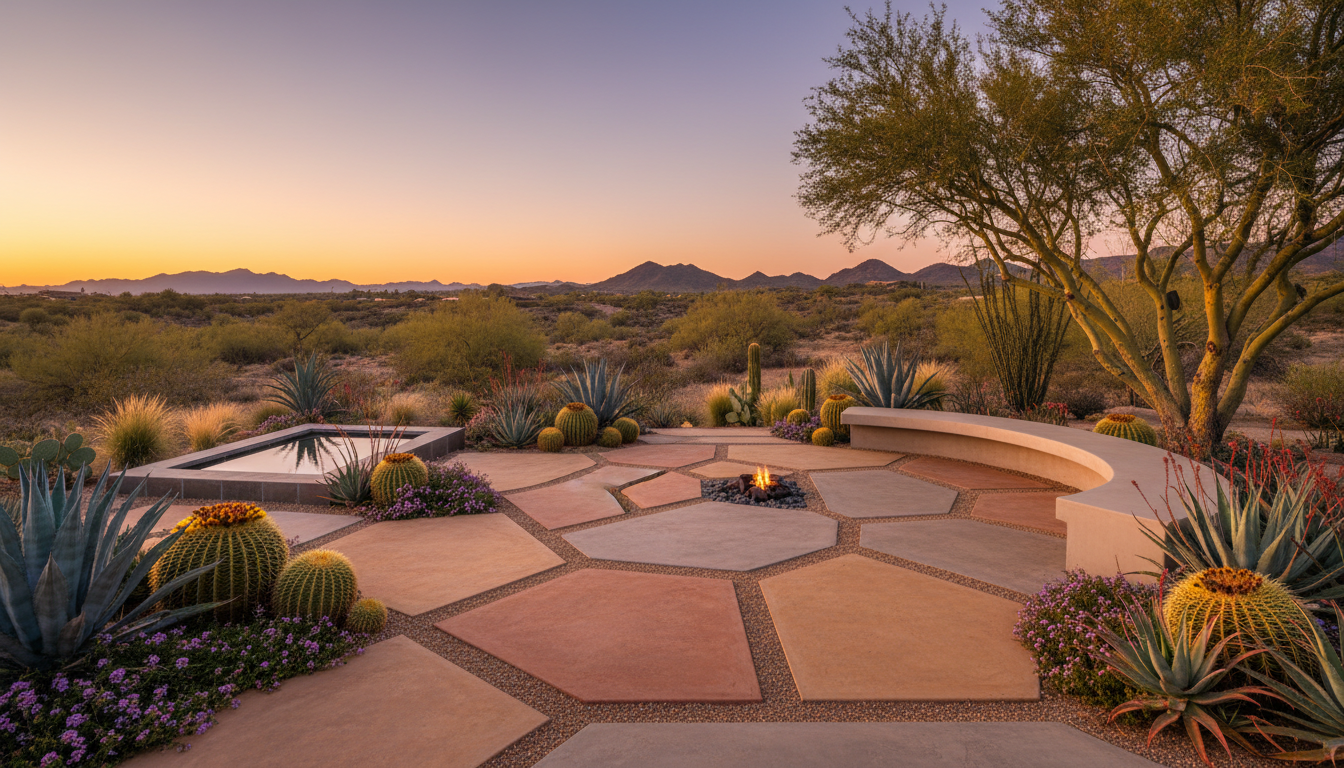
Optimizing a desert patio requires looking beyond the stones to the surrounding environment. Even the best pavers for hot climate bare feet benefit from a design that actively manages the microclimate. At Pavers Pavers Pavers, we integrate hardscape design services with strategic shading and moisture management to lower surface temperatures by an additional 10 to 15 degrees.
Vegetation plays a vital role in thermal regulation. We favor desert friendly trees like the Palo Verde or Desert Willow, which provide dappled shade without excessive water requirements. Their canopy interrupts direct solar radiation before it hits your natural stone patio options. Furthermore, we install high efficiency drip irrigation systems tucked beneath the mulch lines bordering your pavers. The gradual release of moisture provides a subtle evaporative cooling effect, cooling the immediate air and preventing the stone edges from radiating excessive heat.
Design Element | Cooling Mechanism | Benefit |
|---|---|---|
Pergolas/Alumawood | Direct UV Block | Prevents surface heat soak |
Drip Irrigation | Evaporative Cooling | Lowers ambient temperature |
Desert-Adaptive Trees | Dappled Shade | Reduces solar gain on stone |
Low-Voltage LED | Visual Comfort | Extends use into cooler nights |
Strategic placement of these elements ensures that high traffic areas remain accessible even during mid afternoon. As the sun sets and the desert air cools, integrated low voltage lighting transforms the space. By highlighting textures and paths, we make the patio the primary living area during the most comfortable hours of the day. For a comprehensive approach to thermal comfort, professional installation in Palm Desert ensures every element, from sub base to shade structure, works in unison.
Selecting a cooling surface is the most effective way to keep your outdoor areas comfortable during a Palm Desert summer. By prioritizing light tones and natural textures, you can create a beautiful space that is safe for bare feet. If you want expert help navigating these material options or designing a custom layout, our team is available to assist you. Browsing through different Stone Patios is an excellent way to discover which styles best suit your desert home.