
Smaller to medium format pavers are the most effective choice for local properties because they offer superior load-bearing capacity and structural flexibility. When selecting the ideal paver size for driveway Palm Desert projects, homeowners should prioritize units that are at least 60mm thick to ensure the surface remains durable under constant vehicle weight.
Homeowners in Palm Desert often choose driveway pavers based on aesthetics alone, only to find their investment cracking or shifting under the intense Coachella Valley heat and heavy vehicle weight. Selecting the incorrect size or thickness is a common mistake that leads to structural failure and expensive repairs. In our demanding desert environment, the relationship between paver dimensions and long term stability is vital; a stunning entryway is only as effective as its ability to withstand thermal expansion and constant pressure. This guide examines the critical balance between the modern appeal of large format units and the proven durability of smaller stones. You will discover why the 80mm thickness standard is a non negotiable factor for local driveways, how heat affects various formats, and which installation patterns offer the highest level of structural integrity for your property.
Understanding Standard Paver Sizes and Dimensions for Coachella Valley Homes
In the Coachella Valley, selecting the correct standard paver sizes is a balance between regional aesthetic trends and the physical demands of desert soil. The spectrum usually begins with the classic 4x8 inch brick shape, a staple for traditional patterns. As we move into medium formats, sizes like 6x9 or 12x12 inches offer a transitional look that bridges the gap between classic and contemporary styles.
Large format pavers, defined as units 16x16 inches or larger, have become a signature element in modern Rancho Mirage estates and South Palm Desert renovations. These include 24x24 and expansive 24x36 inch stones. While these larger units create the sleek, minimal joint lines favored in high end architecture, they present different engineering requirements than small format pavers.
Format Category | Common Dimensions (Inches) | Typical Application |
|---|---|---|
Small / Standard | 4x8, 6x6, 6x9 | High traffic driveways, intricate patterns |
Medium | 12x12, 6x12 | Walkways, residential entries |
Large Format | 16x16, 24x24, 24x36 | Patios, pool decks, modern driveways |
Choosing a paver size for driveway Palm Desert projects requires an understanding that surface area directly affects structural integrity. A larger stone has more leverage to tilt or crack under the weight of a vehicle if the sub base is not perfectly prepared, whereas smaller units distribute load through a higher density of sand joints. This makes the choice of format a structural decision as much as a stylistic one.
The 60mm vs 80mm Debate: Why Thickness Matters More Than Surface Area
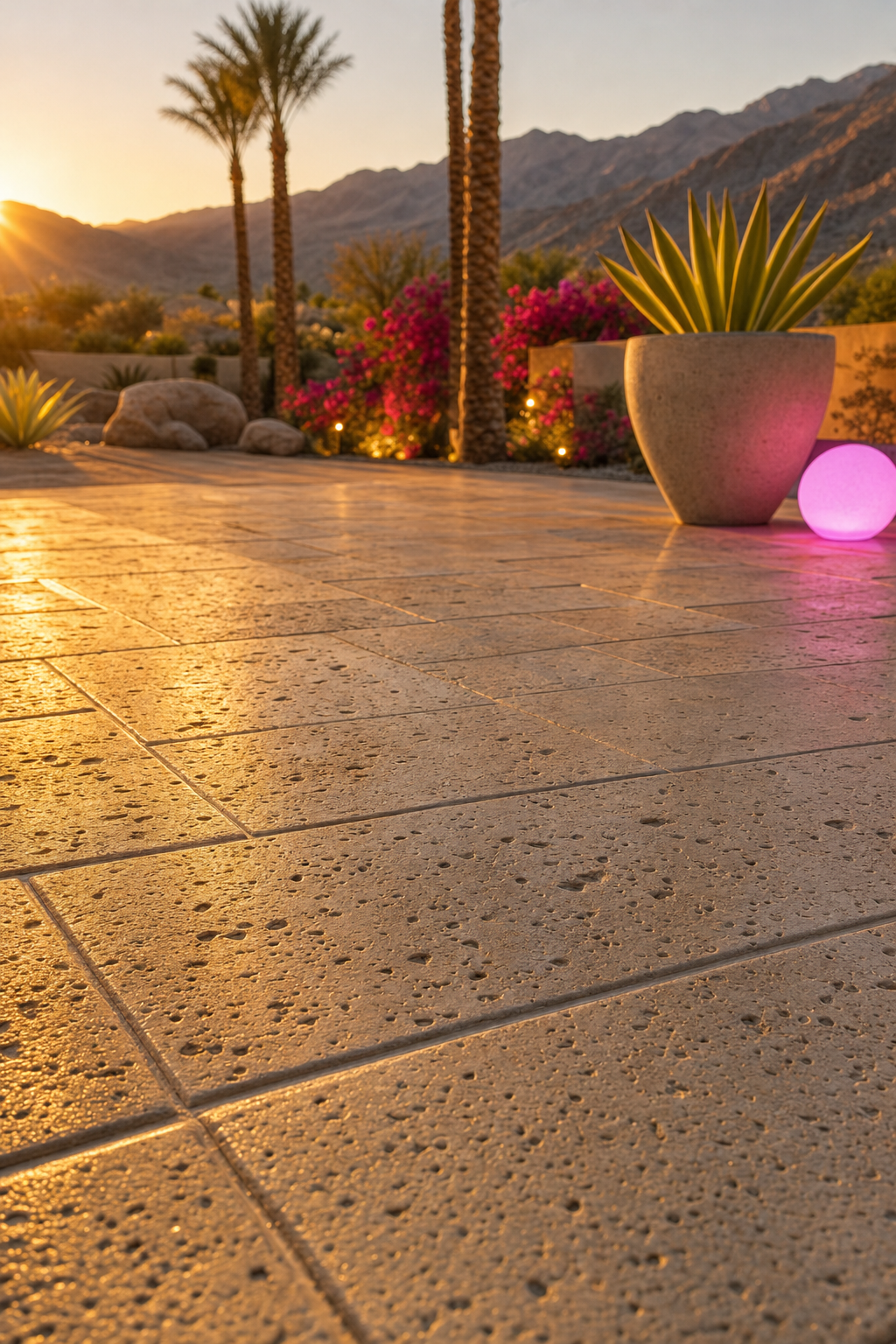
While the length and width define the visual style, the vertical dimension determines the longevity of the installation. In the context of selecting the ideal paver size for driveway Palm Desert projects, thickness is the primary indicator of load-bearing capacity. Residential hardscaping typically utilizes two standard thicknesses: 60mm, which is approximately 2 3/8 inches, and 80mm, which is approximately 3 1/8 inches.
For most standard passenger vehicles and sedans, a 60mm paver is the baseline industry standard. However, we often recommend 80mm units for properties in neighborhoods like Bighorn or The Vintage Club. The increased depth provides superior resistance to the rotational torque generated when heavy SUVs or delivery trucks turn their wheels on the driveway surface. This thickness is especially critical when dealing with the fine, sandy subgrades common throughout the Coachella Valley, as thicker units are less likely to shift under pressure.
It is vital to distinguish between a structural paver and a decorative slab. Slabs are typically 50mm (2 inches) or thinner and are designed strictly for pedestrian use on patios or pool decks. Attempting to install a 2 inch patio slab on a driveway is a common mistake that leads to immediate hairline fractures and structural failure. A true paver is engineered to be thicker relative to its surface area, ensuring it can withstand thousands of pounds of pressure without snapping.
Thickness | Metric | Recommended Use |
|---|---|---|
50mm | 2" | Pedestrian walkways and patios only |
60mm | 2 3/8" | Standard residential custom paver driveways |
80mm | 3 1/8" | High-traffic driveways, heavy SUVs, and commercial entries |
Selecting the 80mm option effectively increases the interlock between units, as there is more vertical surface area for joint sand to create friction. This vertical friction is what prevents units from sinking or tilting over time, a common issue when standard paver sizes are not matched to the expected vehicle weight.
Large Format Pavers vs Small Pavers for Driveway Durability
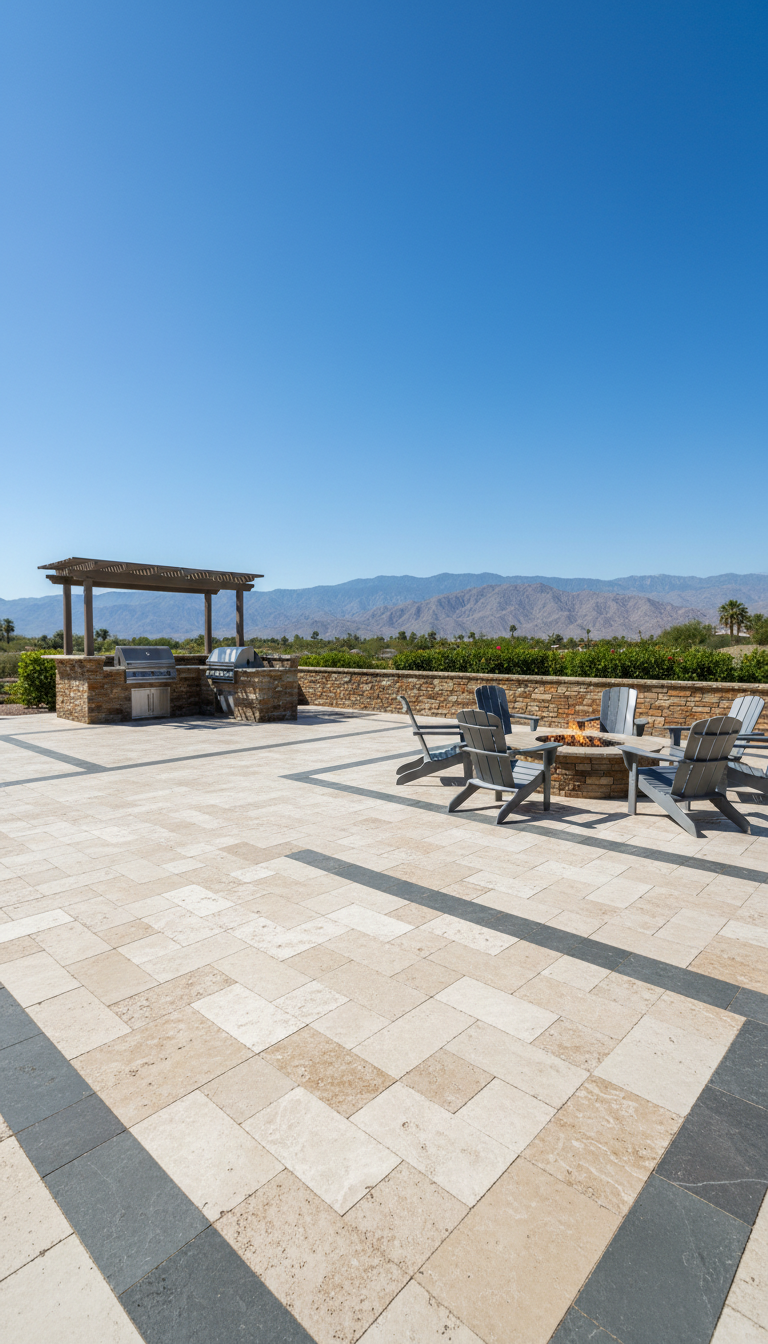
The relationship between surface area and durability is fundamentally a matter of structural physics. While thickness provides the necessary bulk, the specific dimensions of the units dictate how the entire surface reacts to the weight of a vehicle. Choosing small format pavers, such as 4x8 or 6x6 units, provides a high density of sand joints per square foot. These joints act as a suspension system for the driveway. In the sandy, shifting soils common across the Coachella Valley, this flexibility allows the paved surface to settle slightly without individual stones snapping under tension.
Smaller units distribute vehicle weight across a broader network of interlocked stones. When a heavy vehicle enters the driveway, the downward pressure is transferred through the sand into the surrounding units. This mechanical interlock is the primary reason why standard paver sizes on the smaller end of the spectrum remain the gold standard for high traffic areas. They are simply less prone to cracking because they have more room to move.
Performance Metric | Small Format (e.g., 4x8, 6x6) | Large Format (e.g., 24x24) |
|---|---|---|
Joint Density | High (Maximum flexibility) | Low (Minimal jointing) |
Soil Adaptability | Excellent for sandy desert soil | Requires rigid foundation |
Weight Distribution | Dispersed through sand joints | Concentrated on stone surface |
Engineering Need | Standard compacted sub-base | Reinforced, thick-lift base |
In contrast, large format pavers like 24x24 slabs are favored for the sleek, modern aesthetic found in newer Rancho Mirage estates. However, these larger stones act as levers. If a tire puts pressure on one corner and the center is not perfectly supported, the stone is likely to fracture. To successfully use these larger units for custom paver driveways, we must implement specific engineering. This includes using stones with higher flexural strength ratings and installing a significantly thicker, more rigid sub-base to prevent any subterranean shifting. Selecting the right paver size for driveway Palm Desert projects requires acknowledging that the larger the stone, the more critical the precision of the underground preparation becomes.
The Desert Heat Factor: Thermal Expansion and Large Pavers
In the Coachella Valley, the local climate introduces a structural challenge often overlooked in milder coastal regions. The extreme diurnal temperature range, where summer days reach 120 degrees followed by rapid cooling at night, forces concrete units to physically expand and contract daily. This thermal movement is a critical technical consideration when determining the ideal paver size for driveway Palm Desert applications.
Larger pavers have a significantly higher mass to joint ratio. Because a 24x24 unit covers a vast surface area with very few breaks, there is less room for the installation to breathe compared to a surface composed of small format pavers. When these large stones expand in the intense midday sun, they exert significant lateral pressure on their neighbors. If the joint density is too low, this pressure often leads to spalling, a condition where the edges of the pavers chip or flake away because the material has no room to displace the stress.
Thermal Factor | Large Format Units (e.g., 24x24) | Small Format Units (e.g., 4x8) |
|---|---|---|
Expansion Pressure | Concentrated at fewer points | Distributed across many points |
Relief Joints | Minimal (low joint density) | Maximum (high joint density) |
Spalling Risk | High without expert installation | Low due to flexible jointing |
To counteract these forces, professional installations in communities like Indian Wells require a meticulous focus on jointing materials. We utilize high grade polymeric sand, which contains specialized binders that remain slightly flexible under heat. This allows the joints to act as miniature shock absorbers for the expanding stones. For those selecting oversized units for custom paver driveways, ensuring a precise, consistent joint width and using stabilized sand is the only way to prevent heat induced structural damage that rarely affects projects in the stabilized temperatures of coastal California.
Strongest Paver Patterns for Palm Desert Driveways
While material thickness and thermal resilience are vital, the arrangement of those units provides the final layer of structural defense. The Herringbone pattern, set at either a 45 or 90 degree angle, is widely considered the gold standard for custom paver driveways. This layout creates a superior mechanical interlock by ensuring that no continuous joint lines run parallel to the direction of travel. When a vehicle brakes or turns its wheels on the sandy subgrades of the Coachella Valley, the Herringbone pattern distributes those lateral forces across all surrounding units, effectively preventing creeping or shifting.
In contrast, linear patterns like Running Bond or Stack Bond offer less resistance to horizontal movement. In these layouts, the long, straight joint lines can act as failure points under the torque of heavy SUVs. If these patterns are chosen for aesthetic reasons, they often require enhanced edge restraints and more frequent maintenance to prevent the stones from migrating over time. For high traffic Palm Desert properties, the interlocking nature of the pattern is just as important as the paver size for driveway Palm Desert selections.
Pattern Type | Interlock Strength | Best Application | Movement Resistance |
|---|---|---|---|
45° Herringbone | Highest | High-traffic driveways | Excellent |
90° Herringbone | High | Standard driveways | Very Good |
Running Bond | Moderate | Walkways, light driveways | Fair |
Stack Bond | Low | Decorative borders, patios | Poor |
Utilizing standard paver sizes like 4x8 or 6x9 in a Herringbone layout maximizes the number of contact points between stones. This high joint density, combined with the geometric locking of the pattern, ensures the surface remains flush even as the desert soil shifts beneath it. For those moving away from small format pavers toward larger units, the choice of pattern becomes even more critical to compensate for the reduced number of joints.
Choosing a Format That Complements Palm Desert Architecture
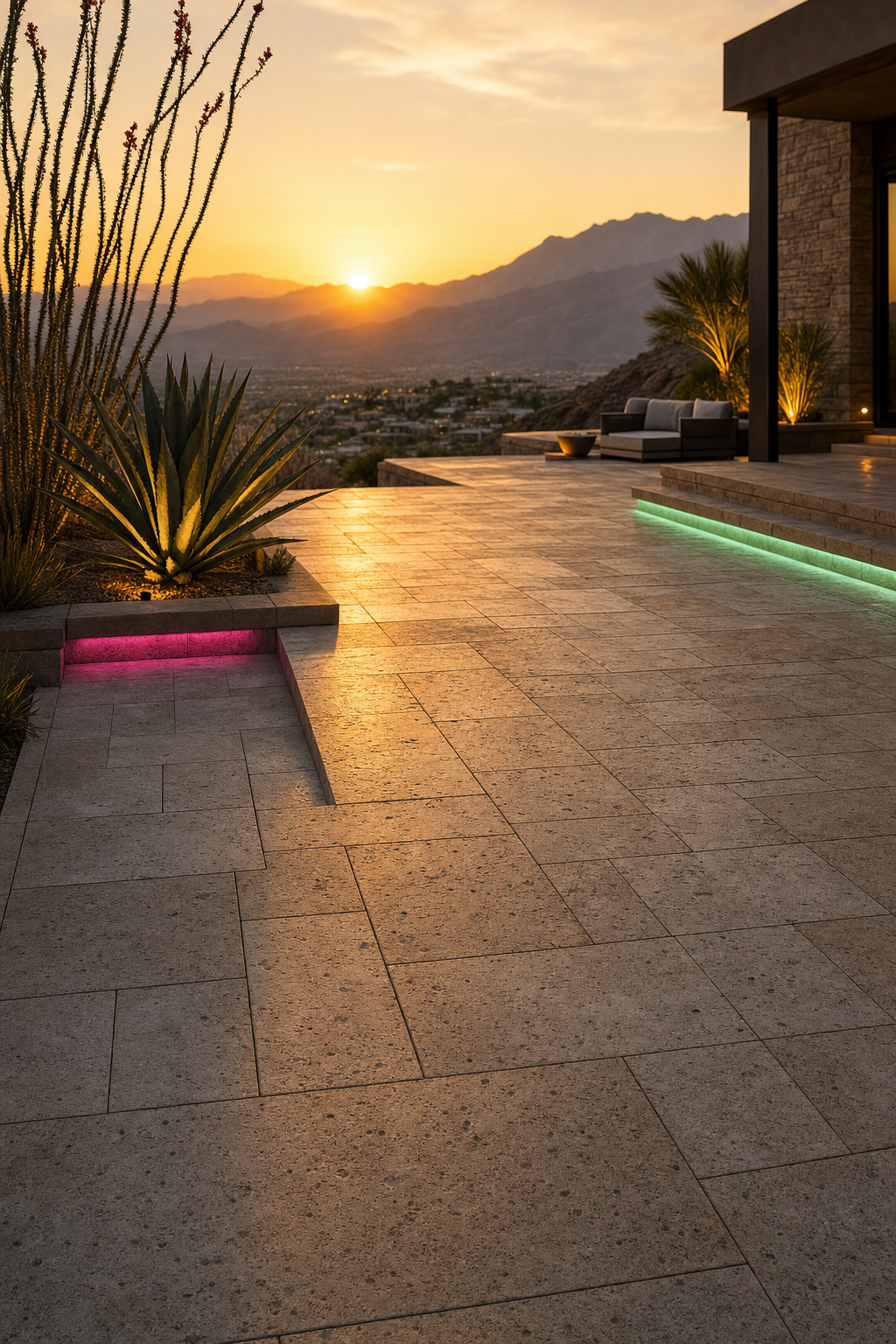
Architectural harmony in the Coachella Valley depends on matching the scale of the masonry to the distinct lines of the home. In neighborhoods like South Palm Desert, where Mid-century Modern aesthetics prevail, the goal is typically to emphasize long, clean horizontals. Sleek, monochromatic large format units or linear 4x12 planks work effectively here, creating a minimalist look that mimics the poured concrete slabs common in the 1950s and 60s.
Conversely, the Spanish Colonial and Mediterranean estates of La Quinta require more organic textures to feel authentic. For these properties, we recommend tumbled multi-size kits. These patterns utilize a mix of small format pavers and medium rectangles to create a cobble effect that feels established and hand-laid, grounding the home in a more traditional desert palette.
Architectural Style | Recommended Paver Format | Visual Impact |
|---|---|---|
Mid-century Modern | Linear 4x12 or 24x24 slabs | Minimalist, expansive, clean |
Spanish / Mediterranean | Multi-size tumbled kits | Textured, historic, warm |
Contemporary / Minimal | Large format monochromatic | Seamless, bold, high-end |
The concept of joint-line density is a critical design tool when selecting a paver size for driveway Palm Desert homes. A high density of lines, created by smaller stones, provides a rich, intricate texture that can make a sprawling entry feel more intimate and inviting. Choosing standard paver sizes on the larger end of the spectrum reduces visual clutter, which can help a narrow driveway appear broader and more cohesive. Properly selecting these formats ensures custom paver driveways look like an original extension of the architecture.
Calculating Waste and Overages for Your Driveway Project
Accurate material ordering is the final step in translating a design into a durable reality. Most custom paver driveways require a waste factor of 10 to 15 percent to account for site-specific adjustments. The specific paver size for driveway Palm Desert selection dictates this margin, as certain standard paver sizes produce more scrap during installation. Larger units and small format pavers set in Herringbone patterns generate significant waste because they require frequent diagonal cuts to meet edge restraints.
Maintaining an adequate overage ensures that the project does not stall if a stone fractures during the cutting process. This surplus also provides the necessary spares for future utility repairs, ensuring a perfect color match that is difficult to replicate years later. The following table breaks down how specific design choices impact your total material order.
Pattern and Size Impact | Recommended Overage | Primary Cause |
|---|---|---|
Simple Running Bond | 5 to 10% | Basic perimeter cuts |
Herringbone (45 or 90°) | 12 to 15% | Constant diagonal trimming |
Large Format Slabs | 15% | High breakage risk per cut |
Circular or Curved Edges | 15%+ | Intricate radial shaping |
Choosing the right paver size is essential for balancing visual appeal with the structural integrity of your driveway. Whether you prefer the sleek look of large slabs or the classic feel of smaller stones, your choice will define the character of your home for years. If you want expert help navigating these options and ensuring a flawless installation, we are here to guide you. You can explore our services for Custom Driveways to see how professional design can transform your Palm Desert property.